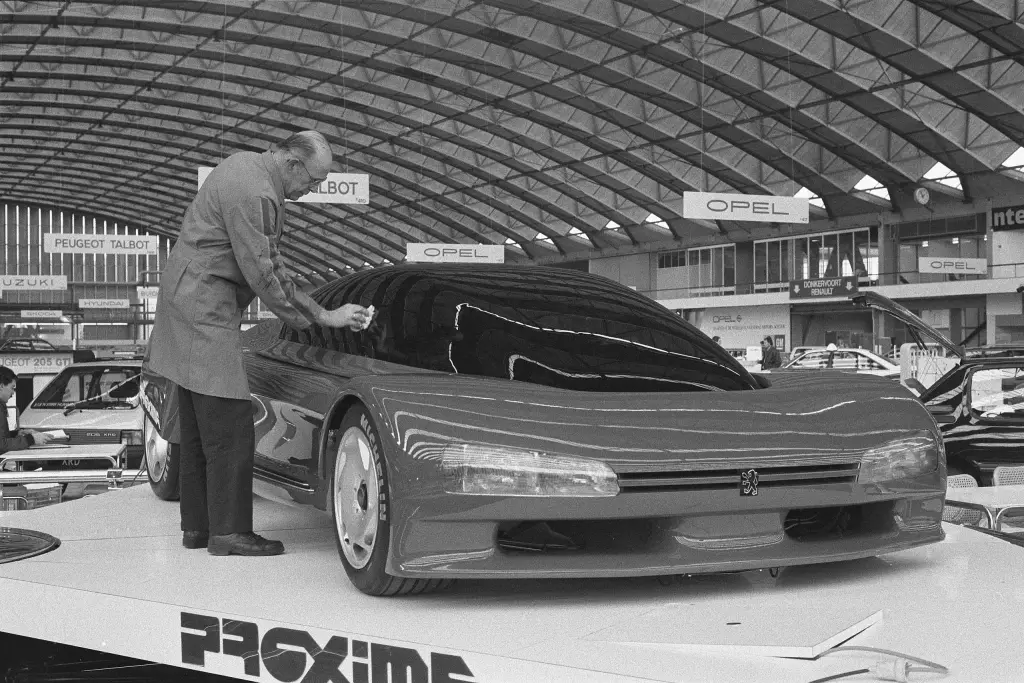
The Peugeot Proxima is a concept car designed and built by Peugeot in 1986. It was presented at the Paris Motor Show that year, and it succeeded the Peugeot Quasar of 1984 ahead of the Oxia of 1988.
Peugeot Proxima at a glance
| Type | concept car, 2+2 coupé |
|---|---|
| Built | 1986 |
| Shown | Paris Motor Show, 1986 |
| Name | after Proxima Centauri, the nearest star |
| Body | composites including resins and carbon fibre, made with CAD |
| Engine | 2,849 cc twin-turbo V6 |
| Power | 680 hp |
| Drive | rear-wheel drive with front traction when slip is detected |
| Brakes | ventilated carbon discs with ABS |
| Canopy | polycarbonate, splitting in half crosswise |
based on one short source
History of the Peugeot Proxima
A science-fiction study
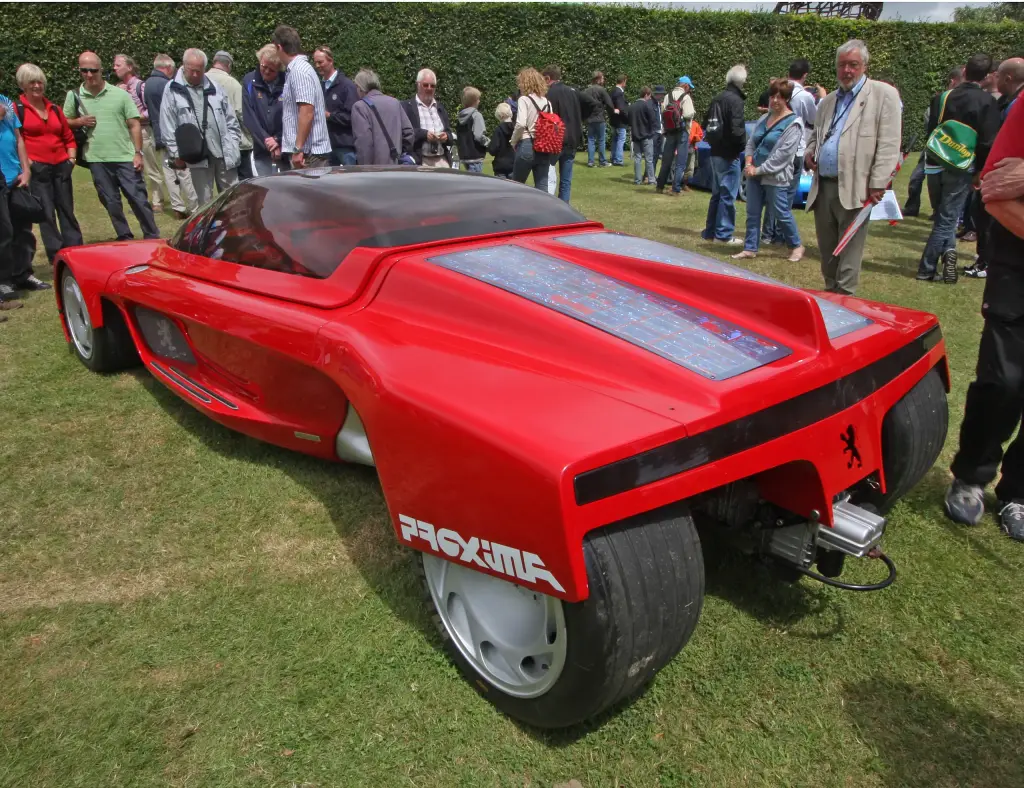
Peugeot showed the Proxima at the Paris Motor Show in 1986. It followed the Quasar of 1984 and preceded the Oxia of 1988, and it was inspired by science fiction, taking its name from Proxima Centauri, the closest star to the Solar System.
Body and cockpit
The bodywork of the 2+2 coupé was created by the Peugeot Style Centre using CAD, a new technology at the time. It uses a range of composite materials including resins and carbon fibre, and a large polycarbonate glazed cockpit. The cockpit is entered through the canopy, which splits in half crosswise: the front half rotates forward at its base while the rear half slides backwards.
Engineering
The Proxima is powered by a 2,849 cc twin-turbocharged V6 producing 680 hp. A traction control system automatically sends power to the front wheels when rear-wheel slip is detected, and the gearbox and clutch are also electronically controlled. The car has ventilated carbon disc brakes with ABS.
Equipment
The cockpit accommodates up to four passengers. Two onboard computers and five high-definition colour screens help the driver with rear-view cameras and an anti-collision radar, giving a full view of the car’s surroundings. It also has one of the prototypes of a satellite navigation system, an electronic key card to open the car and start the engine, and a temperature control system powered by a solar panel at the rear that cools the glazed dome when the car is standing in the sun.
Design and features
- CAD design: the body was drawn on computer, then new technology.
- Splitting canopy: polycarbonate roof that opens in two halves.
- 680 hp V6: twin turbos and electrically controlled gearbox.
- Cameras and radar: rear-view screens and an anti-collision radar.
- Early GPS: one of the first satellite navigation prototypes in a car.
Peugeot Proxima versions
- Proxima (1986): the single concept car.
The Proxima came after the Quasar and before the Oxia, and belongs with Peugeot’s other design studies such as the 907. More in the Peugeot collection.
Video: Peugeot PROXIMA 1986
Video by on YouTube.
Sources
- Peugeot Proxima, English Wikipedia: history, body, engine, cockpit equipment