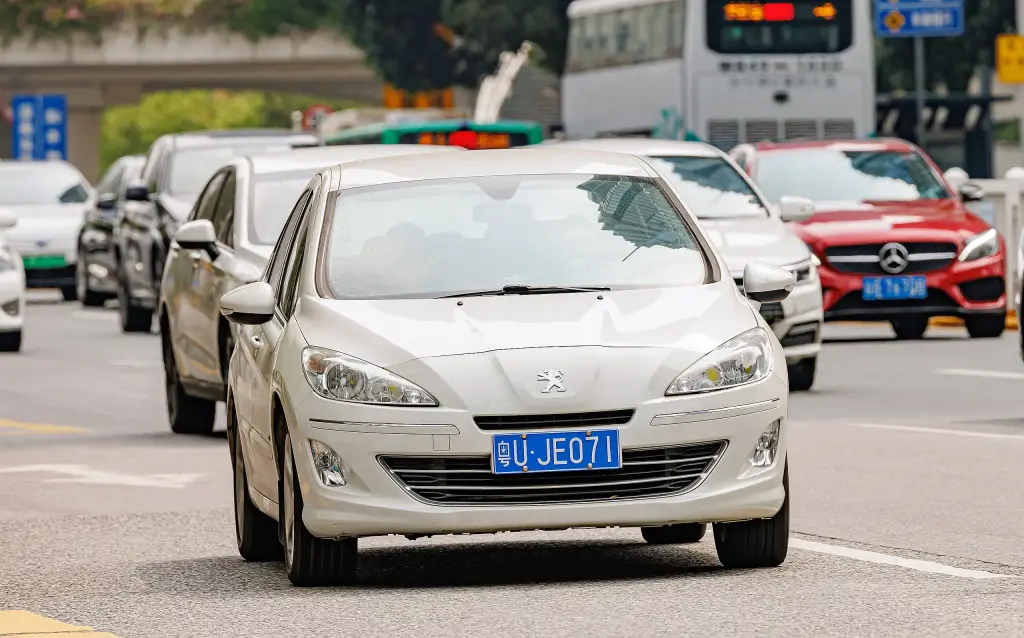
The Peugeot 408 is a compact C-segment saloon that Peugeot has produced since 2010. It was unveiled on 25 January 2010 at the Beijing Auto Show and went on sale in China on 8 April that year.
Peugeot 408 at a glance
| Production | since 2010 |
|---|---|
| Unveiled | 25 January 2010, Beijing Auto Show |
| Chinese sales | from 8 April 2010 |
| Argentine production | from November 2010, sales from April 2011 |
| Based on | a long-wheelbase Peugeot 308 |
| Not a 407 successor | the 407 was replaced by the 508 |
| China engines | 1.6 TU5JP4 115 PS, 2.0 EW10A+ 150 PS |
| Gearboxes | five-speed manual or four-speed automatic |
| Second generation | unveiled at Beijing in 2014 |
based on two short sources; no European-market history
History of the Peugeot 408
What it is
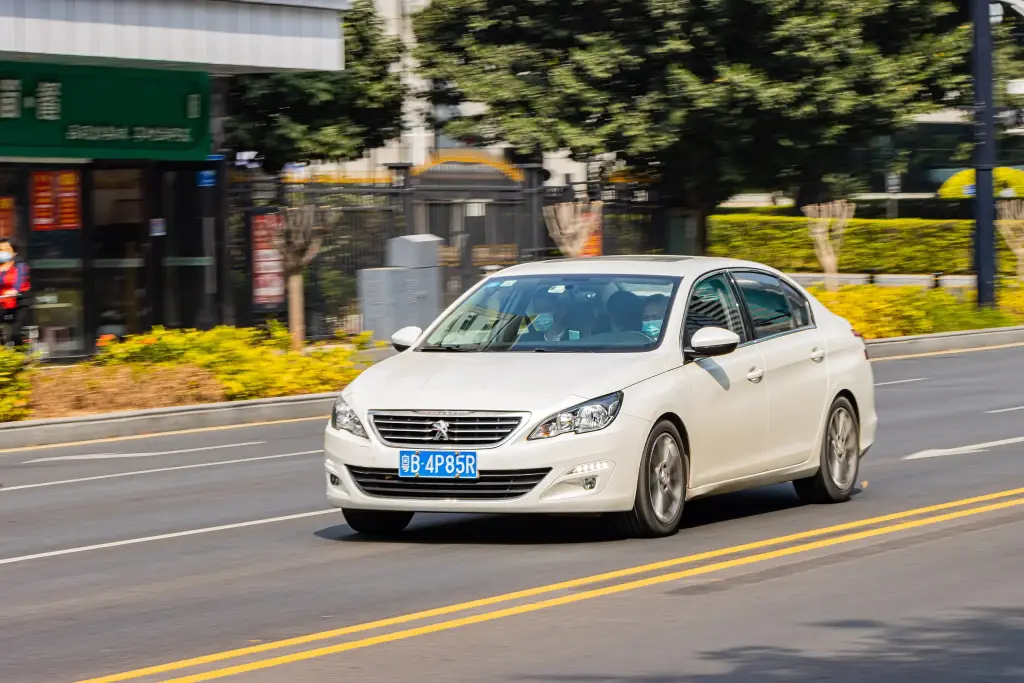
Despite its name, the 408 is not a direct successor to the 407 but a long-wheelbase saloon version of the Peugeot 308 hatchback, aimed mainly at emerging markets such as China. It is not intended for the European market and is not built there. In November 2010 production began at El Palomar in Buenos Aires, with Argentine sales starting in April 2011.
First generation (T7, 2010)
In China the 408 was offered with a 1.6 or a 2.0-litre petrol four. The 1.6, the TU5JP4, has 1,587 cc and produces 115 PS at 5,750 rpm and 147 Nm at 4,000 rpm. The 2.0-litre EW10A+ has 1,997 cc, 150 PS at 6,000 rpm and 200 Nm at 4,000 rpm. Either engine could be ordered with a five-speed manual or a four-speed automatic.
In South America the range also included a 1.6 HDi diesel of 1,560 cc and 110 PS with 240 Nm, with a top speed of 188 km/h and 0–100 km/h in 12.4 seconds, alongside the 2.0 petrol and a 1.6 THP petrol with a six-speed automatic. In Malaysia the 408 came with the 1.6 Prince turbo of 167 PS and 240 Nm from 1,400 rpm, or the 2.0 EW10A+ of 147 PS; the turbo had a six-speed manual and the 2.0 a four-speed adaptive automatic with Tiptronic and a Sport mode. The first generation continued in production in Latin America and Russia with several facelifts, and Argentine production stopped in 2021.
Second generation (T9, 2014)
The second generation was unveiled at the 2014 Beijing Auto Show. In June 2016 an international version called the 408 e-THP reached Malaysia with a single engine and transmission choice. In China the second-generation car used a 1.8-litre engine of 139 hp, a 1.2-litre turbo of 136 hp and a 1.6-litre turbo of 167 hp, all with a six-speed automatic and, on the 1.8 and 1.2, an optional six-speed manual. A first facelift followed in 2018 with a redesigned front fascia, rear bumper and tail lamps, and a second facelift in June 2022 brought the front end of the third-generation 308 and a 1.6-litre turbo of 125 kW with an Aisin six-speed automatic. The Dongfeng Fukang ES600 electric sedan is based on the 2014–2018 car.
Design and features
- Long-wheelbase 308: a saloon built from the 308 platform for China.
- China first: unveiled in Beijing in January 2010.
- Argentine production: built at El Palomar from late 2010.
- Not for Europe: the 407’s European successor was the 508.
- Two generations: T7 from 2010 and T9 from 2014.
Peugeot 408 versions
- 408 saloon (2010): the first generation, 1.6 and 2.0 petrol, 1.6 HDi in South America.
- 408 e-THP (2016): the international version sold in Malaysia.
- 408 (2014): the second-generation Chinese saloon.
- Dongfeng Fukang ES600: an electric sedan based on the first-generation car.
The 408 is a saloon version of the Peugeot 308, while the European replacement for the 407 was the 508. Its larger relative is the 508 and the crossover is the 3008. More in the Peugeot collection.
Video: Peugeot 408 test drive
Video by on YouTube.
Sources
- Peugeot 408 (saloon), English Wikipedia: origin, engines, markets, second generation
- Peugeot 408, English Wikipedia: the two models that share the name