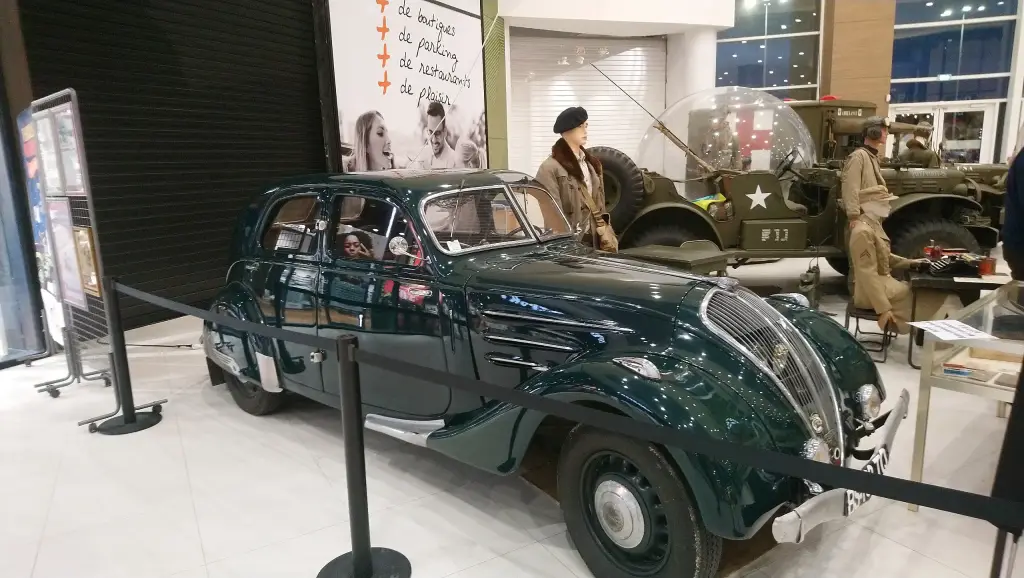
The Peugeot 302 is a mid-weight saloon introduced at the 1936 Paris Motor Show and listed for just eighteen months, until April 1938. It was effectively a shortened 402 with a smaller engine, launched a year after the 402.
Peugeot 302 at a glance
| Introduced | 1936 Paris Motor Show |
|---|---|
| Sold until | April 1938 |
| Related to | Peugeot 402, shortened and with a smaller engine |
| Engine | 1,758 cc water-cooled four-cylinder |
| Power | 43 PS |
| Top speed | 105 km/h |
| Tax horsepower | 10 CV, against 11 CV for the 402 |
| Gearbox | three-speed manual |
| Front suspension | independent |
| Rear suspension | rigid axle on cantilever springs |
based on one source
History of the Peugeot 302
Why the 302 existed
The aerodynamic 402 had been well received, but it was half a class larger than the Citroën Traction Avant, which had rewritten the rules when it appeared in 1934 and which by the late 1930s came in several engine sizes and wheelbases. The 302 could compete with the Citroën more directly, and it was a modest return to stability after the crisis of 1929 suggested growth in demand for mid-sized saloons. By the time the car was launched, however, the country was in industrial turmoil and political uncertainty.
A short life
Peugeot ended production of the 201 in September 1937, and its replacement, the smaller 202, appeared only in February 1938. At the October 1937 Motor Show the 302 was still listed, partly to clear remaining stock after a precarious year for French industry, but the car itself was absent from the Peugeot stand. Through the autumn and winter of 1937 and 1938 it was the smallest and least expensive car on offer at Peugeot dealers.
The body
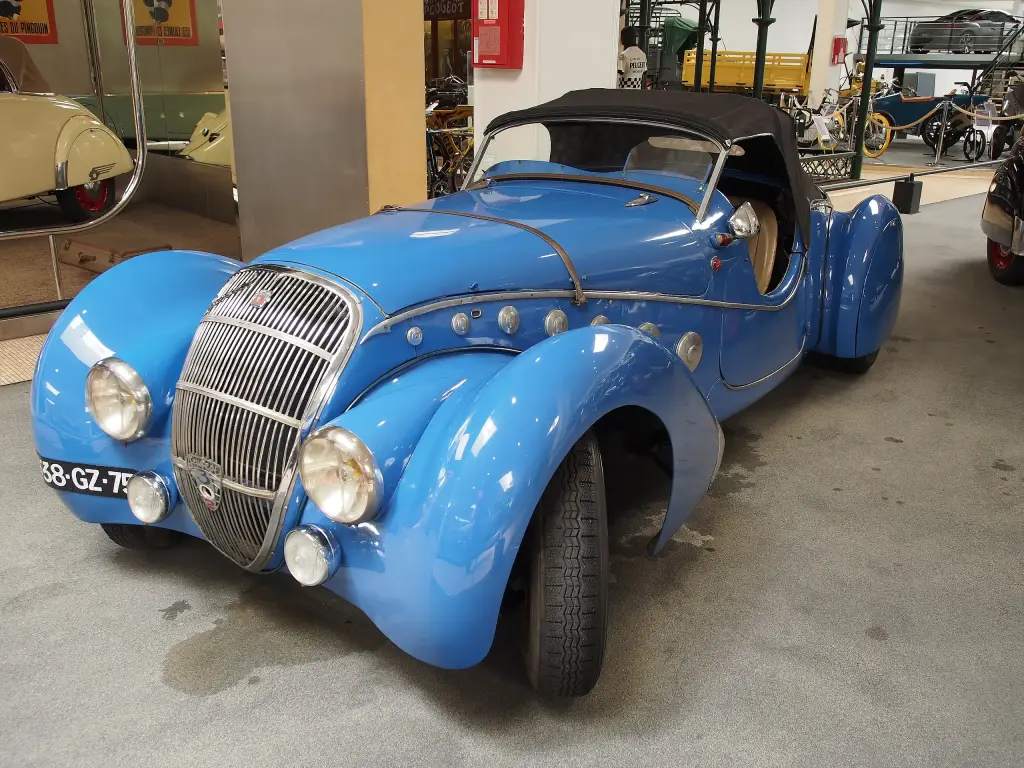
The 302 followed the style of the longer 402, with a sloping front grille and the headlights set behind it. A notable detail was the hole for the starting handle in the lower part of the grille, which passed through the middle digit of the name “302”, inscribed vertically in blue, white and red. Besides the saloon and Peugeot’s own two-door four-seater cabriolet, a few cars were bodied by specialists, including a Darl’mat roadster and a coupé cabriolet with the folding steel roof Georges Paulin had patented in 1931.
Engine and chassis
The four-cylinder water-cooled engine of 1,758 cc was in most respects similar to the slightly larger unit of the 402, but the tax horsepower was 10 CV rather than 11. Maximum output was a claimed 43 PS and the top speed 105 km/h, delivered to the rear wheels through a three-speed gearbox. Peugeot had been the first of the volume makers to offer independent front suspension, on the 201, and the 302 had it too, winning praise for road holding and comfort on poor roads, especially when driven briskly. At the rear there was a rigid axle on cantilever springs.
Design and features
- Shortened 402: the same style on a smaller, cheaper car.
- Headlights behind the grille: the aerodynamic Peugeot look of the late thirties.
- Independent front suspension: a Peugeot technical advantage over Renault.
- Coachbuilt versions: a Darl’mat roadster and a Paulin folding-roof coupé cabriolet.
- Short production: eighteen months, ending as the 202 arrived.
Peugeot 302 versions
- Saloon: the standard four-door car.
- Cabriolet: a two-door four-seater built by Peugeot.
- Darl’mat roadster: a special-bodied version.
- Paulin coupé cabriolet: with a folding steel roof.
The 302 was a shorter Peugeot 402 and gave way to the 202 in the range. More in the Peugeot collection.
Sources
- Peugeot 302, English Wikipedia: launch, positioning, body, engine, chassis