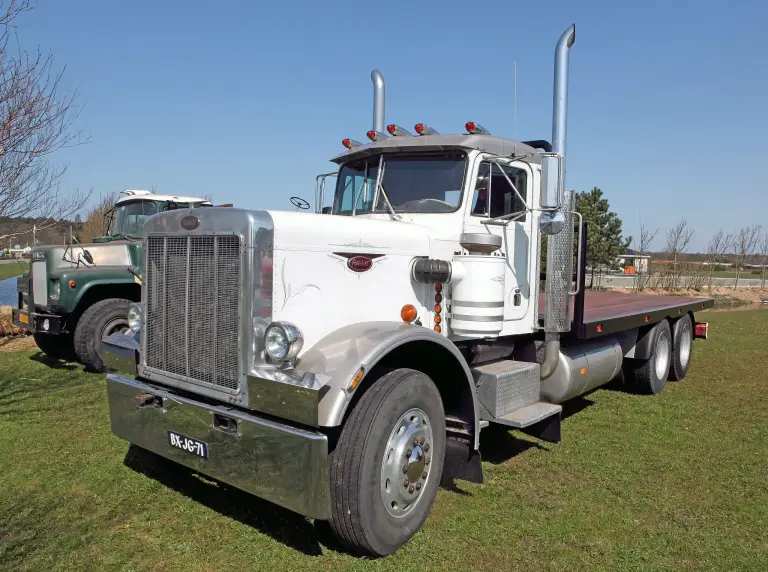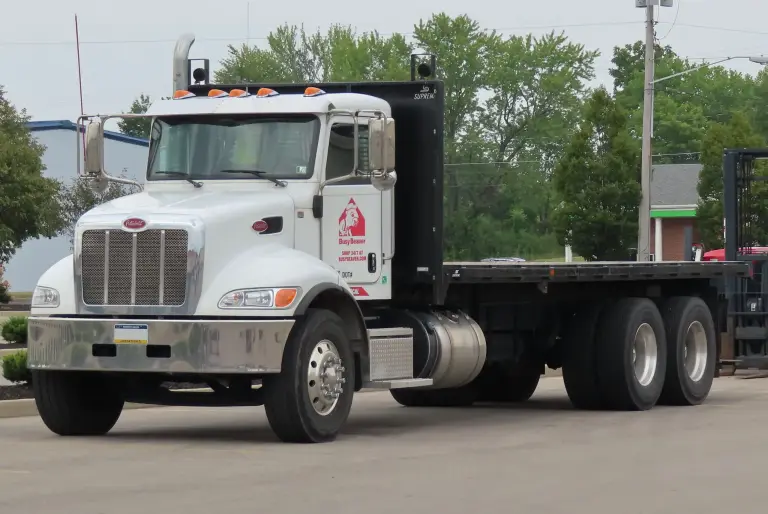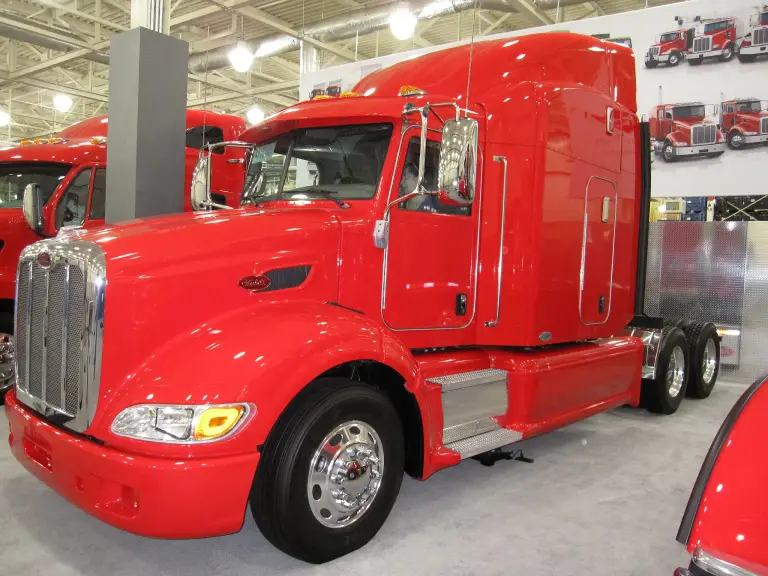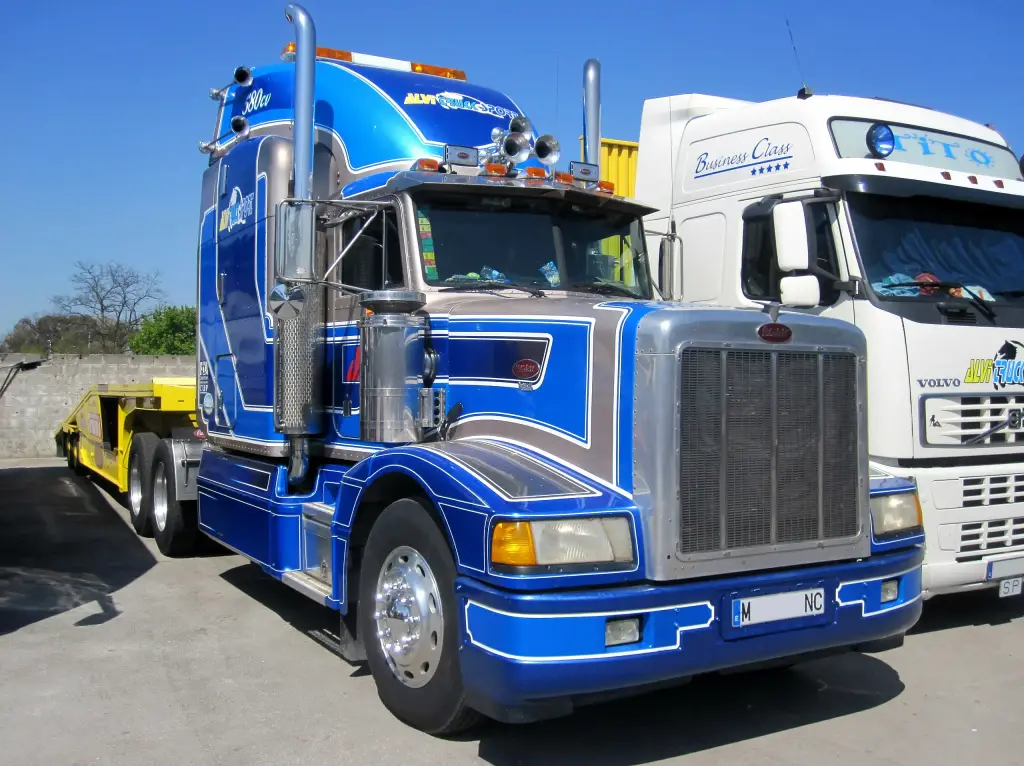
The Peterbilt 375 of 1987 was the company’s first aerodynamic conventional, conceived along the same lines as the Kenworth T600. It was the daycab version of the 377, intended for lighter loads, and it stayed in production until 2005.
Peterbilt 375 at a glance
| Maker | Peterbilt Motors Company (PACCAR) |
|---|---|
| Production | 1987–2005 |
| Class | on-highway, Class 7/8 |
| Layout | conventional cab, daycab |
| Note | first Peterbilt aerodynamic conventional |
| Related | daycab version of the 377 |
| Hood | sloped fibreglass, similar to the 349 |
| Fenders | large, with headlamps and turn signals built in |
| BBC | 120 inches set-back, 122 inches set-forward |
| Replaced by | 120-inch 385, along with the 387 |
History of the Peterbilt 375
The 375 appeared in 1987 in the same programme as the 377, when Peterbilt began to move away from the flat-nosed conventionals of the 359 generation. The idea was borrowed from the Kenworth T600, which had shown that a sloped bonnet could cut fuel consumption on long-haul work. The 375 took that shape and applied it to a daycab truck for lighter loads.
Visually the 375 carried a fibreglass hood sloped in the manner of the 349, with large fenders that incorporated the headlamps and turn signals. Buyers could have a 120-inch bumper-to-back-of-cab body with a set-back front axle or a 122-inch body with a set-forward axle, which covered regional haulage and shorter-distance work where a sleeper was not needed.
The model survived until 2005, by which time the 385 had taken over its role. Peterbilt’s own summary is that the 375 was directly replaced by the 120-inch 385, together with the 387, and that the aerodynamic idea it introduced in 1987 had by then spread through the whole highway range.
Design and features
- Aerodynamic hood: the sloped fibreglass bonnet brought the T600 idea into the Peterbilt range.
- Daycab layout: intended for lighter loads and shorter runs than the sleeper-equipped 377.
- Integrated fenders: headlamps and turn signals were built into the large front fenders.
- Two body lengths: 120 inches with a set-back axle or 122 inches with a set-forward axle.
Peterbilt 375 versions
- 375 (1987–2005): the standard aerodynamic daycab.
- Set-back and set-forward versions: 120 and 122 inches respectively.
- 377: the sleeper-capable sister model on the same idea.
The sister model is the Peterbilt 377, and the truck that replaced it is the 385. The conventional it evolved from is the 359; more in the Peterbilt collection.
Sources
- Peterbilt, English Wikipedia: 1987 aerodynamic programme, Kenworth T600 comparison
- List of Peterbilt vehicles, English Wikipedia: production years, hood, fenders, BBC, replacement