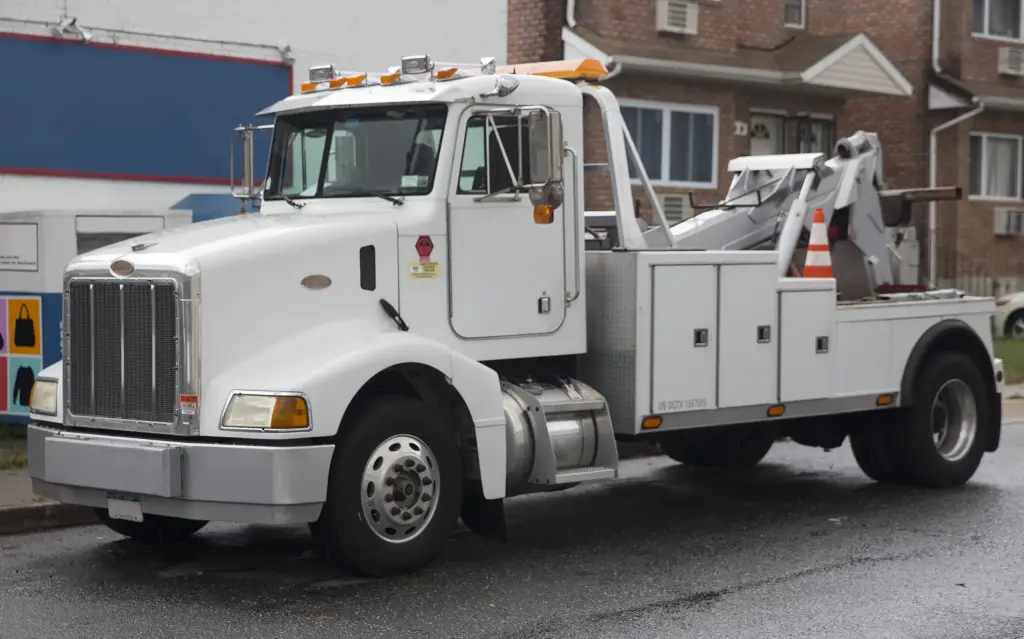
The Peterbilt 365 came in 2007 as one of two severe-service models replacing the 357. It measures 115 inches from bumper to back of cab, the shorter of the pair, and it is offered with either a set-back or a set-forward front axle for different vocational jobs.
Peterbilt 365 at a glance
| Maker | Peterbilt Motors Company (PACCAR) |
|---|---|
| Production | from 2007 |
| Class | severe-service and vocational, Class 8 |
| BBC | 115 inches |
| Replaced | 357 |
| Sister model | 367, with a 123-inch BBC and replacing the 378 |
| Front axle | set-back or set-forward |
| Use | construction, tipper, mixer and heavy vocational bodies |
The model is described in the list of Peterbilt vehicles and in the company history; there is no separate article on the 365.
History of the Peterbilt 365
The 365 and its longer sister, the 367, arrived in 2006–2007 to replace the 357 and 378 in Peterbilt’s vocational range. The division of labour was simple: the 365 with its 115-inch bumper-to-back-of-cab measurement replaced the 357, and the 367 at 123 inches replaced the 378. Both were Class 8 trucks built for site work rather than line haulage.
Like the models they replaced, the 365 and 367 came with either a set-back or a set-forward front axle. The choice affects weight distribution and the turning circle, and vocational buyers pick according to the body they intend to fit, whether a tipper, a mixer, a crane or a service body.
The 365 continues in the Peterbilt range alongside the heavier 367. It shares the family approach of the 2000s vocational trucks: a steel cab, a simple bonnet for access, and a chassis designed to take the loads that construction and municipal work put on a truck.
Design and features
- Short vocational chassis: 115 inches from bumper to back of cab, giving a compact site truck.
- Two axle positions: set-back or set-forward front axles for different bodies and weight distributions.
- Class 8 strength: heavy-duty chassis for construction and municipal work.
- Family with the 367: the longer sister for jobs that need a bigger cab-to-axle space.
Peterbilt 365 versions
- 365 (from 2007): the 115-inch model.
- 367: the 123-inch sister that replaced the 378.
- Set-back and set-forward versions: two front-axle positions for different applications.
The longer sister is the Peterbilt 367, and the model they replaced is the 357. The older vocational truck is covered with the 378; more in the Peterbilt collection.
Sources
- Peterbilt, English Wikipedia: 2006 introduction of the 365 and 367 as successors to the 357 and 378
- List of Peterbilt vehicles, English Wikipedia: BBC, axle configurations, replacement of the 357