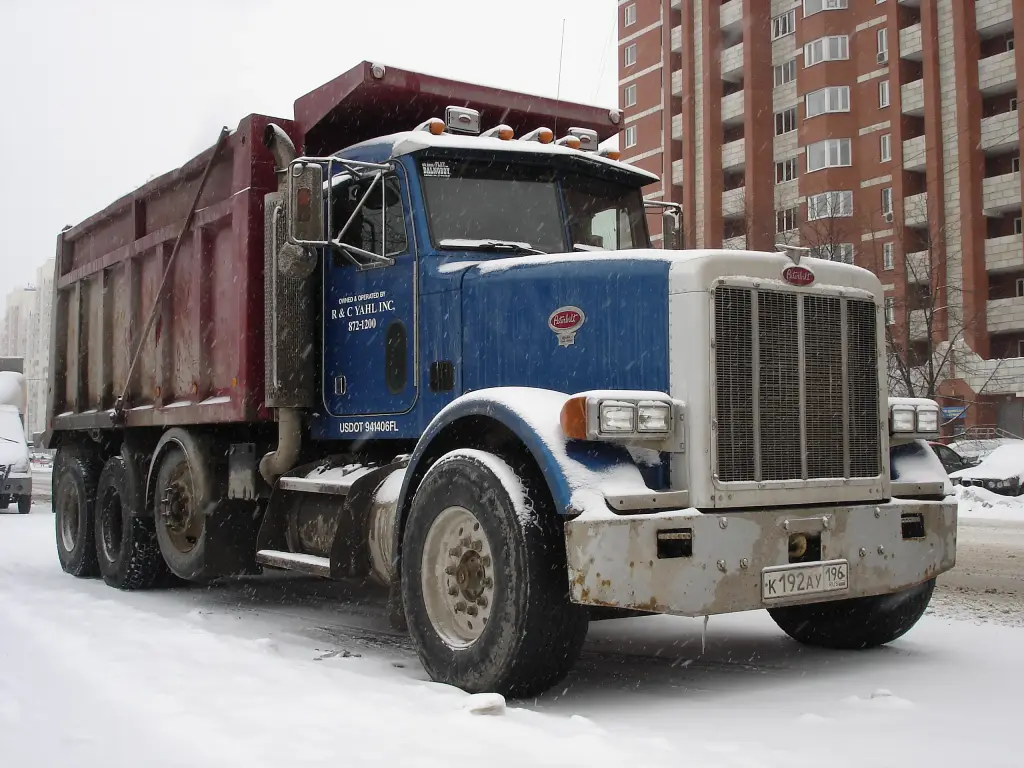
The Peterbilt 357 arrived in 1986 as the successor to the 353 in the vocational line. It was configured like the 378 but built on a heavier chassis, and it was offered with a flat-fender hood like the old 353 for buyers who needed the construction look.
Peterbilt 357 at a glance
| Maker | Peterbilt Motors Company (PACCAR) |
|---|---|
| Production | from 1986 |
| Class | severe-service and vocational, Class 8 |
| Relation | similar to the 378 but with a heavier chassis |
| BBC | 111 to 123 inches |
| Front axle | set-back and set-forward versions |
| Hood option | flat-fender hood similar to the 353, with front PTO |
| Replaced | 353 in the vocational line |
| Successor | 365, introduced in 2007 |
History of the Peterbilt 357
The 357 appeared in 1986, in the same round of changes that saw the 378 replace the 348 and 349. Where the 378 was the general vocational truck, the 357 was the severe-service model: it looked much the same but sat on a heavier chassis, for operators who needed more strength than a standard construction truck could offer.
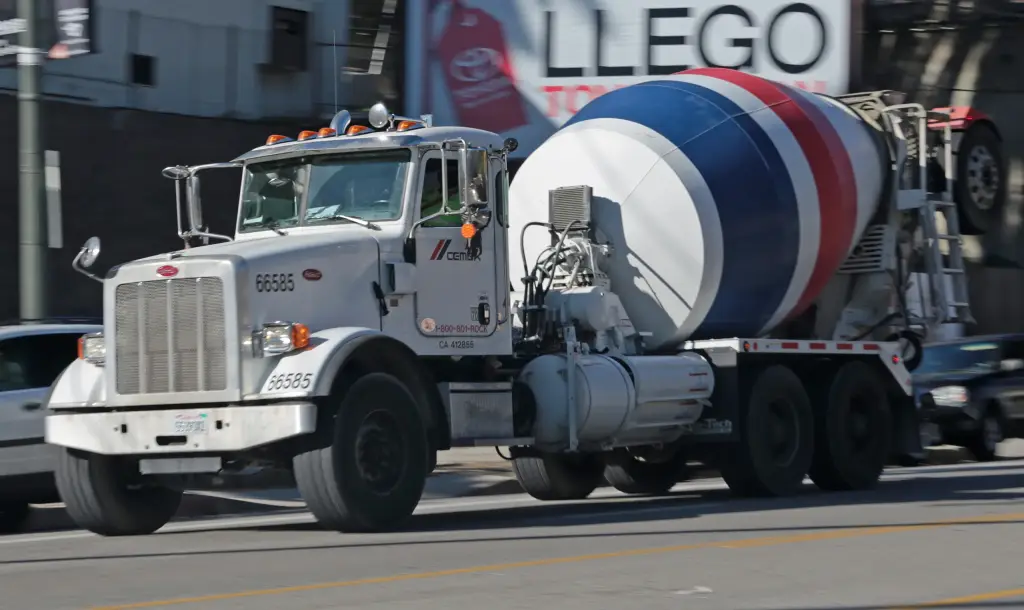
The truck could be ordered with a set-back or a set-forward front axle and with a body length from 111 to 123 inches, which covered everything from a short tipper to a long tractor for heavy haulage. Peterbilt also offered a flat-fender hood like the one on the 353, along with a front power take-off, details that suited site trucks driving pumps and winches as well as carrying loads.
The 357 stayed in the catalogue for two decades. In 2006 Peterbilt introduced the 365 and 367 as successors to the 357 and 378, and the older model was phased out. For a while in 2002 the company even moved some 357 production to the Sainte-Thérèse plant to meet demand, a sign of how widely the model was used.
Design and features
- Heavy chassis: the 357 was built on a stronger frame than the 378 for severe service.
- Two axle positions: set-back and set-forward front axles were both offered.
- Body lengths: 111 to 123 inches from bumper to back of cab.
- Flat-fender option: the construction hood of the 353 remained available, with a front PTO.
Peterbilt 357 versions
- 357 (from 1986): the standard severe-service truck.
- Flat-fender version: with the 353-style hood and front power take-off.
- 365 and 367 (from 2006): the successors in the vocational line.
The construction truck it replaced is the Peterbilt 353, and its general-purpose sister is the 378. The models that followed are the 365 and the 367; more in the Peterbilt collection.
Video: Peterbilt 357 5inch straight pipes
Video by Unlimited3406 on YouTube.
Sources
- Peterbilt, English Wikipedia: 1986 successor to the 353, 365 and 367 as successors, 2002 production
- List of Peterbilt vehicles, English Wikipedia: BBC range, chassis, flat-fender hood and front PTO