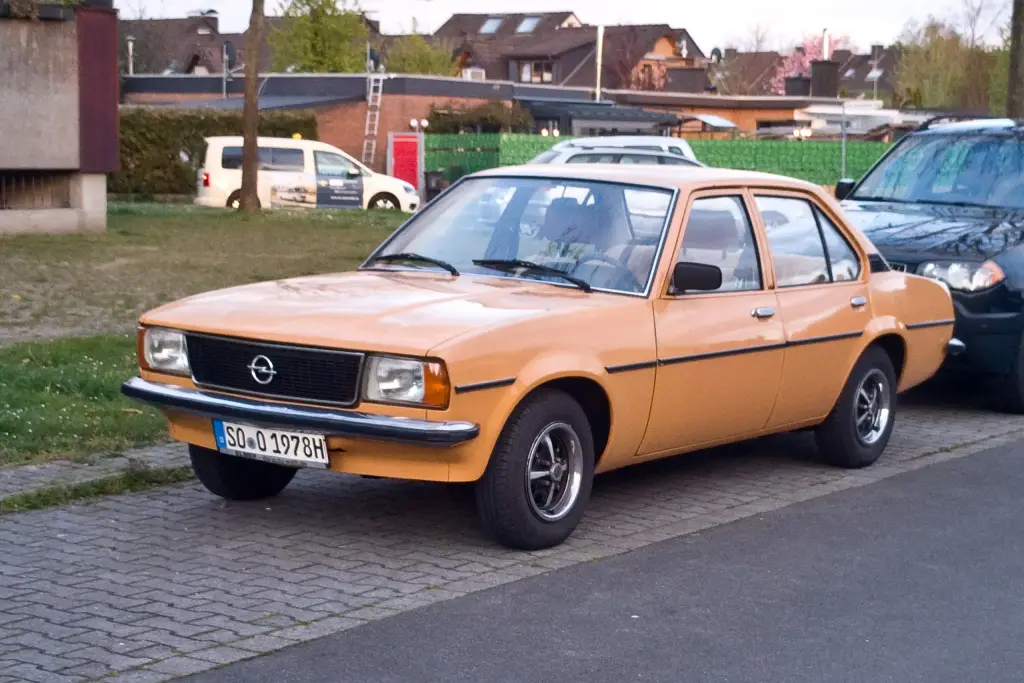
The Opel Ascona was a large family car built by Opel from 1970 to 1988 in three generations, from the rear-wheel-drive Ascona A to a front-wheel-drive J-car derivative. It was created to fill the gap in the Opel range as the Rekord grew larger, and it was replaced by the Vectra A.
Opel Ascona at a glance
| Maker | Adam Opel AG, Rüsselsheim |
|---|---|
| Production | September 1970 – August 1988 |
| Generations | three |
| Ascona A | 1970–1975 |
| Ascona B | 1975–1981 |
| Ascona C | 1981–1988, front-wheel drive |
| Ascona A engines | 1.2 to 1.9 litres, 60–90 PS |
| Ascona A built | almost 692,000 |
| US version | Opel 1900, 1971–1975 |
| Rally | Walter Röhrl, 1982 World Rally champion in an Ascona 400 |
| Replaced by | Opel Vectra A |
Based on one source, the English Wikipedia article on the Opel Ascona.
History of the Opel Ascona
A name from Switzerland
The Ascona took its name from the lakeside resort in Ticino, Switzerland. The name had been used before: in the 1950s a special edition of the Opel Rekord P1 was sold in Switzerland as the Opel Ascona, and in 1968 it was used again for a locally adapted Kadett B with a 1.7-litre engine borrowed from the Rekord. The Ascona A launched in 1970 was the first mainstream Opel to carry it, breaking with the company’s tradition of using German naval ranks for model names.
Ascona A (1970–1975)
In the autumn of 1970 Opel presented a completely new range at Rüsselsheim, internal project 1.450. The Manta coupé came first on 9 September, followed by the Ascona on 28 October in two- and four-door saloon forms plus a three-door estate called the Caravan or Voyage. The Ascona had originally been developed to replace the Kadett, but late in the programme Opel chose to build a new, smaller Kadett and position the Ascona against the Ford Taunus instead. There was no Vauxhall sister model. Engines ran from 1.2 to 1.9 litres with 60 to 90 PS; the 1.2 had an overhead-valve head while the 1.6 and 1.9 used Opel’s cam-in-head unit. The Ascona A stayed in production until 1975, by which time almost 692,000 had been built.
The Opel 1900 and the Ascona B
From 1971 to 1975 the 1.9-litre Ascona was exported to the United States as the Opel 1900 and sold through Buick-Opel dealerships. Two- and four-door saloons were offered, the two-door dropped after 1973, and rubber-clad impact bumpers arrived for 1974. All 1975-model Opels sold in America had Bosch L-Jetronic fuel injection to meet emissions rules, with the compression ratio cut to 7.6:1 and power down to 75 hp. A poor exchange rate ended the experiment, and Isuzu Geminis with Opel badges took their place after 1975.
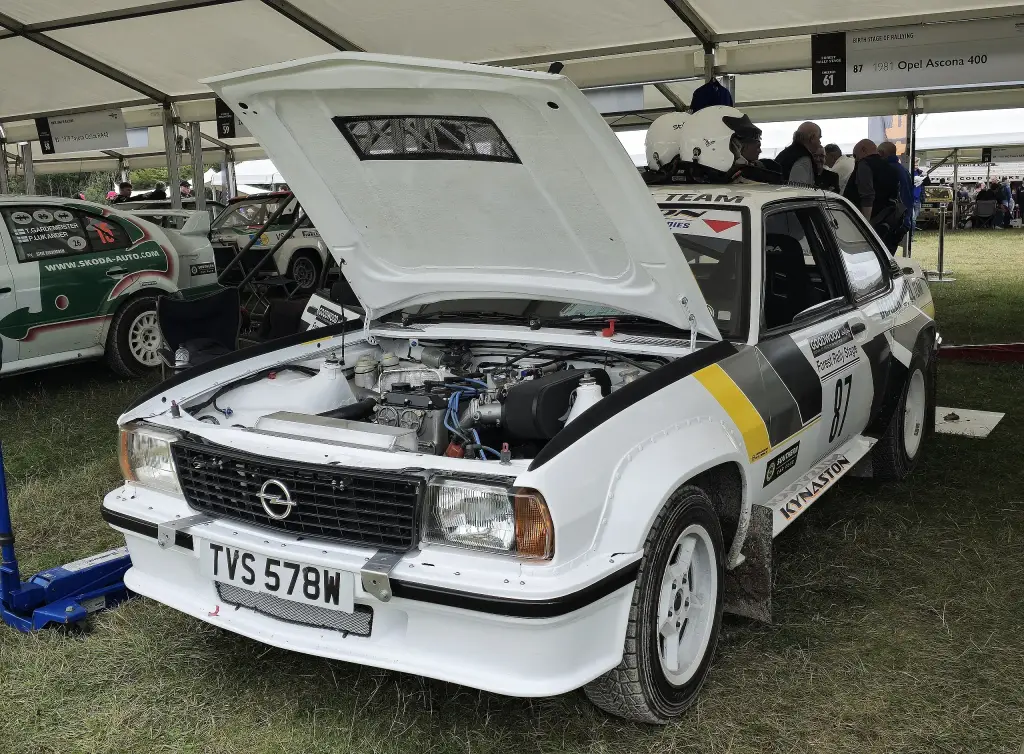
The Ascona B followed in August 1975 at the Frankfurt show, as a two- or four-door saloon with no Caravan estate. It was Opel’s version of the GM U-car platform, essentially an enlarged T-car that also underpinned the Kadett C. The 1.9 S engine gave way to a 2.0 in September 1977, a 2.0 diesel joined the range in 1978, and the street-legal Ascona 400 with a 2.4-litre 16-valve engine of 144 PS appeared in January 1979. A facelift in September 1979 brought plastic bumpers and a larger-mesh grey grille.
Design and features
- Three generations: from rear-wheel drive in 1970 to a front-wheel-drive J-car in 1981.
- Cam-in-head engines: the 1.6 and 1.9 units of the Ascona A, with a camshaft beside the valves.
- Rally pedigree: Walter Röhrl won the 1974 European Rally Championship in an Ascona 1.9 SR and the 1982 world title in an Ascona 400.
- A name with history: used on Swiss Rekord and Kadett specials before it became a model of its own.
Opel Ascona versions
- Ascona A saloon: two and four doors, 1.2 to 1.9 litres.
- Ascona A Caravan/Voyage: the three-door estate.
- Opel 1900: the American version of the 1.9-litre car, 1971–1975.
- Ascona B: two and four-door saloon, 1975–1981, with 2.0 petrol and diesel.
- Ascona 400: 2.4-litre 16-valve homologation model of 1979.
The Ascona shared its platform with the Manta coupé and sat between the Kadett and the Rekord. More cars are in the Opel collection.
Sources
- Opel Ascona, English Wikipedia: generations, engines, Opel 1900, rally history