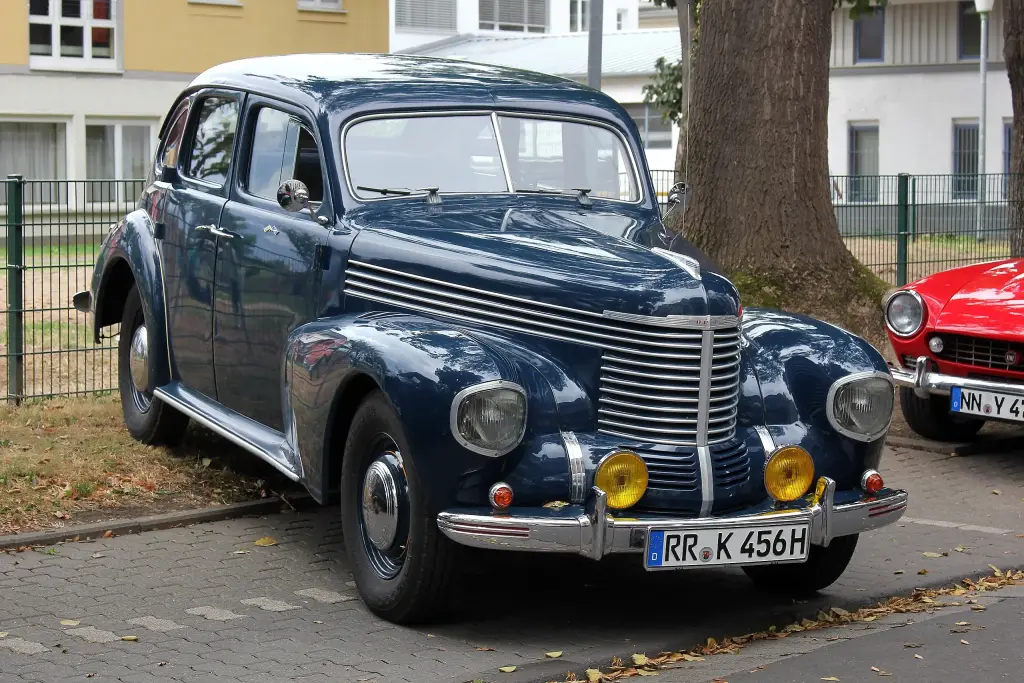
The Opel Kapitän was Opel’s luxury car from 1938 until 1970, built in several generations that tracked the recovery of the German car market after the war. It began as the last new Opel before 1939 and ended as the cheapest member of the KAD range.
Opel Kapitan at a glance
| Maker | Adam Opel AG, Rüsselsheim |
|---|---|
| Production | 1938–1970 |
| First Kapitän | launched 1939, production from November 1938 |
| Pre-war body | unitary construction, four-door saloon and coupé cabriolets |
| Pre-war top speed | 118 km/h |
| Built to 1940 | 25,374 |
| Post-war return | October 1948, 55 PS |
| 1951–1953 cars | 48,562 |
| 1953–1958 cars | 154,098 |
| P1 (1958–1959) | 34,282 cars, 80 PS |
Based on one source, the English Wikipedia article on the Opel Kapitän.
History of the Opel Kapitan
The last Opel before the war
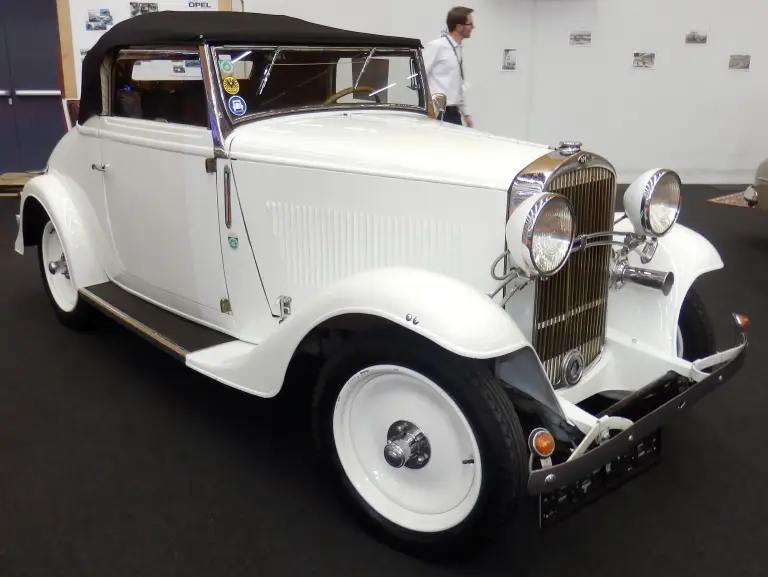
The Kapitän was the last new Opel model to appear before the Second World War, developed during 1938 and launched at the Geneva motor show in the spring of 1939, with production starting in November 1938. It came in many bodies, the four-door saloon most popular and two-door coupé cabriolets also built. The pre-war Kapitän had a unitary body, innovative for its time; Soviet engineers studied it and it influenced the GAZ-M20 Pobeda. The 2.5-litre engine from its predecessor gave a reported 118 km/h. Civilian production ended in the autumn of 1940 after 25,371 cars, with three more assembled in 1943; 248 of the total were two-seater cabriolets bodied by Gläser of Dresden and Hebmüller of Wuppertal.
Germany’s first post-war six
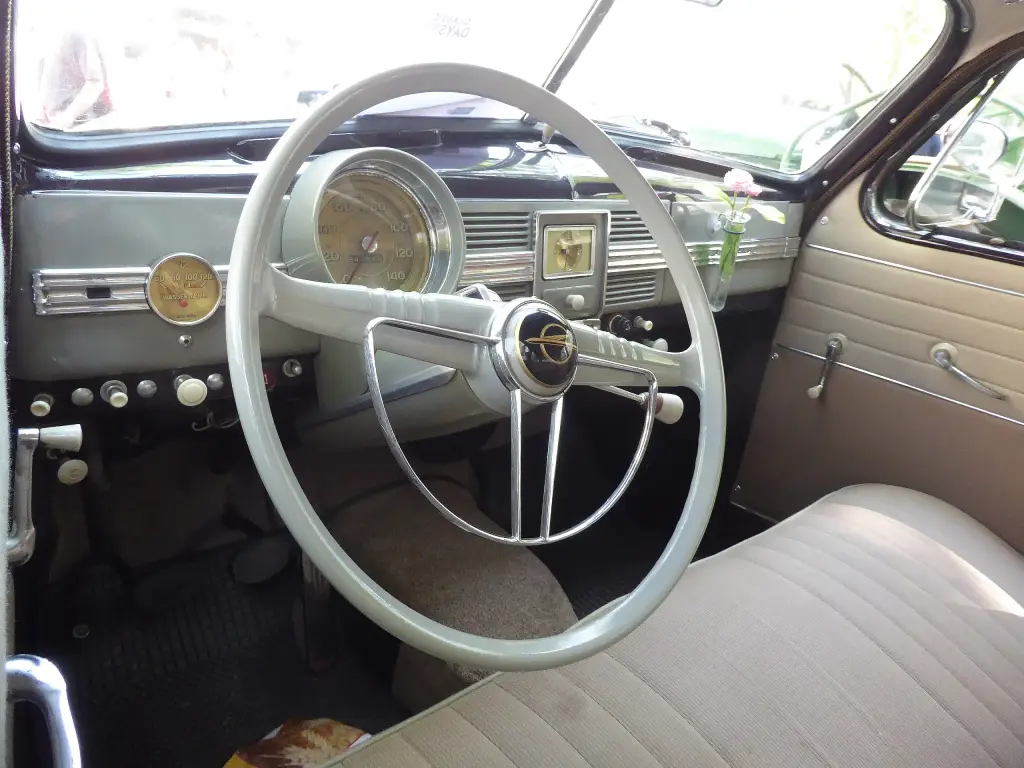
In October 1948 the Kapitän returned as Germany’s first post-war six-cylinder car. The engine was already being used in the Opel Blitz trucks, but the occupation regulations forbade civilian sales of cars over 1.5 litres, so the first cars went to the occupying powers and private sales began in 1949. Only a saloon was offered, based on the 1939 car, with round instead of hexagonal headlights and better springs and dampers; from May 1950 the dashboard was redesigned and the gear lever moved to the steering column. With 55 PS it reached 126 km/h, needed 29 seconds to reach 100 km/h and used 13 litres per 100 km. By February 1951, 30,431 had been built.
Chrome and sales records
The Kapitän of March 1951 was a modernised version of the same car, with the compression ratio raised from 6.0:1 to 6.25:1 and power from 55 to 58 PS, later 60. It was recognised by its chrome and American-style grille, and was the most modern large mass-produced car in Europe at the time. From March 1951 to July 1953 Opel built 48,562 of this series. A completely new car followed in November 1953, longer and wider, with a revised rear axle, a stabilising bar and larger brakes. Its compression ratio rose to 7.0:1 for 68 PS, then 71 PS in 1955 and 75 PS in 1956; the 1956 car reached 140 km/h, and from May 1957 a semi-automatic three-speed overdrive transmission with a fourth gear was available. Between November 1953 and February 1958 Opel built 154,098 Kapitäns, making it the third most popular car in Germany behind the Volkswagen Beetle and Opel’s own Rekord.
The P1 and the KAD years
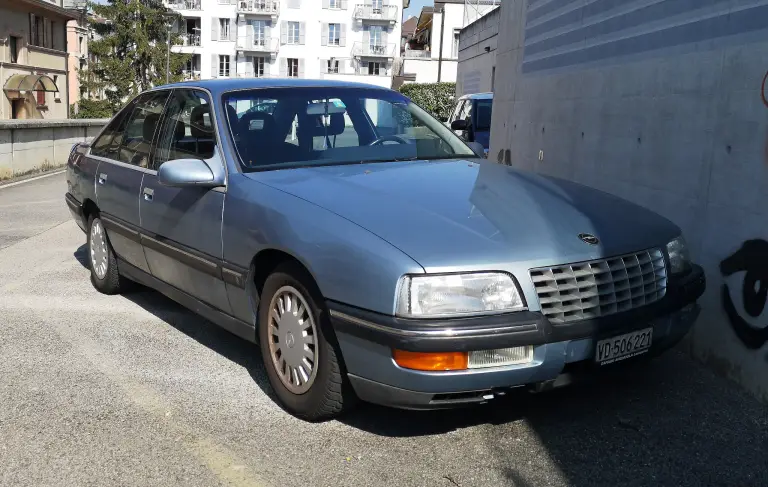
The 1958 Kapitän P1 was wider and lower than its predecessor, with panoramic windows that won praise for their American dream-car look but restricted the driver’s view and narrowed the rear doors. The 2,473 cc six was raised to 80 PS. The P1 lasted a single year, from June 1958 to June 1959, with 34,282 built. From 1964 the Kapitän became the cheapest member of the KAD range alongside the Admiral and Diplomat, and it stayed in production until 1970.
Design and features
- Unitary body in 1939: advanced construction that influenced the Soviet GAZ-M20 Pobeda.
- Germany’s first post-war six: the Kapitän returned in October 1948 with 55 PS.
- American style: chrome and a US-style grille on the 1951 car, panoramic windows on the P1.
- KAD family: from 1964 the Kapitän was the entry model of Opel’s flagship range.
Opel Kapitan versions
- Kapitän 1939: saloon and coachbuilt coupé cabriolets.
- Kapitän 1948: the first post-war six, 55 PS.
- Kapitän 1951: chrome and a US-style grille, 58 to 60 PS.
- Kapitän 1953: new body, 68 to 75 PS, 154,098 built.
- Kapitän P1 (1958): panoramic windows and 80 PS.
- Kapitän of the KAD range (1964–1970): the entry model below the Admiral.
The Kapitän shared the KAD range with the Admiral and Diplomat, and its engine also went into the Opel Blitz. More cars are in the Opel collection.
Video: opel kapitan 1939
Video by zyxel565 on YouTube.
Sources
- Opel Kapitän, English Wikipedia: generations, engines, production figures