The Opel Manta was Opel’s sporting coupé, built in two generations from 1970 to 1988 on the Ascona family car. It competed with the Ford Capri, stayed rear-wheel drive throughout, and its name comes from the manta ray.
Opel Manta at a glance
| Maker | Adam Opel AG, Rüsselsheim |
|---|---|
| Production | 1970–1988 |
| Generations | two |
| Manta A | 1970–1975 |
| Bodies | two-door coupé; three-door hatchback added in the second generation |
| Engines | 1.2, 1.6 and 1.9 litres |
| Gearboxes | four-speed manual or three-speed TH-180 automatic |
| Built, Manta A | 498,553 |
| US name | 1900 Sport Coupé, then Manta |
| Sporting model | GT/E, from 1975 |
Based on one source, the English Wikipedia article on the Opel Manta.
History of the Opel Manta
Manta A
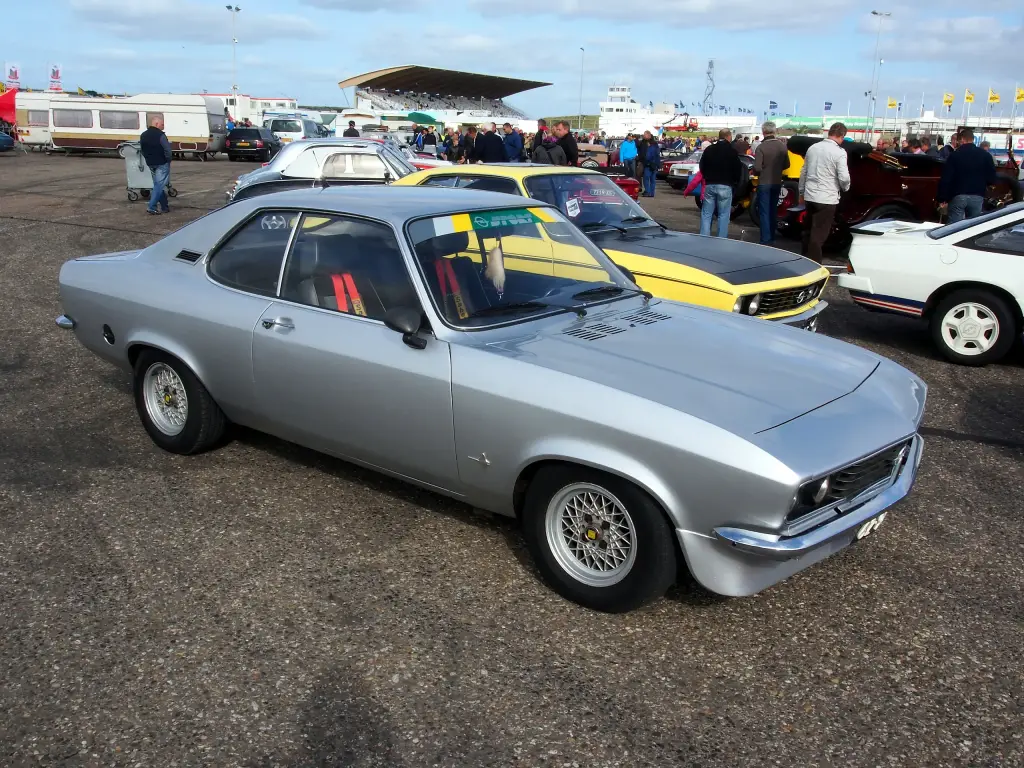
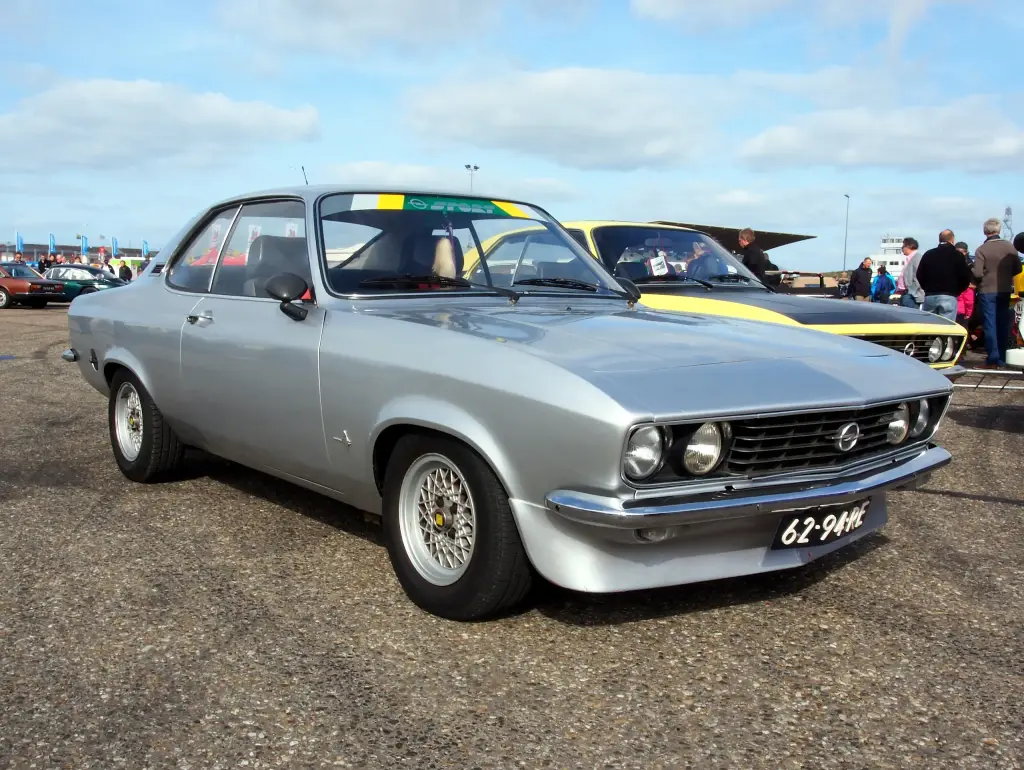
The Manta A was released in September 1970, two months before the Ascona on which it was based, as a direct rival to the Ford Capri. It was a two-door three-box coupé with distinctive round tail lights much like those of the Opel GT, which in 1973 borrowed them for its final model year. The name and a few styling details came from the Manta Ray concept car of 1961, which also influenced the 1968 Chevrolet Corvette C3; both Opel and Chevrolet belonged to General Motors. Between 1970 and 1975 Opel built 498,553 Manta As.
The normal engines were 1.6 and 1.9-litre cam-in-head units, with a small 1.2-litre also offered in continental Europe. Power went through a four-speed manual or a three-speed TH-180 automatic, and the Manta went on to win a large number of rallies in Europe and the United States.
Trims and the GT/E
Most European Mantas were simple trim packages, the most popular being the Berlinetta, close to the Luxus but with rubber bumper trim, a vinyl roof and other extras. The exception was 1975, when Opel offered the GT/E, a fuel-injected version of the European 1.9 whose performance was impressive for the time, and special editions such as the Black Magic with a black and plaid interior and the Swinger in white with red stripes and a bright red fabric interior.
The Manta in America
The Manta was one of the few Opels sold in the United States, imported by GM and sold through Buick dealers from October 1970 for the 1971 model year. It was sometimes badged 1900 Sport Coupé or 1900 Rallye rather than Manta, and only in 1973 did American cars get the Manta name. All US Mantas had the 1.9-litre engine and a heavy-duty radiator, and from 1971 to 1974 there was a Rallye model with a black bonnet, fog lamps, stiffer suspension and quicker steering, plus a Panhard rod and rear anti-roll bar. In 1973 and 1974 the Luxus added corduroy seats and colour-coded interiors, and a single special edition, the Blue Max, was made for America in 1973.
As emissions rules arrived the engine lost power: the 1.9 fell from 90 hp to 75 hp in 1973 with a compression ratio of 7.2:1, and sales dropped as the car no longer matched its looks. For 1975 all Mantas and 1900s in America used Bosch L-Jetronic injection, a system available in Europe only on the GT/E. The last Opels imported to the United States under the Opel name were the Manta and Ascona A in 1975.
Design and features
- Capri rival: a two-door coupé priced and sized against Ford’s best seller.
- Rear-wheel drive: kept through both generations, which made the Manta a favourite of tuners and rally drivers.
- GT/E: the fuel-injected 1.9 of 1975, the fastest and most desirable version.
- Rally success: wins in Europe and the United States with the Manta A.
Opel Manta versions
- Manta 1.2, 1.6 and 1.9: the engines of the first generation.
- Berlinetta: the most popular trim, with rubber bumper trim and a vinyl roof.
- GT/E (1975): fuel-injected 1.9 with sporting trim.
- Black Magic and Swinger: special editions based on the GT/E.
- 1900 Sport Coupé / Rallye: the American versions of the early 1970s.
- Manta B: the second generation, with a three-door hatchback added.
The Manta was based on the Ascona and was replaced in spirit by the Calibra. More cars are in the Opel collection.
Sources
- Opel Manta, English Wikipedia: generations, engines, trims, US market