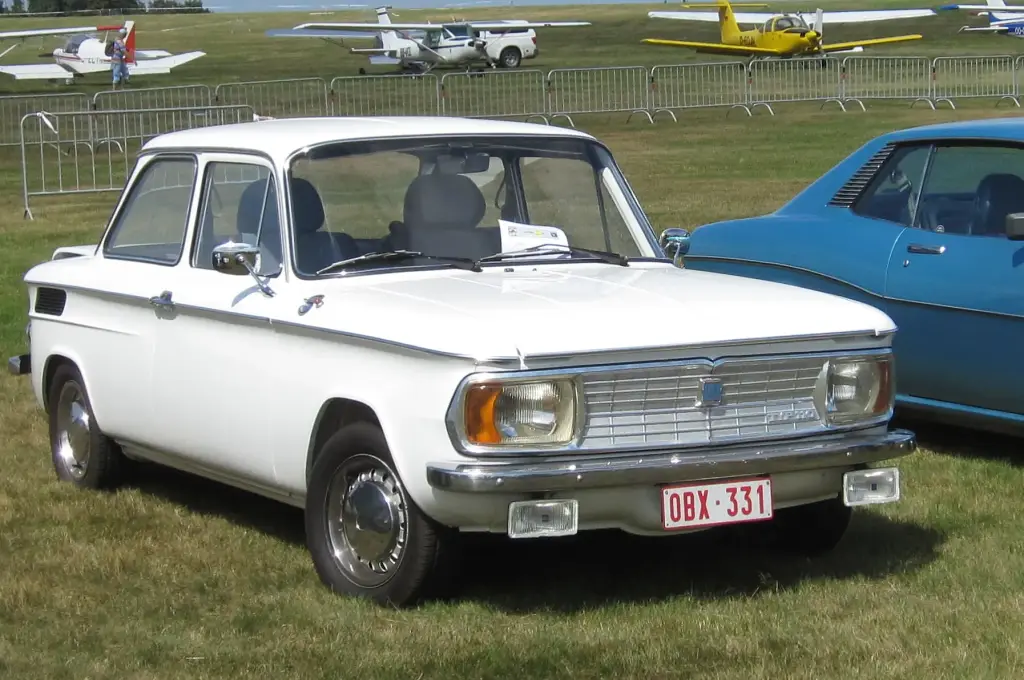
The NSU Typ 110 was presented at the Frankfurt Motor Show in September 1965 as a bigger brother to the Prinz 1000. Two years later the company dropped the Prinz-derived name and sold the same car as the NSU 1200 until December 1972.
NSU 1200 at a glance
| Maker | NSU Motorenwerke, Neckarsulm |
|---|---|
| Also called | NSU 1200 (from 1967) |
| Production | 1965–1972 |
| Based on | NSU Prinz 1000 |
| Length | about 4 m |
| Engine | rear-mounted air-cooled four, transversely mounted |
| 1085 cc | 49 PS (36 kW), also used in the Prinz 1000 TT |
| 1177 cc | 60 PS (44 kW), Typ 110 S and 110 SC from autumn 1966 |
| 1200 (1967) | 54 PS (40 kW) |
| Front suspension | double wishbone, longer travel than the 1000 |
| Rear suspension | semi-trailing arms |
| Brakes | discs at the front |
| Built | about 74,000 Typ 110/110 SC; about 256,000 NSU 1200 |
Based on one source: the English Wikipedia article on the NSU Typ 110, which covers both the Typ 110 and the later NSU 1200.
History of the NSU 1200
NSU’s passenger cars had all carried the Prinz name until 1965. The Typ 110 was meant to change that. Built on the Prinz 1000 floorpan but with a longer wheelbase and a front overhang, it offered more space for passengers and luggage and, at four metres long, moved NSU into the lower end of the middle-class saloon market in West Germany. The Prinz name was deliberately dropped for the new model.
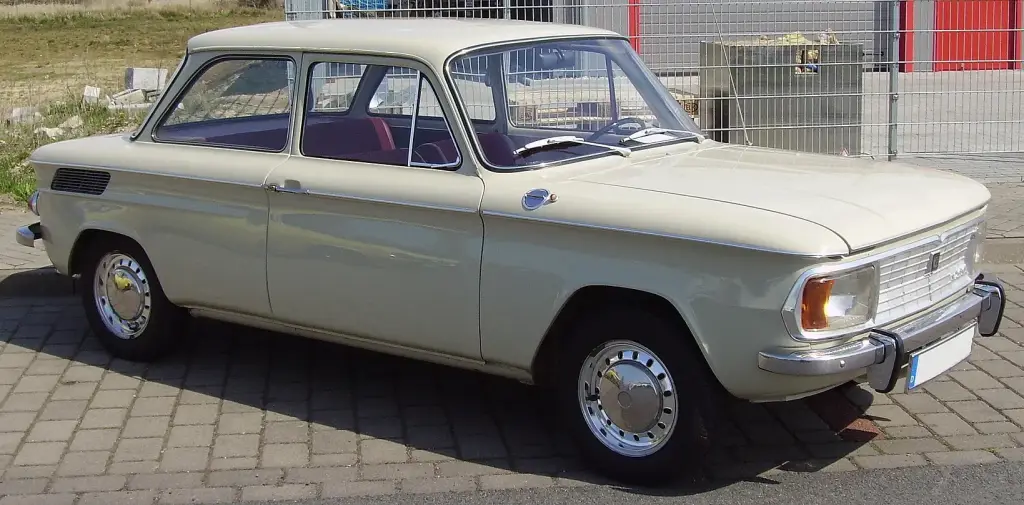
The car was easy to recognise from the front: large rectangular headlights flanked a broad chrome-effect panel that looked like a grille without being one. Inside, domestic cars had a strip speedometer of the kind Opel had just introduced on the Rekord B, a strip of simulated wood across the dashboard and a new heating and ventilation system. Reclining front seats cost extra.
The engine sat at the back, air-cooled and mounted transversely, with a chain-driven single overhead camshaft. The initial 1085 cc unit produced 49 PS; the same engine went into the sporting Prinz 1000 TT with a slightly higher 54 PS. In autumn 1966 a 1177 cc engine of 60 PS arrived in the Typ 110 S and 110 SC. The rear suspension used semi-trailing arms shared with the 1000, but the front was new: double wishbones with longer arms, better noise isolation and more wheel travel.
In 1967 NSU simplified its range and rebranded the car as the NSU 1200, with claimed output back at 54 PS. A comfort version, the 1200 C, came with a generous list of extra equipment. Production ended in December 1972.
British road tests show what the changes were worth. Autocar tested the 1085 cc car in January 1966 and the 1177 cc 110 SC in July 1967: top speed rose from 87 to 93 mph, and 0–50 mph came down from 12.3 to 10.0 seconds. Fuel consumption improved by about 10 per cent, from 26.9 to 29.7 mpg. The testers liked the light build and lively engine, which put the car near the top of the small-saloon performance tables, but criticised poor directional stability in crosswinds — a real problem on the Autobahn.
Design and features
- Rear-mounted four-cylinder engine: air-cooled, transverse, with a chain-driven overhead camshaft and plenty of power for its size.
- Room for four metres: longer wheelbase and front overhang gave cabin and boot space the Prinz 1000 could not offer.
- New front suspension: double wishbones with longer travel and better isolation than the 1000.
- Easy to repair: NSU claimed the clutch could be changed in 30 minutes, and service intervals were 7,500 km against the 5,000 km usual at the time.
- Rust protection: zinc-coated underbody, advertised as superior resistance to corrosion.
NSU 1200 versions
- Typ 110 (1965–1967): 1085 cc, 49 PS, strip speedometer and simulated wood dashboard.
- Typ 110 S / 110 SC (1966–1967): 1177 cc, 60 PS; the SC was tested in Britain at £799 against £678 for a Triumph Herald 12/50.
- NSU 1200 (1967–1972): the renamed car, 54 PS, sold in Germany to the end of 1972.
- NSU 1200 C: comfort version with a generous range of special equipment.
The 1200 grew out of the NSU Prinz range, and the same body style was carried into the Wankel-engined NSU Ro 80. More NSU models are in the NSU collection.
Sources
- NSU Typ 110, English Wikipedia: design, engines, renaming, road tests, production totals