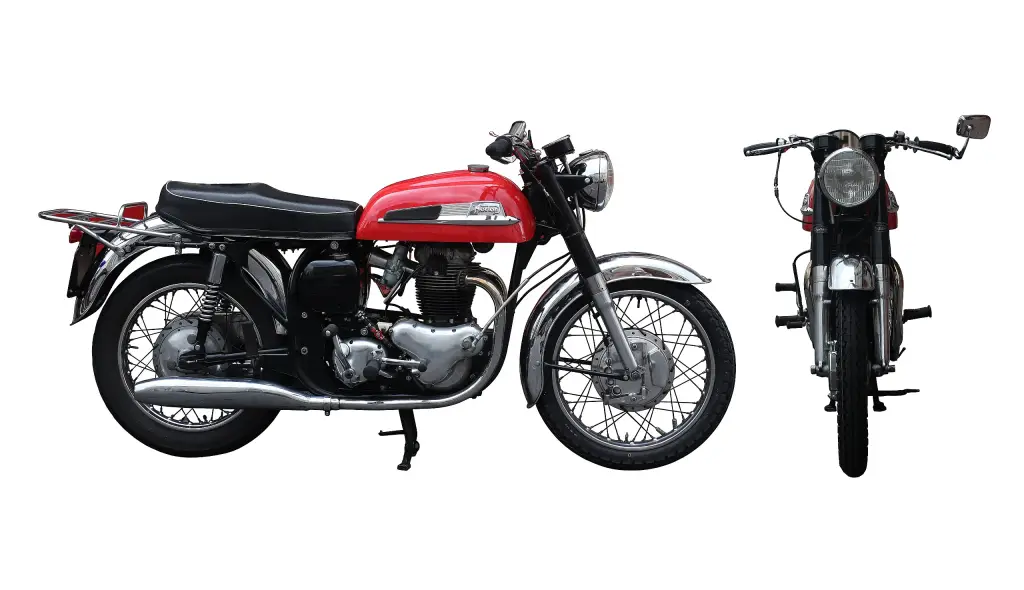
The Norton Atlas was a Norton motorcycle made between 1962 and 1968, until it was replaced by the Norton Commando. It was the largest development of the Dominator twin, with a 745 cc engine in the famous Featherbed frame, and its styling was aimed squarely at the American market.
Norton Atlas at a glance
| Maker | Norton Motorcycle Company |
|---|---|
| Production | 1962-1968 |
| Engine | 745 cc air-cooled parallel twin, overhead valves |
| Compression | 7.6:1 |
| Carburettor | single 376 Amal Monobloc; second added in 1964 |
| Power | 55 bhp (41 kW) at 6,500 rpm |
| Frame | slimline Featherbed |
| Forks | Roadholder, with adjustable Girling rear shocks |
| Electrics | 6 volt; 12 volt from 1964 |
| Gearbox | four-speed |
| Replaced by | Norton Commando |
Based on one source, the English Wikipedia article on the Norton Atlas.
History of the Norton Atlas
A bigger Dominator for America
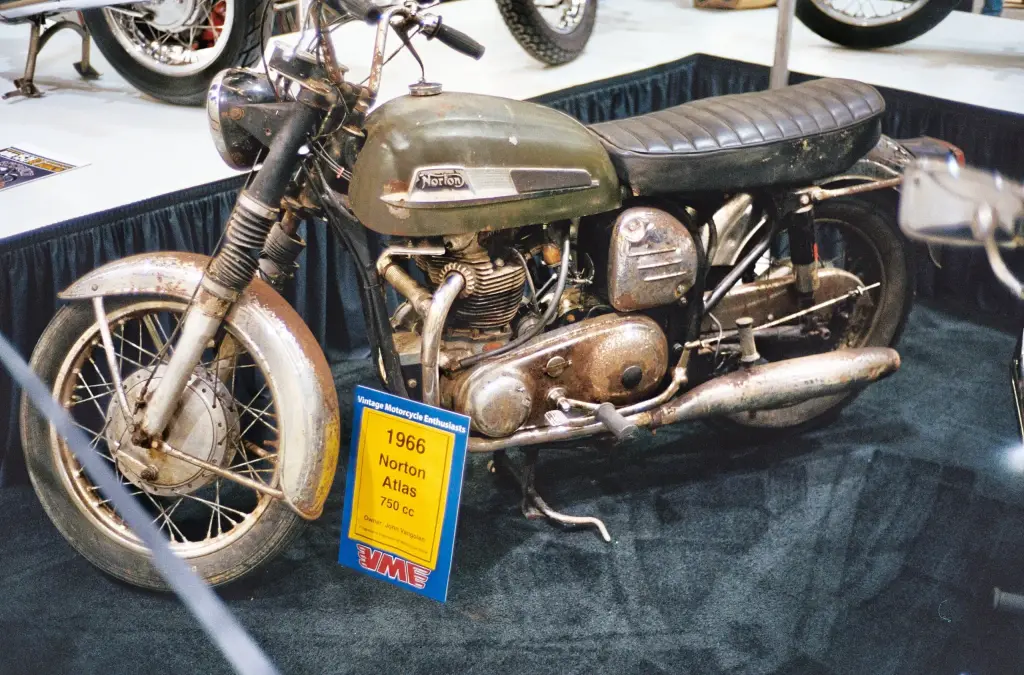
The Mark 1 Atlas was launched as the 750SS in the early 1960s, but by the time it appeared around 1962 it was being called the 750 cc Atlas. Designer Bert Hopwood’s 1949 497 cc Dominator engine had been bored and stroked over the years to 745 cc, via 600 cc and 650 cc versions, to appeal to the American market, and at first it was produced only for export. The Atlas used Norton’s famous Featherbed frame.
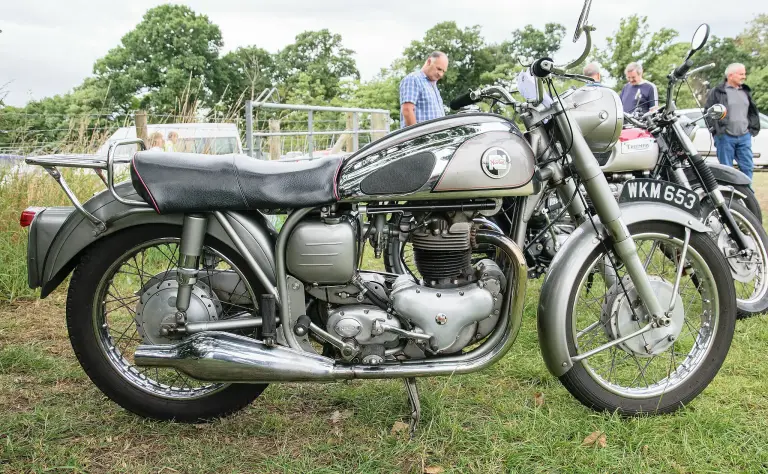
The styling was aimed at the United States, with high-rise handlebars, a small 2.5-gallon petrol tank and valanced chrome mudguards and chain guard. A heavy-duty WM3-18 rear wheel completed the look, and a Lucas Competition magneto was supplied as standard.
Engine and chassis
The engine had a lower compression ratio than the Dominator, at 7.6:1, and was fitted with a single 376 Amal Monobloc carburettor giving 55 bhp (41 kW) at 6,500 rpm. The design produced excessive vibration at high engine speeds, so the compression ratio was reduced. The Atlas shared many cycle parts with the last of the Dominator twins and had Norton’s four-speed gearbox and heavy-duty clutch. Electrics were 6-volt, and the bike used Roadholder forks, adjustable Girling rear shocks and a slimline Featherbed frame.
The 1964 update and the end
In 1964 the Atlas was upgraded to 12-volt electrics and gained a second carburettor and wider fork yokes. A British version was launched with flat bars and twin instruments. The Atlas continued to be built until 1968, but by then the Norton Commando had taken over.
Specialist tuners built Atlas-based machines: Dunstall produced the Domiracer 750 racers and offered race-styled roadsters called the Dominator 750, while a few Rickman Metisse frames were made or modified to take Norton engines. The factory-built AMC-Norton hybrids included the Atlas-powered, Matchless-framed P11 off-road trailster. Over seven thousand Atlas hybrids were produced at Plumstead between late 1963 and late 1968, using Atlas engines and various Matchless frames under the designations G15 or N15 for roadsters and P11 for the trailster.
Design and features
- Featherbed handling: the slimline Featherbed frame that made the Dominator famous, in its final form.
- 745 cc torque: the biggest version of Bert Hopwood’s twin, tuned for American roads.
- American style: high-rise bars, a small tank and valanced chrome mudguards.
- Hybrid base: the Atlas engine also powered the Matchless-framed G15, N15 and P11 hybrids.
Norton Atlas versions
- Atlas 750 (1962): the original single-carburettor export model with 6-volt electrics.
- 1964 Atlas: 12-volt electrics, second carburettor and wider fork yokes.
- UK Atlas: flat handlebars and twin instruments.
- G15 and N15: Atlas-engined Matchless-framed roadsters built at Plumstead.
- P11: the Atlas-powered trailster version.
The Atlas grew out of the Norton Dominator and was replaced by the Norton Commando. More Norton motorcycles are in the Norton collection.
Video: 1965 Norton Atlas Cafe Racer
Video on YouTube.
Sources
- Norton Atlas, English Wikipedia: development, equipment, hybrids