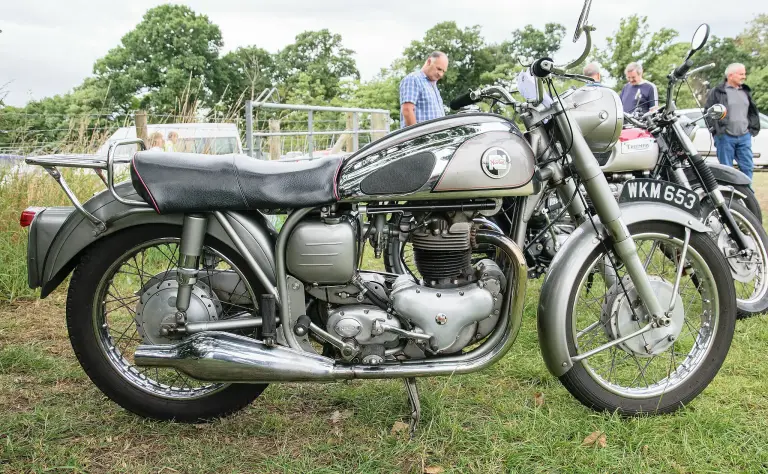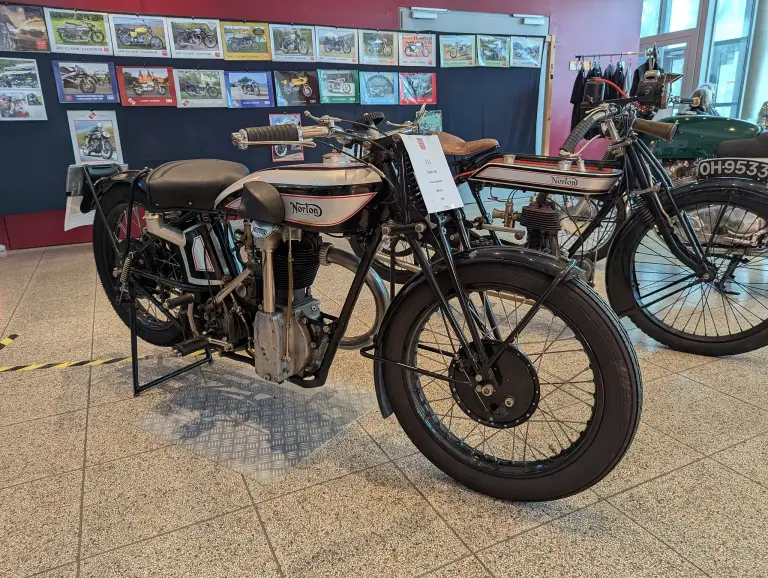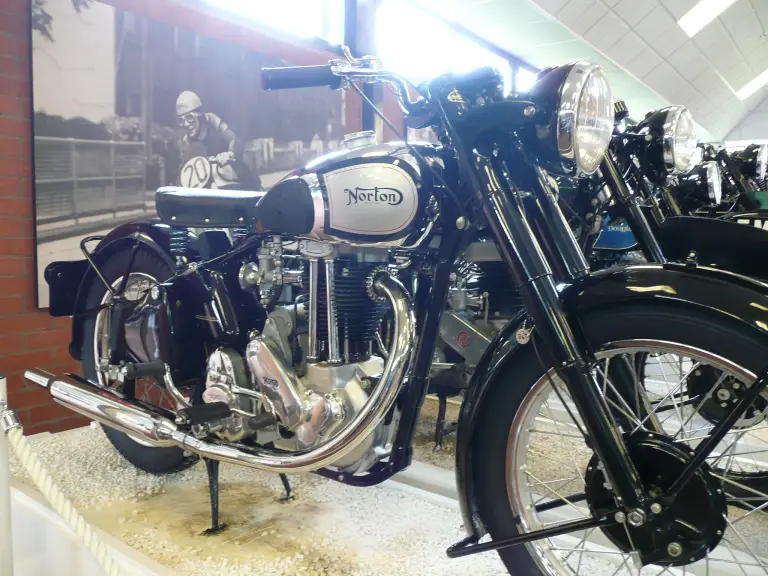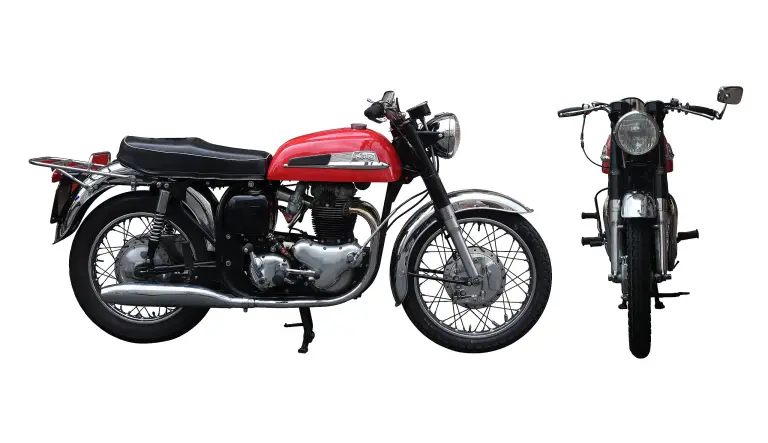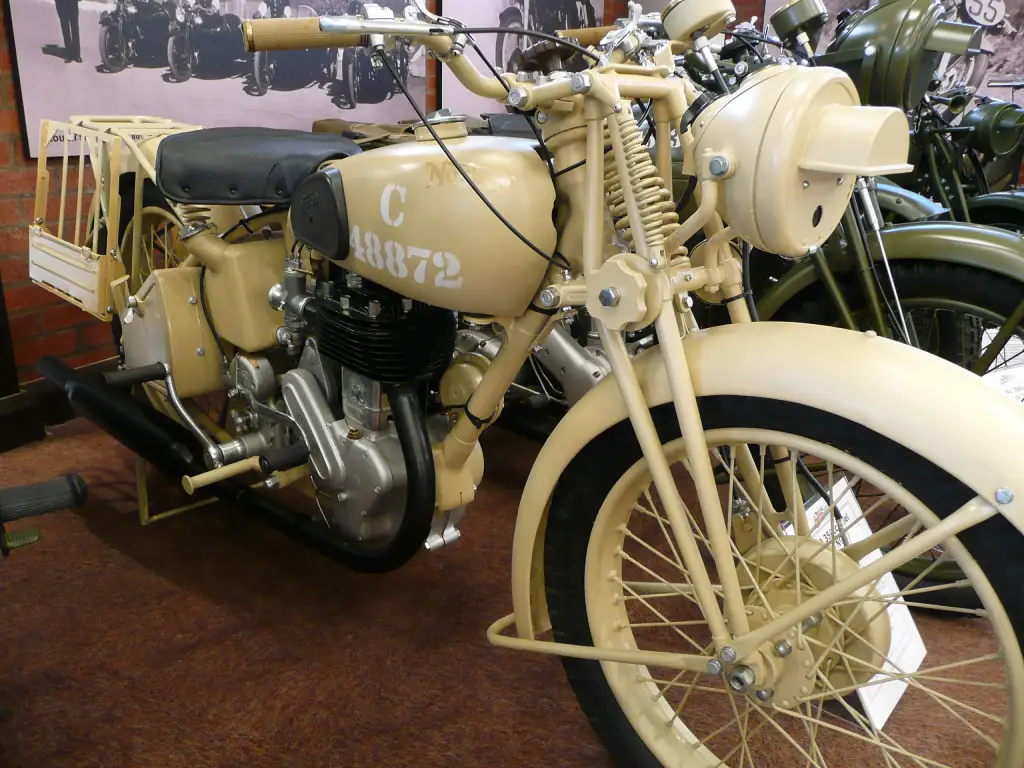
The Norton 16H is the designation given to a long series of Norton motorcycles made between 1911 and 1954, all built around a 490 cc side-valve single with a 79 x 100 mm bore and stroke. The H stands for the Home model, as distinct from the Colonial export version. Its military form, the WD16H, became one of the main motorcycles of the British Army in the Second World War.
Norton 16H at a glance
| Maker | Norton, Bracebridge Street, Birmingham |
|---|---|
| Production | 1911-1954 |
| Engine | 490 cc single, side valve, 79 x 100 mm |
| Designation | 16H = Home model; Colonial had higher ground clearance |
| Gearbox | Sturmey-Archer, fitted to the Model 16 |
| Military version | WD16H, ordered from 1936 |
| Military output | nearly 100,000 machines |
| Front fork | girder; telescopic from 1947 |
| Colours | Army Service Green, khaki green or brown, olive green; RAF blue before 1939 |
| Racing heritage | 21 world records |
| Production end | mid-1950s |
Based on one source, the English Wikipedia article on the Norton 16H.
History of the Norton 16H
From TT racer to side-valve single
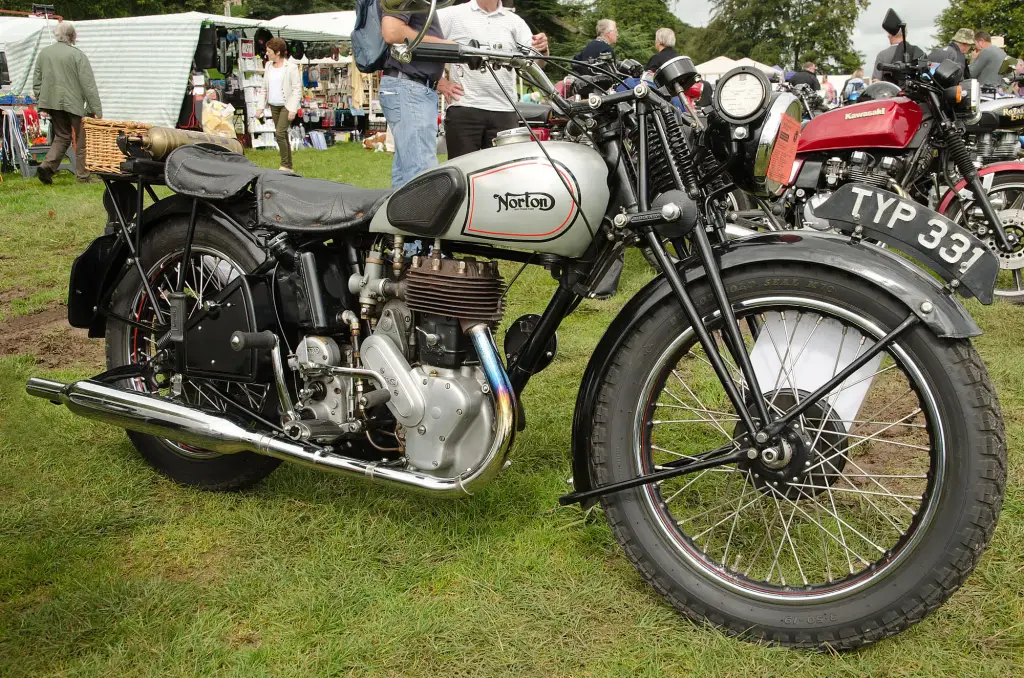
In 1911 James Lansdowne Norton entered a side-valve 490 cc single in the new 500 cc Senior Class race at the Isle of Man TT. He was unplaced, but the following year the improved motorcycle won the Brooklands TT and set three world records. A drive chain was developed to replace the belt drive, and although production was delayed by the First World War, the Model 16 as it became known gained a Sturmey-Archer gearbox. Its racing heritage eventually included 21 world records. In 1921 Norton launched the Colonial, a Model 16 with higher ground clearance for poor roads, and designated the British model the 16H. Despite its early racing successes, the 16H was regarded as the poor man’s Norton and never earned the superlatives reserved for the racing machines.
The WD16H at war
A 16H was first offered for military evaluation in 1932, together with a Norton Model 18 and a Model 19. It was found suitable, and Norton designers began working with the War Office on a series of developments. Military orders for the type, designated WD16H, were placed from 1936 and continued throughout the Second World War, setting a ten-year record for the longest period in which the War Office bought a single make of motorcycle. The entire staff of the Bracebridge Street factory was needed to meet demand, and even the racing team found itself on the WD16H production line. The machine was used as a despatch bike, for training, reconnaissance, convoy control and escort duties, and British Army Nortons were also supplied to Australian, New Zealand, Indian and Canadian forces.
Military motorcycles left the factory in Army Service Green, khaki green, khaki brown or olive green, depending on the colour specified at the time; pre-war RAF machines were delivered in RAF Blue. Some machines were painted sand-coloured desert camouflage by local workshops in the Middle East and used in Palestine and during the North Africa campaign. The exact number and manufacturing dates of machines built after the beginning of 1940 are not certain, because the Norton assembly books for the military motorcycles are missing and were probably destroyed.
After the war
At the end of hostilities in 1945 there were thousands of Model 16H Nortons all over the world. Some remained in use with British and Commonwealth armed forces until the end of the 1950s, and many were sold by the War Department to the Dutch, Belgian, Danish, Greek and Norwegian armies. The rest went to dealers, who converted them to civilian colours and specifications. The civilian machine had a short centre stand as well as the usual rear-wheel main stand, and its girder fork springs, wheel rims and headlamp were chromed. Not many civilian 16H motorcycles with girder frames were made, which makes them the rarest version of the model.
The 16H and the Model 18 were the first civilian models Norton built after the war. In 1947 the 16H received its final modification, telescopic forks, which improved the handling and gave the bike a more modern look. The basic engine layout remained popular, and Norton continued production until the mid-1950s, when twin-cylinder motorcycles had become the fashion. The 16H still has a strong following among enthusiasts.
Design and features
- Side-valve simplicity: a 490 cc single with a long 100 mm stroke, easy to maintain and to repair in the field.
- Military record: the WD16H was ordered by the War Office for ten years without a break, the longest run for any single make.
- Commonwealth service: British Army machines were also supplied to Australian, New Zealand, Indian and Canadian forces.
- Long life: the same basic design was built from 1911 to 1954 and stayed in military use into the late 1950s.
Norton 16H versions
- Model 16 (from 1911): the original side-valve single, later with a Sturmey-Archer gearbox.
- Colonial (1921): a Model 16 with higher ground clearance for rough roads overseas.
- 16H Home model: the standard British-market version.
- WD16H (1936-1945): the War Department motorcycle, built in several military colours.
- Post-1947 16H: telescopic forks and a more modern look.
- Civilian girder-fork 16H: converted ex-military machines, now the rarest variant.
The 16H was the side-valve stablemate of the overhead-valve Norton ES2, and its engine layout led on to the Model 7 Dominator twin. More Norton motorcycles are in the Norton collection.
Video: Norton 16H video, part 2
Video on YouTube.
Sources
- Norton 16H, English Wikipedia: development, military service, post-war use