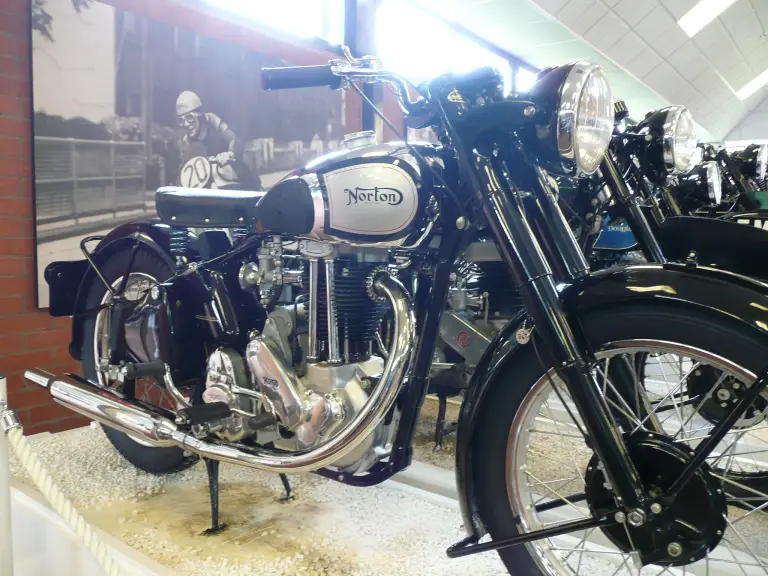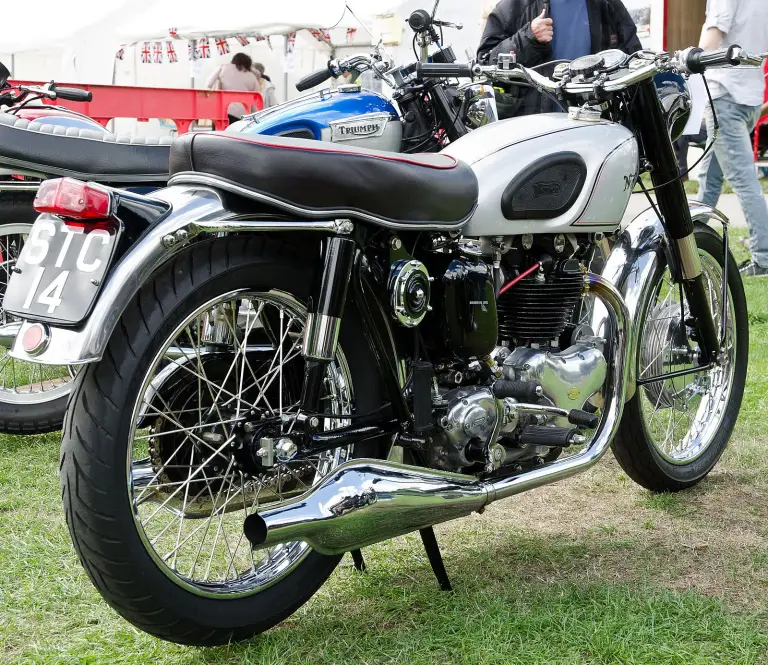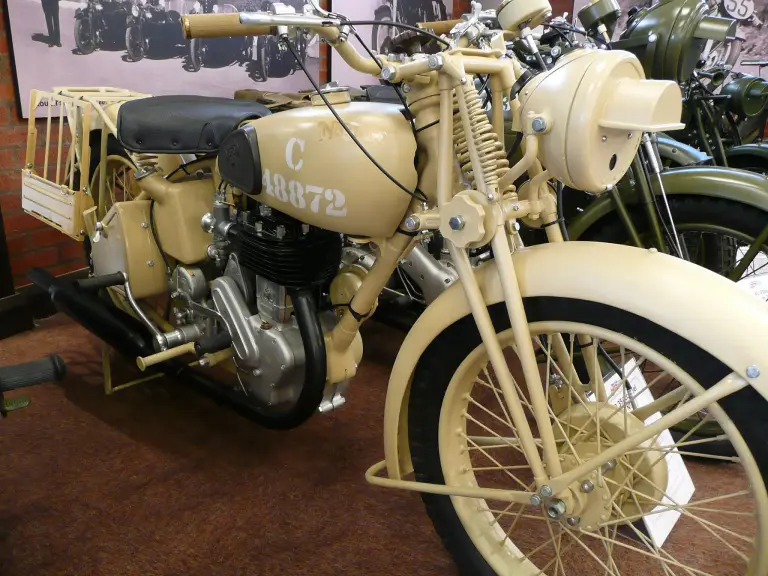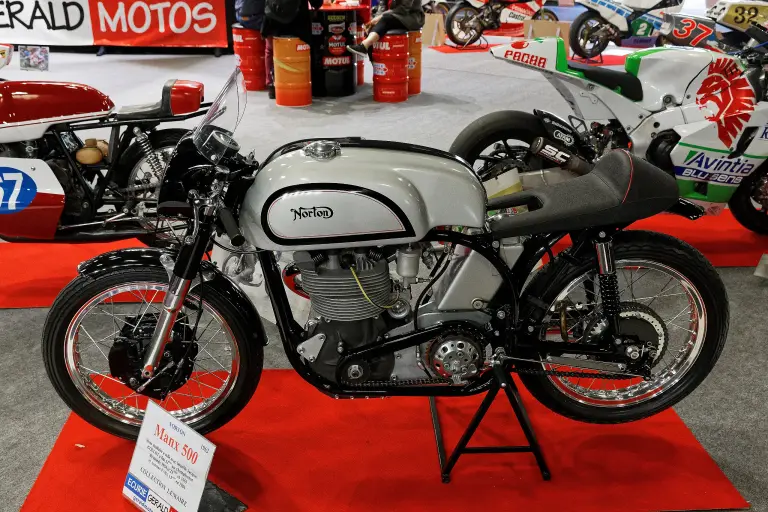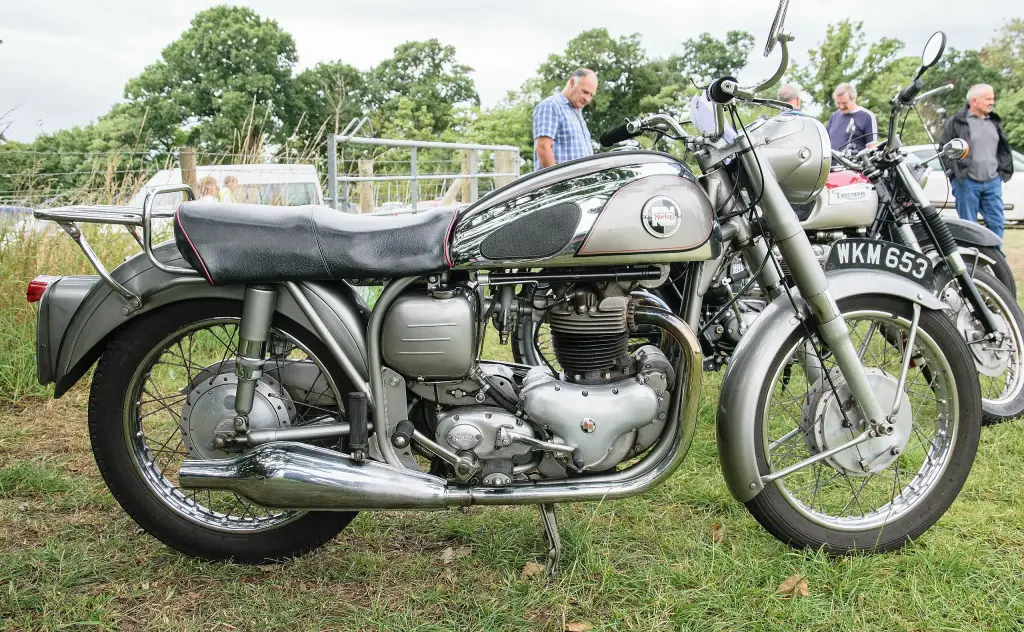
The Norton Dominator is a twin-cylinder motorcycle developed by Norton to compete against the Triumph Speed Twin. The original Dominator was designed in 1947 and 1948 by Bert Hopwood, who had been on the Speed Twin design team at Triumph, and was on sale from mid-1949. It set the pattern for Norton twins for the next thirty years.
Norton Dominator at a glance
| Maker | Norton Motorcycle Company, Birmingham |
|---|---|
| Production | 1949-1967 (Dominator series) |
| Engine | air-cooled overhead-valve parallel twin, 360-degree crankshaft |
| First model | Model 7, 497 cc |
| Bore x stroke | 66.0 x 72.6 mm (Model 7) |
| Designer | Bert Hopwood |
| Rival | Triumph Speed Twin |
| Frames | plunger, then Featherbed from 1951 |
| Models | Model 7, 77, 88, 99, Manxman, 650SS, Atlas |
| Racing | Domiracer and works Dominators |
Based on one source, the English Wikipedia article on the Norton Dominator.
History of the Norton Dominator
A twin to beat Triumph
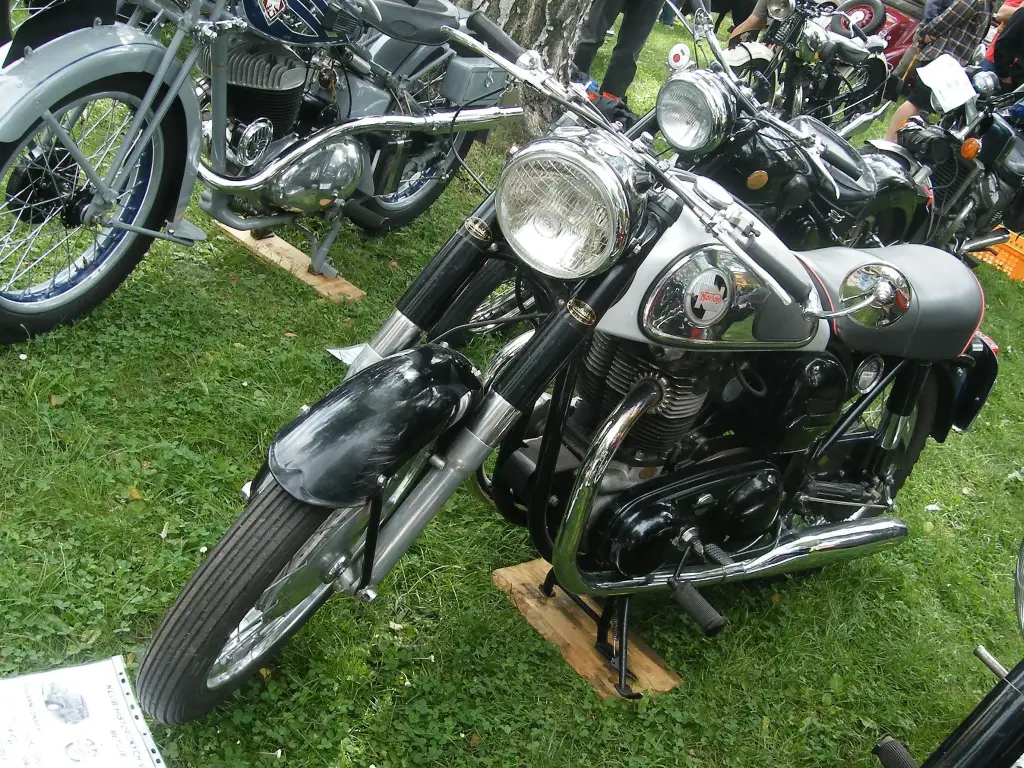
The Dominator was developed by Norton to compete against the Triumph Speed Twin. Bert Hopwood, who had been on the Speed Twin design team at Triumph, designed the engine in 1947 and 1948, and the motorcycle went on sale in mid-1949. The design set the pattern for Norton twins for the next thirty years.
The first Dominator, the Model 7, had a 497 cc parallel twin engine with iron cylinders and cylinder head and a Lucas K2F magneto. The crankshaft was a 360-degree layout with two main bearings, and a single camshaft at the front of the engine was driven by gears and chain. The rocker box was integral with the head, so there were fewer gasket faces to leak and less valve noise. The long-stroke engine, with a 66.0 x 72.6 mm bore and stroke, was mildly tuned and produced good torque low down. For the first few years a plunger frame was used, but in 1953 the Model 7 was upgraded with a single-downtube swinging-arm frame, a 19-inch front wheel and pear-shaped silencers. It remained in production until 1955 and was often used with a sidecar, which could not be fitted to the later Featherbed Dominators.
Featherbed frames
Duplex cradle frames known as Featherbed were introduced in two types: the original design, later called wideline, was discontinued from 1960, when an updated slimline version appeared and continued until about 1970 on the low-specification 650 cc Norton Mercury. The Featherbed frame was first designed and raced by the McCandless brothers in Ireland, and the design was bought by Norton, which had the frames made by Reynolds because the works did not have the welding capacity to build them itself.
The Featherbed frame led to the Model 88 Dominator, also called the Dominator De Luxe, which used the same 497 cc engine and was developed in 1951. Originally intended for export, it was sold on the home market from 1953. The 88 suffered from oil leaks from the primary chain case, and the outdated Norton works caused quality-control problems for the 200 Model 88s produced each week. The 597 cc Featherbed-framed Model 99 Dominator was introduced in September 1955 as a larger-capacity companion to the 500 cc Model 88. The extra capacity gave the 99 an output of 31 bhp, helped by the higher compression ratio possible with the alloy head introduced a year earlier; full-width alloy hubs with improved brakes had also arrived a year before, preparing for the increase from 500 to 600 cc.
The first Model 77 was a rigid-framed, telescopic-forked Dominator of 500 cc produced from 1950 and supplied to the Australian market only, with the all-iron Dominator engine, an oil pressure gauge in ES2 style and a flat-bottomed petrol tank; about 240 were made between 1950 and 1952. A 596 cc Model 77 Dominator was introduced in late 1956, using the cycle parts of the ES2 and the 600 cc Dominator 99 engine; it was sold as a sidecar motorcycle alongside the 99 but was dropped after 1957, when sidecar Featherbeds arrived.
The 650s and the Atlas
From the 1960 model year the Featherbed frame was altered so that the tubes in front of the seat were narrower for rider comfort, and the seats, tanks and whole styling of the Dominator were redesigned to suit, with a large metal tank badge, two-tone paint schemes and optional enclosed bodywork on the Deluxe versions of the 88 and 99 in the manner of the Triumph bathtub models. A 650 cc model was added late in 1960: the Norton Manxman, built first from 7 November 1960 to September 1961 as a limited edition for the USA in custom-cruiser style, with high handlebars, polychromatic blue paint and a bright red seat piped in white. In September 1961 the 650SS was introduced with café-bar style and twin carburettors; the SS stood for Sport Special, the 600 cc models were discontinued, and the 650SS was soon known as the best of the Dommies. A development with an enlarged 745 cc engine, the Atlas, was available from 1962.
Norton also raced the Dominator. Engineer Doug Hele joined the factory in 1956 under AMC and was briefed to develop an engine for Daytona under AMA rules, which required production-based roadsters with a compression ratio no higher than 8.5:1 and a kick starter. Dennis Greenfield and Fred Swift won the 500 cc class in the 1960 Thruxton 500 for road-legal production machines. Norton used race-tuned Dominators from about 1960, though they were outclassed by the Manx Norton. The highly developed 500 cc Dominator engine produced 55 bhp and revved to 8,000 rpm, and in a special lightweight frame called the lowboy it became the factory Domiracer, 35 lb lighter than the Manx. In the 1961 Isle of Man TT Tom Phillis took it to third place and lapped at over 100 mph.
Design and features
- Hopwood engine: a 360-degree parallel twin with an integral rocker box, designed to beat the Triumph Speed Twin.
- Featherbed frame: the McCandless duplex cradle, made by Reynolds, that gave the Dominators their handling.
- Model range: from the 497 cc Model 7 and 88 to the 597 cc Model 99 and the 650 cc Manxman and 650SS.
- Racing development: the Domiracer lowboy, 35 lb lighter than a Manx and good for 55 bhp.
Norton Dominator versions
- Model 7 (1949-1955): the original 497 cc Dominator, later with a swinging-arm frame.
- Model 77 (1950-1952): a rigid-framed 500 cc version for Australia, about 240 built.
- Model 88 (1951): the 497 cc Featherbed Dominator, also called the Dominator De Luxe.
- Model 99 (1955): the 597 cc Featherbed version with 31 bhp.
- Manxman (1960-1961): a 650 cc limited edition for the USA, in custom-cruiser style.
- 650SS (1961-1967): the twin-carburettor 650, the best of the Dommies.
- Atlas (1962-1968): the 745 cc development of the Dominator.
The Dominator led to the Norton Atlas and, through it, to the Norton Commando; the 650SS was its fastest road version. More Norton motorcycles are in the Norton collection.
Video: Norton Dominator
Video on YouTube.
Sources
- Norton Dominator, English Wikipedia: models, frames, racing