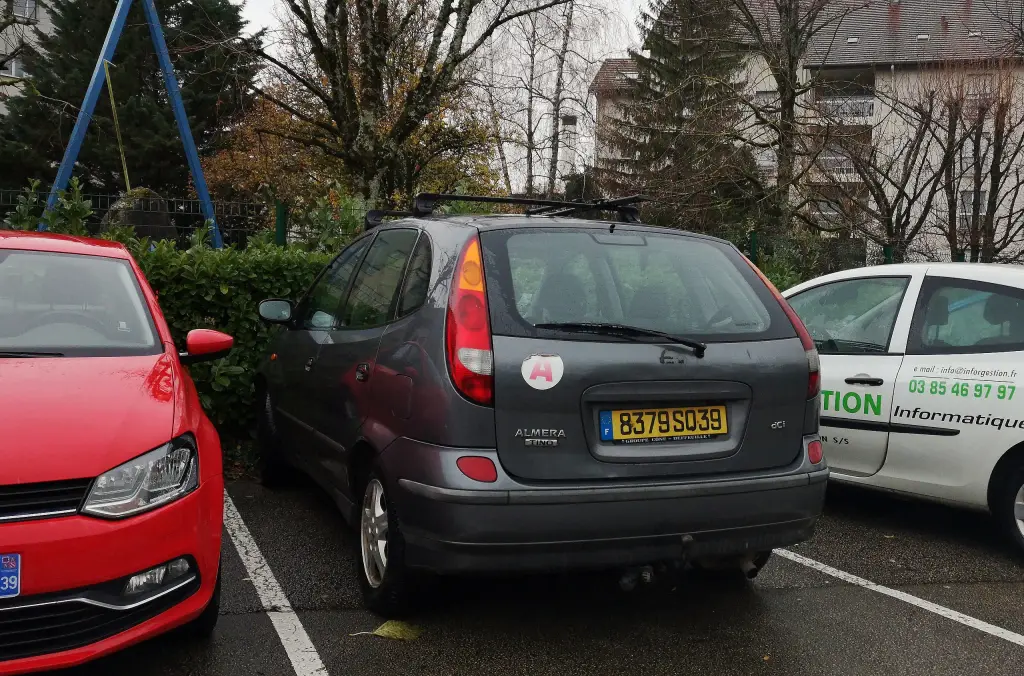
The Nissan Almera Tino was a car built between 1998 and 2003 in Japan as the Nissan Tino, while Nissan’s Spanish factory made the Almera Tino between 2000 and 2006. It has been described as a mini MPV, a compact people carrier or an estate car.
Nissan Tino at a glance
| Japanese production | 1998–2003 |
|---|---|
| Spanish production | May 2000 – February 2006 |
| Basis | floorpan of the Almera small family car |
| Japanese engines | 1.8 and 2.0 petrol |
| European engines | petrol from Sunderland, 2.2-litre YD22DDT turbodiesel from Madrid |
| Transmissions | five-speed manual; four-speed automatic after facelift; Hyper CVT with the 2.0 |
| Japanese trims | J, G, X, Aerosports |
| Hybrid | Tino Hybrid, April 2003, 100 cars |
| Facelifts | Japan October 2002, Spain January 2003 |
based on one source: the English Wikipedia article on the Nissan Almera Tino.
History of the Nissan Tino
Launch
The Almera Tino was based on the floorpan of the Almera small family car, whose second generation arrived at the beginning of 2000. It launched in Europe in May that year and was sold until the end of 2006, production stopping in February 2006 just before the Almera hatchback and saloon were dropped. In Japan it was simply the Tino, sold from 1998 to 2003 with the 1.8 and 2.0 petrol engines only. Spanish production began in May 2000 in Barcelona, with the 2.2-litre direct-injection turbodiesel built at Nissan’s Madrid engine plant and the petrol engines for Europe built at Sunderland.
Engines and trims
In Japan and Europe the 2.0-litre petrol engine was only available with Nissan’s Hyper CVT transmission. The 1.8 came only with a four-speed automatic in Japan, while European buyers could only have a five-speed manual until the automatic arrived after the facelift, and diesels were manual only, with a six-speed after the 2003 facelift. Japanese equipment levels were J, G, X and Aerosports; European markets used names such as Comfort, Tecna and Acenta, while British buyers chose among S, SE, SE+, SVE and others. There were special editions including Twister, DVD, Hurricane and a Haribo version for France. Japanese television adverts in 1999 featured Mr. Bean, played by Rowan Atkinson.
Hybrid and facelifts
The Tino Hybrid went on sale in Japan in April 2003 with the 1.8-litre petrol engine revised to 101 PS; emissions improved considerably but fuel economy only slightly, and Nissan stopped the model quietly after 100 cars sold online. Most cars had climate control and electric front windows, with front and side airbags available, along with ABS, traction control, EBD and active headrests; later models gained a reversing camera and navigation on a 5.8-inch screen in a redesigned dashboard. Early Japanese cars had a front bench with a sixth seat belt. A light facelift appeared in Japan in October 2002, reducing the range to the 1.8 with five seats, and the Spanish-built car was updated in January 2003 with a new steering wheel, clear front indicators and revised engines, the diesel becoming the common-rail dCi of 112 or 136 PS.
Design and features
- Almera base: the same floorpan as the small family car.
- Hyper CVT: the only transmission offered with the 2.0 petrol.
- Tino Hybrid: a 100-car online experiment in Japan.
- Mr. Bean adverts: Rowan Atkinson fronted the 1999 Japanese campaign.
Nissan Tino versions
- Nissan Tino (Japan, 1998–2003): the Japanese version with 1.8 and 2.0 engines.
- Almera Tino (Europe, 2000–2006): the Barcelona-built car.
- Tino Hybrid (2003): 100 cars sold online.
- Almera Tino dCi (2003–2006): the common-rail diesel versions.
The Almera Tino shared its base with the Almera and was later replaced in Europe by the Note. More cars are in the Nissan collection.
Video: Nissan Almera Tino Euro NCAP crash test
Video by YouTube on YouTube.
Sources
- Nissan Almera Tino, English Wikipedia: production, engines, transmissions, trims, hybrid, facelifts