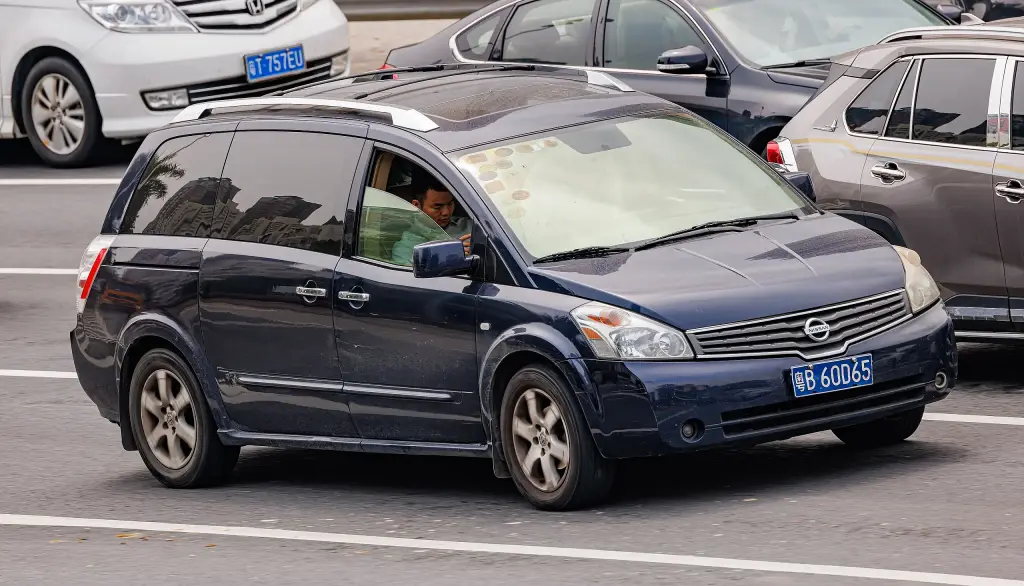
The Nissan Quest was a minivan sold in North America from the 1993 to 2017 model years. It was the successor to the Japanese-designed Nissan Van and Nissan Axxess and the first Japanese-brand minivan developed specifically for North America. The first two generations were made in a joint venture with Ford.
Nissan Quest at a glance
| Model years | 1993–2017 |
|---|---|
| Role | successor to the Nissan Van and Axxess |
| Joint venture | with Ford, from 1987 |
| First two generations | Ford VX54 platform, Mercury Villager twin |
| Built by Ford at | Ohio Assembly, Avon Lake |
| Powertrain | Nissan, derived from the Maxima |
| Third generation | Nissan FF-L platform, built at Canton, Mississippi |
| Fourth generation | Nissan D platform, widened Elgrand |
| Final assembly | Nissan Shatai, Kanda, Fukuoka |
based on one source: the English Wikipedia article on the Nissan Quest.
History of the Nissan Quest
The Ford joint venture
In 1987 Ford and Nissan agreed to develop an all-new vehicle for the minivan segment planned for 1991. Ford had no minivan for its Mercury division and Nissan was struggling to adapt its compact cars to the American market, so the deal let both share costs. Development began later that year under the codename VX54, with final designs chosen in 1989 and the shared model designed by Nissan Design International in La Jolla. Ford’s version went to Mercury as the Villager. For Nissan the project expanded American-sourced content: it launched with 140 new suppliers and 75 percent domestic parts, aiming for 90 percent.
Built in Ohio
Under the joint venture Nissan contributed the powertrain, derived from the Maxima, and major body stampings from its Smyrna plant, shipping them to Ford for final assembly at Ohio Assembly in Avon Lake. The first Quest left the line on 14 April 1992. Prototypes had been tested at Ford and Nissan tracks in 1990 and on the road through 1991. The Quest and Villager shared the Ford VX54 platform and looked like neither the Ford Aerostar nor the Windstar.
Later generations
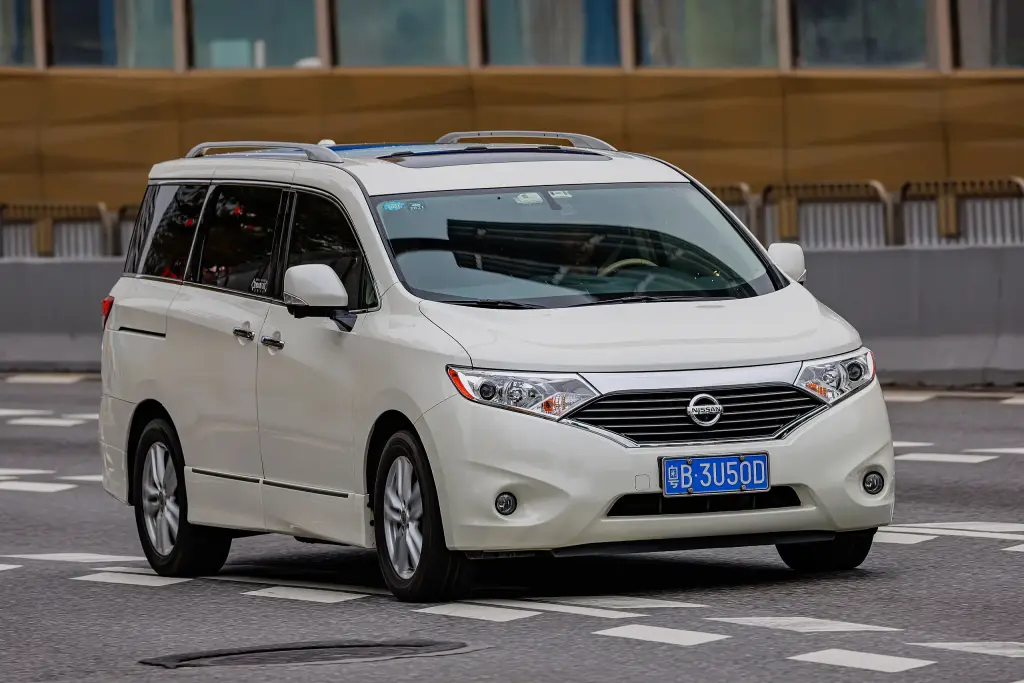
When the joint venture ended, the third generation moved to the Nissan FF-L platform, growing in size and sharing chassis parts with the Maxima; Nissan built it entirely at Canton, Mississippi. The fourth generation used the Nissan D platform as a widened version of the Nissan Elgrand developed for the United States and China, assembled alongside the Elgrand at Nissan Shatai in Kanda, Fukuoka. With minivan sales falling in North America, Nissan ended the Quest after the 2017 model year.
Design and features
- Ford partnership: the first two generations were built by Ford in Ohio.
- Mercury twin: the same vehicle was sold as the Mercury Villager.
- Maxima powertrain: Nissan supplied the engine for both brands.
- Elgrand link: the last generation was a widened Elgrand.
Nissan Quest versions
- Quest first generation (1993–1998): Ford VX54 platform.
- Quest second generation: the last of the Ford-built cars.
- Quest third generation: FF-L platform, Canton-built.
- Quest fourth generation (to 2017): a widened Elgrand built in Japan.
The Quest replaced the Nissan Van and Axxess and was later based on the Elgrand. More cars are in the Nissan collection.
Video: Here’s the 2014 Nissan Quest Review on Everyman Driver
Video by YouTube on YouTube.
Sources
- Nissan Quest, English Wikipedia: joint venture, development, platforms, plants, end of sales