The Nissan Prairie was a mini or compact MPV built from 1981 to 2004. It was sold as the Multi in Canada and the Stanza Wagon in the United States, and in Japan through Nissan Bluebird Store and later Nissan Blue Stage. The car had a very flexible seating layout, sliding rear doors on both sides and a liftgate at the back.
Nissan Prairie at a glance
| Production | 1981–2004 |
|---|---|
| Also called | Nissan Multi (Canada), Stanza Wagon (US), Prairie Liberty |
| First generation | M10, from 1982 |
| Engines at launch | 1.5 and 1.8-litre fours |
| Seats | five, with seven and eight in some markets |
| Doors | sliding rear doors on both sides, liftgate |
| Base | Sunny platform with Stanza powertrain |
| Drag coefficient | 0.40 initially |
| Replaced by | Nissan Lafesta, 2004 |
based on one source: the English Wikipedia article on the Nissan Prairie.
History of the Nissan Prairie
M10 (1982)
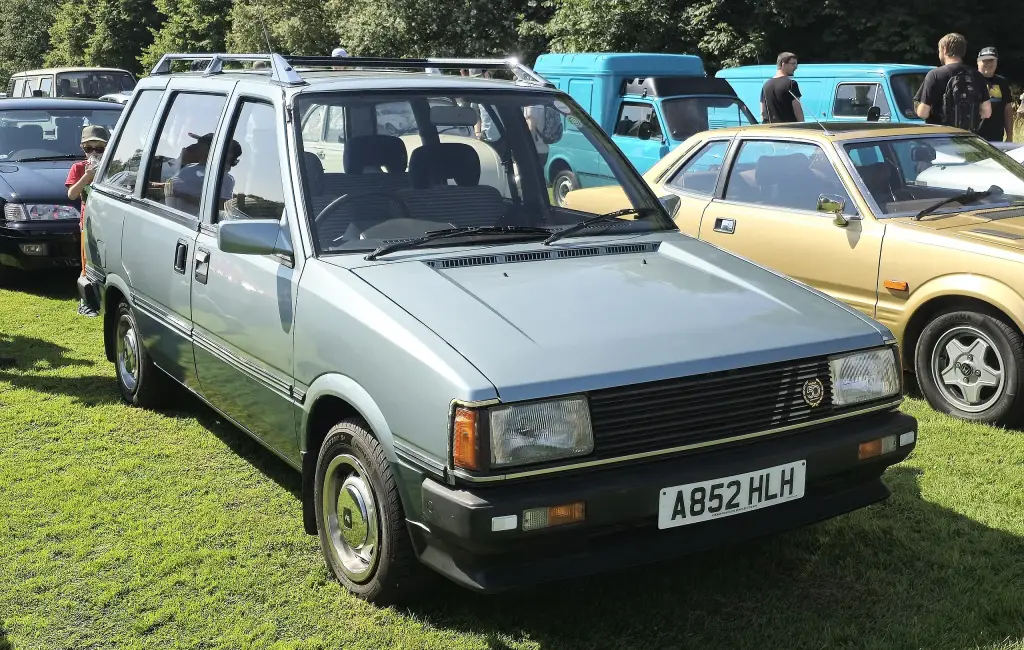
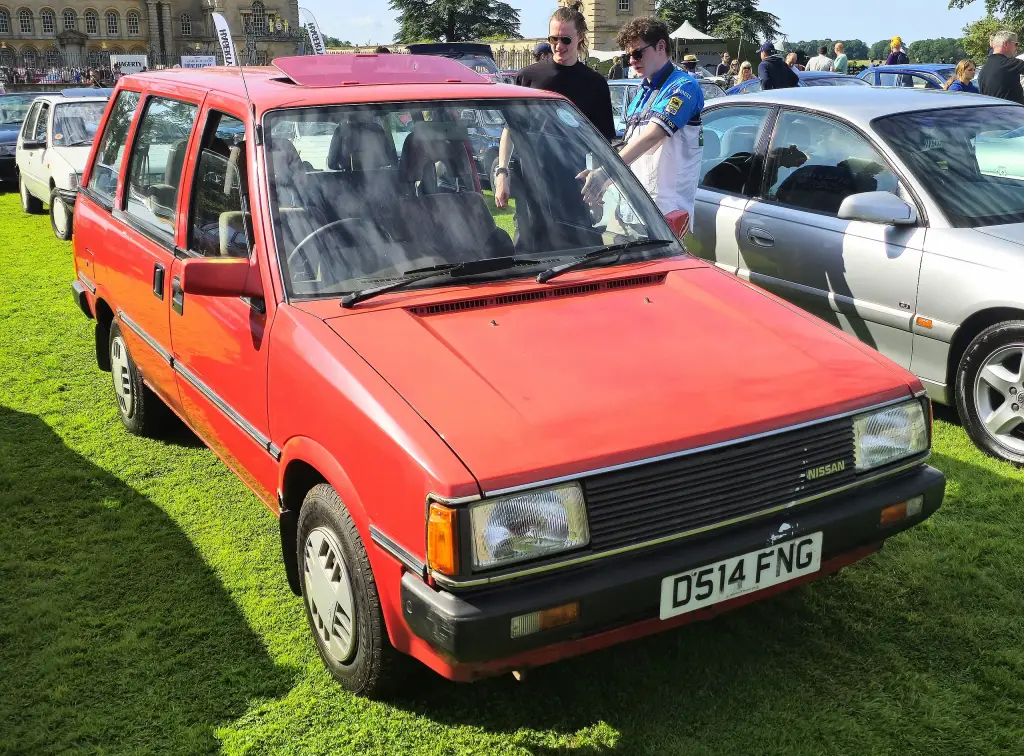
The Prairie, known in Canada as the Multi and in the United States as the Stanza Wagon, had a four-cylinder engine, manual or automatic transmission and front-wheel drive with optional four-wheel drive. It had sliding rear passenger doors on both sides and a folding rear seat to increase carrying capacity, and its tailgate opened upwards as one unit like a hatchback. It was developed from the Sunny platform using the Stanza’s powertrain, and was a companion to the more traditional cab-over Nissan Vanette. Its trailing-arm torsion-beam rear suspension came from the Pulsar Van. Reviewers noted poor body behaviour when driven hard, probably because of the missing B-pillar and the torsion-beam rear axle, and strong understeer.
Clever packaging
During development the car was internally called “the Nissan 1.6 m high multipurpose sedan”, and the design was strongly inspired by Giugiaro’s 1979 Lancia Megagamma concept. It complied with Japanese dimension rules and used small engines to keep road tax low. The first-generation Prairie had no B-pillar: the front door and the sliding rear door interlocked with the floor and roof. Front seat belts were mounted on the doors (except in the US), the front seats slid fully forward and reclined flat, and the rear seats folded or reclined to make a double bed with them; rear window winders folded into themselves so they would not catch on the sliding doors, and the centre of the rear bumper was mounted on the tailgate. A third row facing forward was optional, and an optional column-shift manual freed space for an extra front seat. A commercial Prairie NV or Estate van used the smallest engine.
Later versions
The second generation was sold in North America as the Nissan Axxess and was replaced there by the larger Quest, while in Europe the Serena partly took its place. When the third generation arrived in Japan it was first called Prairie Liberty, the Prairie name being dropped in November 1998. The line was replaced by the Nissan Lafesta in 2004.
Design and features
- No B-pillar: the doors locked into the floor and roof instead.
- Flexible seats: front seats reclined to make a bed with the rear bench.
- Sliding doors: on both sides, with fold-away window winders.
- Many names: Multi in Canada, Stanza Wagon in the US, Axxess later.
Nissan Prairie versions
- Prairie M10 (1982–1988): the original with no B-pillar.
- Prairie NV / Estate: the commercial van version.
- Prairie second generation: sold as the Axxess in North America.
- Prairie Liberty (to 1998): the third generation before the name was dropped.
The Prairie was replaced by the Lafesta, and its role in Europe passed partly to the Serena. More cars are in the Nissan collection.
Video: NISSAN PRAIRIE vs 48cm SNĚHU
Video by YouTube on YouTube.
Sources
- Nissan Prairie, English Wikipedia: M10 design and packaging, names, later generations