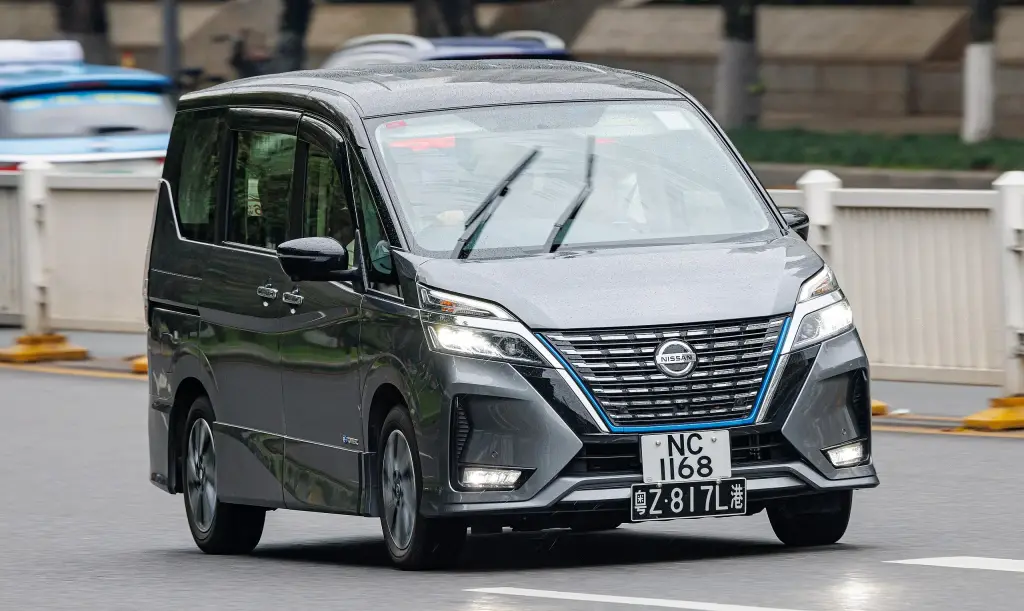
The Nissan Serena is a minivan that joined the slightly larger Vanette. It was engineered by Nissan’s Aichi Manufacturing Division and launched in 1991 as a compact passenger van, growing larger with each generation. Earlier versions were front-engine, rear-wheel drive with a live axle on leaf springs; later ones are front-wheel drive or four-wheel drive.
Nissan Serena at a glance
| Launched | 1991 |
|---|---|
| First generation | C23 |
| Layout at launch | front engine, rear-wheel drive, live axle on leaf springs |
| Later layout | front-wheel drive or four-wheel drive |
| Japanese size limit | 4.7 m long, 1.7 m wide |
| Position | below the Nissan Elgrand |
| First-generation engines | SR20DE petrol, CD20 and CD20T diesels |
| European engines | 1.6 and 2.0 petrol, 2.3 LD23 diesel |
| European trims | LX, SLX, SGX, SGXi |
| Suzuki twin | Suzuki Landy, 2007–2022 |
based on one source: the English Wikipedia article on the Nissan Serena; the collected material concentrates on the first generation.
History of the Nissan Serena
C23 (1991)
The first-generation Serena was built in Japan from 1991, and many were imported to Australasia and the United Kingdom. Japanese cars came in grades PX, FX, FG, SX and FE with all-wheel drive and VX, LX and L with front-wheel drive, and full-time four-wheel-drive versions were also made. A 2.3-litre naturally aspirated diesel was never built for Japan. The C23 was sold at Nissan Bluebird Store dealerships. It had several facelifts, identified by the grille in 1994 and 1997, while the interior and body stayed largely the same, gaining airbags and bench seats for the second and third rows.
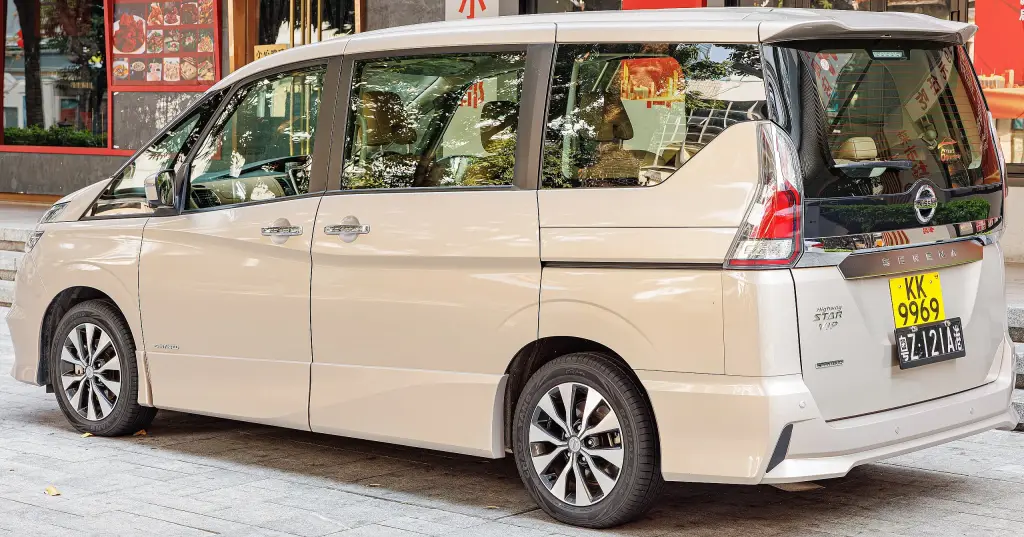
Engines and reputation
In Europe the C23 came with 1.6 or 2.0-litre petrol engines or a 2.3-litre LD23 diesel in LX, SLX, SGX and SGXi trims. Auto Express once named the Serena the slowest passenger car in its 0–60 mph benchmark, the mid-1990s 2.3-litre diesel taking 27.8 seconds. Until about 2002 the main petrol engine was the SR20DE, alongside the 1.6-litre GA16DE, with diesels such as the CD20 for the commercial van version, the CD20T and the CD20ET.
Later generations
The Serena is designed to fit Japanese vehicle class rules, which limit it to 4.7 m long and 1.7 m wide, and it sits below the larger Elgrand as a smaller, cheaper alternative, competing with the Toyota Noah, Honda Stepwgn and Mitsubishi Delica. The name comes from the Latin serenus, meaning clear, tranquil or pleasant. It was rebadged and sold by Suzuki as the Suzuki Landy between 2007 and 2022; the Landy was then replaced by an all-new Suzuki based on the Toyota Noah. As with the Elgrand, Autech offers a tuned version.
Design and features
- Japanese size class: kept within 4.7 m by 1.7 m.
- Old-fashioned first generation: rear-wheel drive with leaf springs.
- Suzuki Landy: the same van sold by Suzuki for 15 years.
- Autech versions: tuned and modified models offered alongside.
Nissan Serena versions
- Serena C23 (1991–): the first generation.
- Serena full-time 4WD: the four-wheel-drive version.
- Serena commercial van: with the CD20 diesel.
- Suzuki Landy (2007–2022): the rebadged version.
The Serena sits below the Elgrand and was a larger companion to the Prairie, with its wagon relative the Vanette. More cars are in the Nissan collection.
Video: 2013-2014 New NISSAN SERENA HighwaySTAR – Exterior & Interior
Video by YouTube on YouTube.
Sources
- Nissan Serena, English Wikipedia: C23 details, engines, trims, size rules, Suzuki Landy