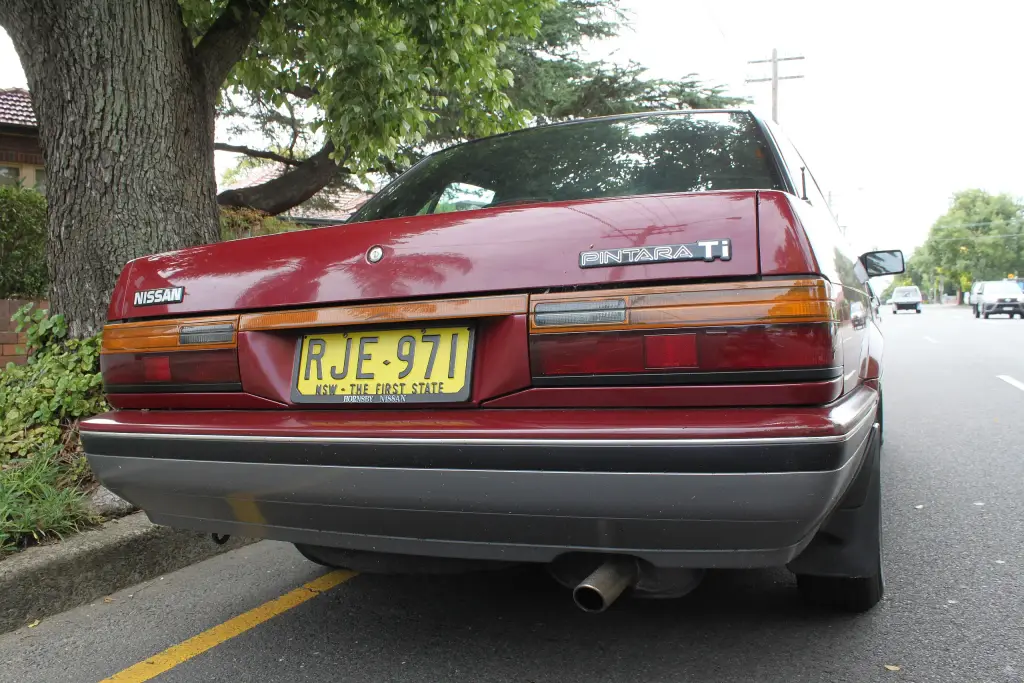
The Nissan Pintara was a compact car made by Nissan Motor Australia from 1986 to 1992. The first generation was a four-cylinder version of the Skyline, built at Clayton in Victoria; the second was a locally produced front-wheel-drive version of the Nissan Bluebird U12.
Nissan Pintara at a glance
| Production | 1986–1992, Australia |
|---|---|
| First generation | R31, from mid-1986 |
| Built at | Clayton, Victoria, Melbourne |
| First-generation engine | 2.0-litre CA20E four, 78 kW |
| First-generation trims | GLi, Executive, GX, GXE |
| Sports package | TRX body kit on GX and GXE sedans |
| Second generation | U12, from 1989 |
| Second-generation bodies | sedan and five-door Superhatch |
| Rival | Mitsubishi Magna |
based on one source: the English Wikipedia article on the Nissan Pintara.
History of the Nissan Pintara
R31 (1986–1990)
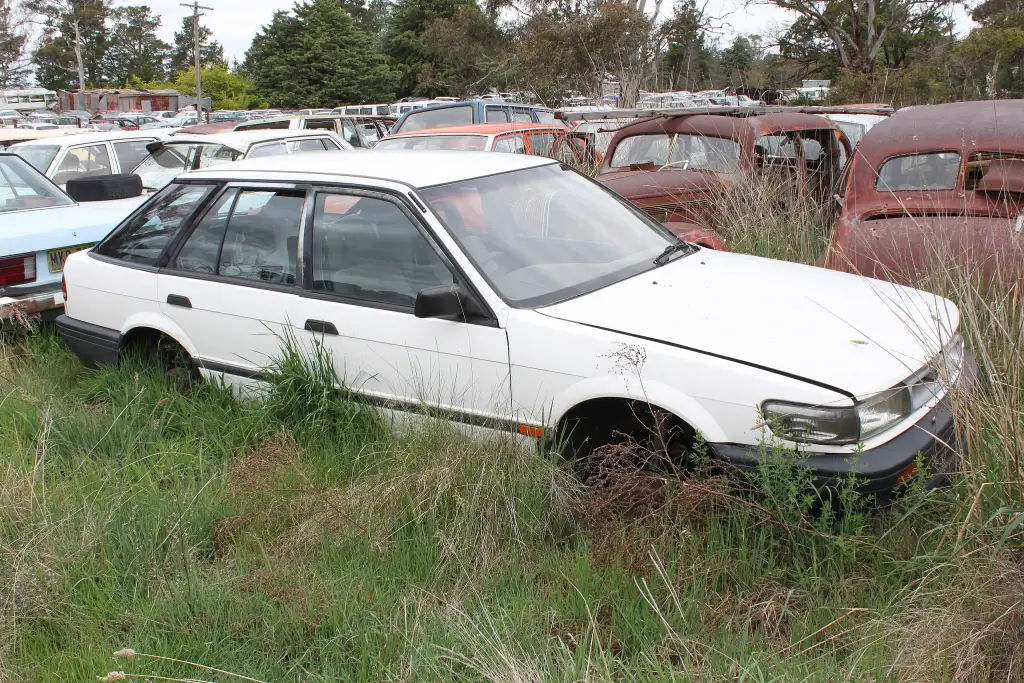
The first Pintara was a compact family car built from mid-1986 at Nissan Australia’s Clayton plant in Melbourne. It was based on the Nissan Skyline and powered by a single-overhead-cam fuel-injected 2.0-litre four, intended to compete with the Mitsubishi Magna. Like the Australian-built six-cylinder R31 Skyline it came as a sedan and a station wagon. Four specification levels were offered, GLi, Executive, GX and GXE, with a TRX body kit available on GX and GXE sedans, adding front and rear air dams, a rear spoiler, side skirts, a grille cover, alloy wheels and low-profile tyres, though without mechanical changes.
The CA20E engine
The only engine was the 2.0-litre CA20E inline four, making 78 kW at 5,200 rpm and 160 N·m at 3,200 rpm. It was single-overhead-cam and multi-point fuel injected with Nissan’s ECCS engine control including electronic ignition, and had two spark plugs per cylinder to meet emission rules. The engine had already appeared in the sportier Nissan Gazelle and was unusually high-revving for a family car.
Why a local Skyline
Instead of building the U11 Bluebird, Nissan Australia chose to build a localised four-cylinder Skyline because the U11 had switched to front-wheel drive and the company feared Australian buyers would not accept it in a market used to rear-wheel drive. Toyota took the same view, keeping the rear-drive T140 Corona for Australia until 1987. The second generation of 1989, internally called “Project Matilda”, was in fact a locally built front-wheel-drive Bluebird U12, available as a sedan and a locally designed five-door Superhatch. It performed badly in local testing and needed body and chassis strengthening. Sedans and Superhatches were exported to New Zealand as the Nissan Bluebird, and the Superhatch went to Japan as the Bluebird Aussie. Production ended in mid-1992.
Design and features
- Four-cylinder Skyline: a locally built R31 with a 2.0-litre engine.
- TRX package: a body kit with spoilers and alloy wheels.
- Superhatch: a locally designed five-door body for the U12.
- Export: sold in New Zealand as the Bluebird.
Nissan Pintara versions
- Pintara R31 (1986–1990): sedan and wagon in GLi, Executive, GX and GXE.
- Pintara TRX: the body-kit package on GX and GXE sedans.
- Pintara U12 (1989–1992): the front-wheel-drive generation.
- Pintara U12 Superhatch: the five-door version.
The Pintara was a local Skyline and later a Bluebird, and it was replaced in Nissan’s line by the Primera. More cars are in the Nissan collection.
Video: Red Nissan Pintara Burnout / Drift at Ingham 2009
Video by YouTube on YouTube.
Sources
- Nissan Pintara, English Wikipedia: R31 and U12 details, engine, trims, exports