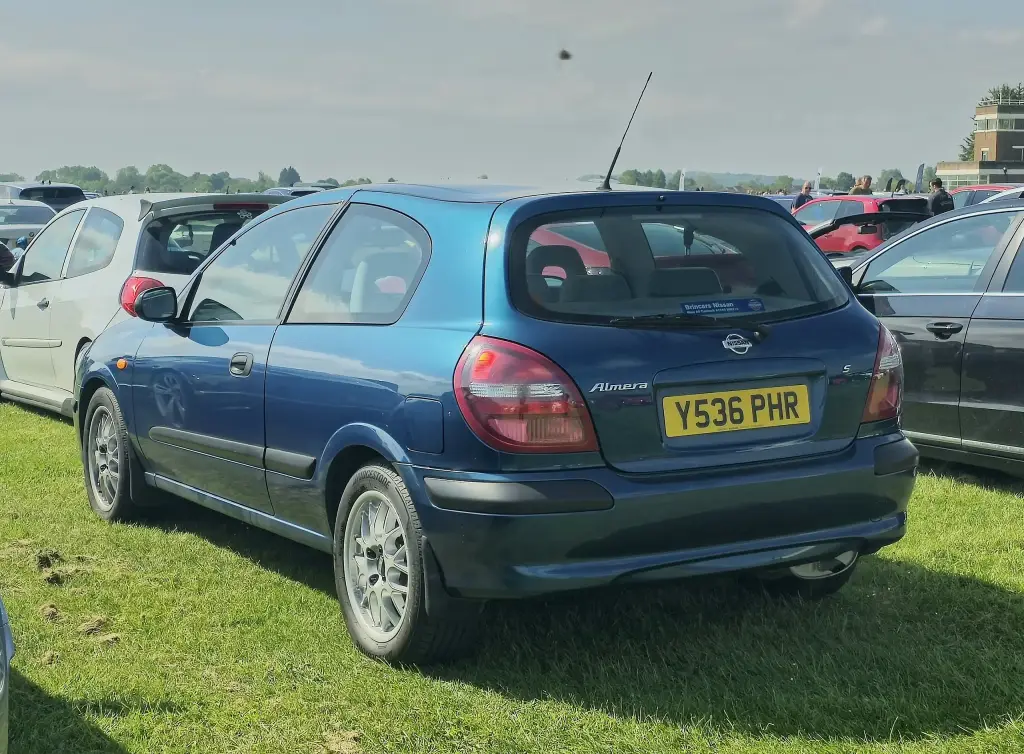
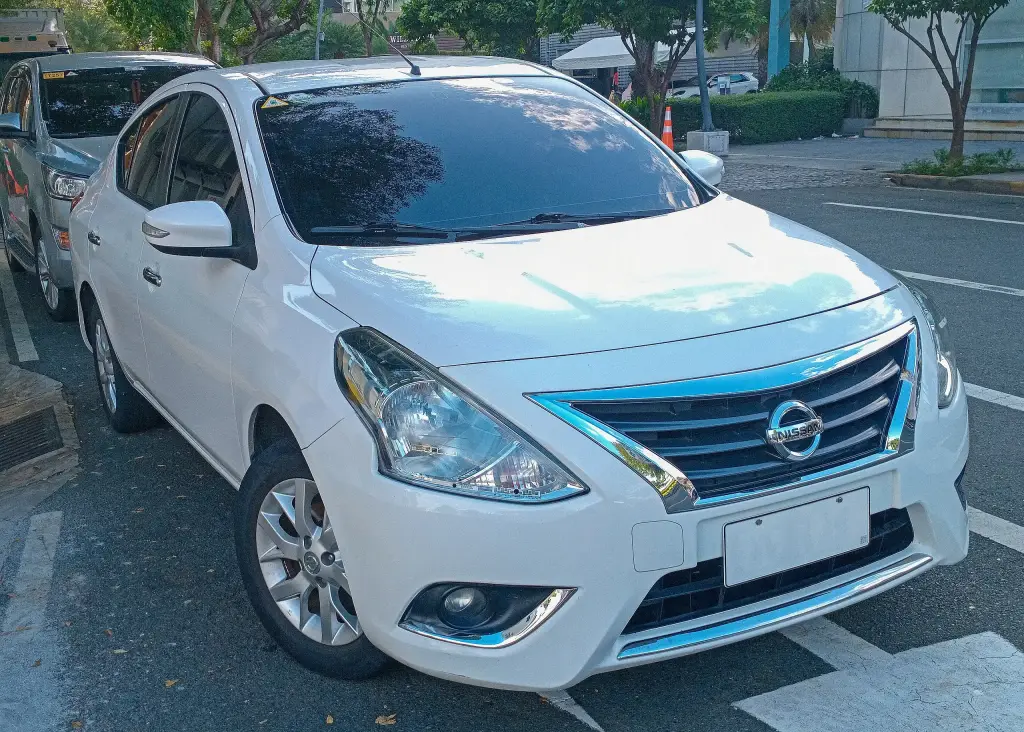
The Nissan Almera is a line of cars produced since 1995. The first two generations, the N15 and N16, were compact cars and essentially the European export versions of the Nissan Pulsar. From the N17 generation the Almera became a subcompact sedan on the Nissan V platform, sold under five different nameplates.
Nissan Almera at a glance
| Production | since late 1995 |
|---|---|
| Generations | N15 (1995), N16 (2000), N17 |
| First generation engines | 1.4 and 1.6 petrol, 2.0 diesel, 2.0 SR20DE GTi |
| First generation bodies | three- and five-door hatchback, four-door saloon |
| Second generation | built at Sunderland, on the MS platform |
| Second generation engines | 1.5, 1.6 and 1.8 petrol, 2.2 and 1.5 dCi diesel |
| N17 | subcompact sedan on the V platform |
| Replaced | Nissan Sunny (N14) |
based on one source: the English Wikipedia article on the Nissan Almera.
History of the Nissan Almera
N15 (1995)
The first Almera appeared in late 1995 as a replacement for the Sunny N14. It was almost identical to the Japanese Pulsar N15 apart from trim and the petrol engine range. Early cars used the 1.4-litre GA14DE and 1.6-litre GA16DE petrol engines or a 2.0-litre CD20 diesel, and a 2.0-litre SR20DE GTi joined the range about a year later. The three non-sporting engines came with a three- or five-door hatchback or a four-door saloon, while the GTi was a three-door only. In Britain the car was advertised as “The car they don’t want you to drive”, and specification was high for the class, with power steering, airbags, electric mirrors and a stereo on every model.
N15 facelift and GTi
The GTi had 143 PS from its 2.0-litre engine, uprated suspension, front and rear strut braces and a quicker steering rack, with an optional body kit in the style of the BMW M3. A 1998 facelift redesigned the front bumpers, added splitters on Si and SRi cars and made the body kit standard on the GTi; towards the end of production in early 1999 GTi cars came with ABS, air conditioning and the updated interior as standard.
N16 (2000)
The second generation was launched in January 2000 with smoother, more curved lines. European cars were built at Sunderland on Nissan’s global MS platform, the first new platform developed after the Renault partnership and also used for the P12 Primera and the Almera Tino. It came as a three- or five-door hatch and a four-door saloon, with 1.5, 1.6 and 1.8 QG petrol engines, a 2.2 direct-injection turbodiesel and later a 1.5 dCi from Renault. The saloon was based on the Bluebird Sylphy with a different front end. A 2003 facelift brought new styling, retuned suspension and new engines.
Design and features
- Pulsar twin: the N15 was the European version of the Japanese Pulsar.
- GTi: 143 PS, strut braces and a quick steering rack.
- High specification: power steering and airbags on every car.
- Sunderland build: the N16 was made in Britain on the MS platform.
Nissan Almera versions
- Almera N15 hatchback (1995–2000): three or five doors.
- Almera N15 saloon (1995–2000): four doors, popular in Ireland.
- Almera GTi (1996–2000): 2.0-litre SR20DE, three-door only.
- Almera N16 (2000–2006): hatchback and saloon, built at Sunderland.
- Almera N17: subcompact sedan on the V platform.
The Almera was replaced in Europe by the Note, and its estate relative was the Almera Tino. More cars are in the Nissan collection.
Video: Nissan Almera Review (2000)
Video by YouTube on YouTube.
Sources
- Nissan Almera, English Wikipedia: generations, engines, bodies, facelifts, N17