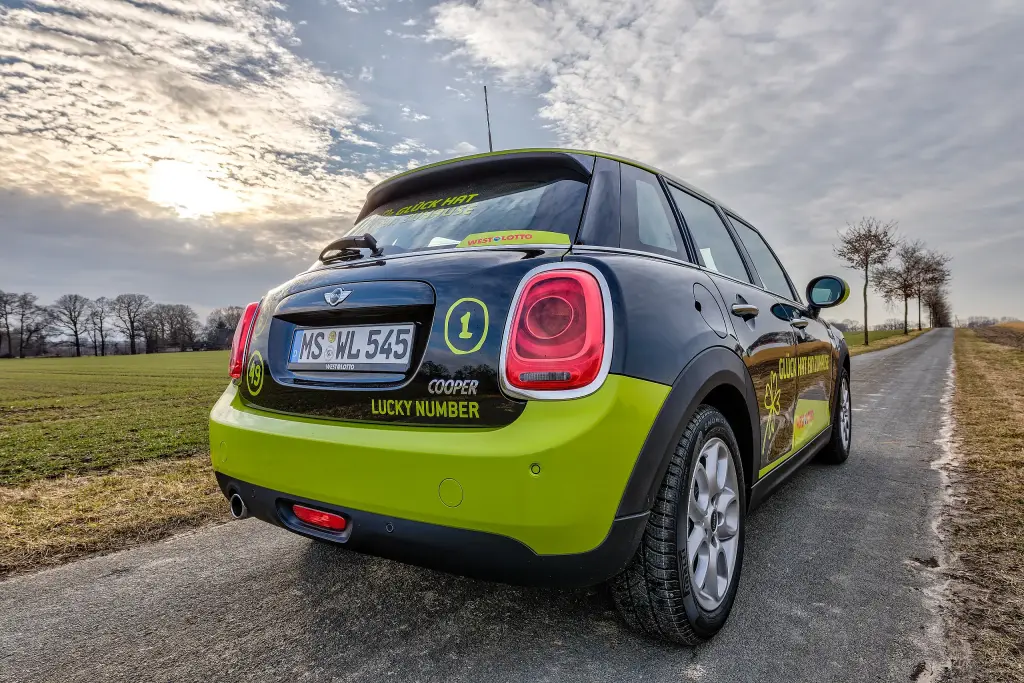
The Mini Hatch is the car BMW launched in 2001 as a modern successor to the original Mini. Design work began under Rover in the 1990s and the styling was done by Frank Stephenson. Sold at first only as a three-door, it has been offered as the Mini One, Cooper and Cooper S, and by 2024 had reached its fourth generation.
Mini Hatch at a glance
| Maker | Mini, a BMW marque |
|---|---|
| Production | from April 2001 |
| Built at | Plant Oxford, Cowley; VDL Nedcar, Born, 2014–2024 |
| Designer | Frank Stephenson |
| First shown | concept at the 1997 Frankfurt Motor Show |
| On sale | July 2001 |
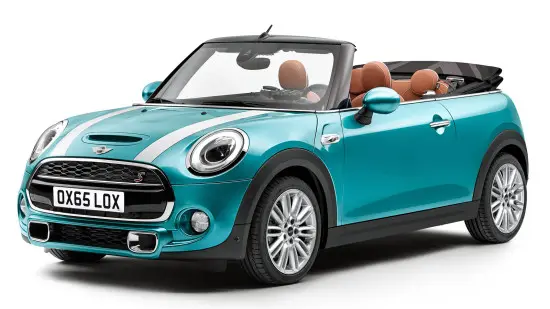
| Bodies | three-door hatchback; convertible from 2004; five-door from the third generation |
| First-generation codes | R50 (One, Cooper), R52 (convertible), R53 (Cooper S) |
| First engines | 1.4 and 1.6-litre Tritec four-cylinder; 1.4 diesel from 2003 |
| Length in 2001 | 3.63 m, 58 cm longer than the 1959 Mini |
| Later models | Clubman 2007, Countryman 2010, Paceman 2012, Aceman 2024 |
Power figures and the One D date come from the Italian Wikipedia article, which is more detailed on the first generation than the English one.
History of the Mini Hatch
From Rover project to BMW marque
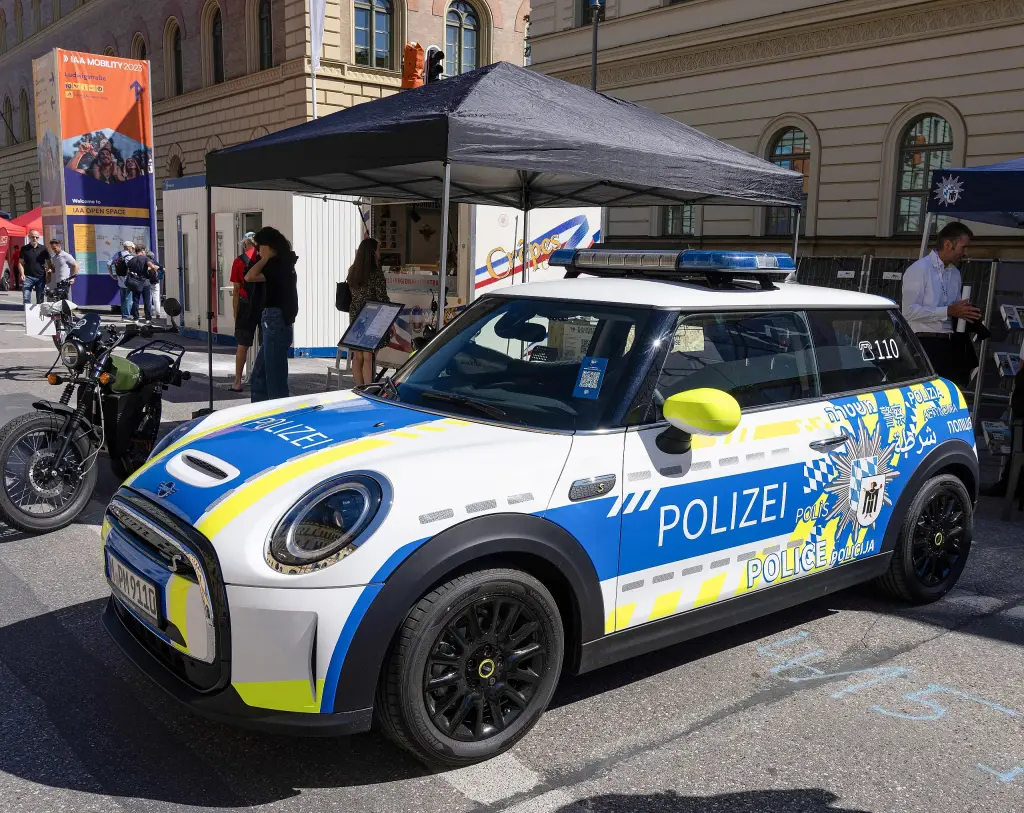
BMW bought the Rover Group in 1994 and the two companies worked on the new Mini together. Rover wanted a straight economy car to replace the Rover 100; BMW wanted a small sporting car. A concept was shown at the 1997 Frankfurt Motor Show together with details of the Tritec engine, built in Brazil by a Chrysler and BMW joint venture. When BMW sold Rover in 2000 it kept the Mini project and moved production from Longbridge to Cowley, near Oxford, which was renamed BMW Works Oxford.
The clay model famously reached the board without an exhaust pipe. Frank Stephenson pushed an empty beer can into the back of the model as a stand-in, and the board told him not to change a thing, which is how the production car got its visible exhaust tip.
First generation, 2001
The car entered production on 26 April 2001 and went on sale in July as a three-door hatchback. Naturally aspirated One and Cooper hatchbacks carried the R50 code and the supercharged Cooper S the R53. In some European markets the One used a 1.4-litre version of the Tritec engine and every other petrol Mini the 1.6-litre one. The Italian Wikipedia gives 90 hp for the One, 115 hp for the Cooper and 163 hp for the supercharged Cooper S, and adds the One D of 2003 with a 75 hp 1.4 common-rail diesel from Toyota.
At 3.63 m the new car was 58 cm longer than the 1959 Mini, and the five-door hatch of 2002 was 68 cm longer than the old Mini estate. The Cooper S was marked out by a scoop cut into the bonnet and twin central exhausts; the Cooper had more chrome than the One, and the One D had no visible exhaust at all. A fabric-roof convertible, the R52, joined the range in 2004 and stayed until 2008.
Later generations
The second generation hatchback arrived in 2006, the third in 2013 for sale in 2014, and the fourth in 2024, when the hatch was renamed simply Mini Cooper. From the third generation a five-door body was added. The F56 three-door was built at Oxford and at VDL Nedcar in the Netherlands between July 2014 and February 2024, and the convertible was assembled only at Born between 2015 and 2024. Battery Minis followed: the trial Mini E of 2009, the production Mini Electric of 2019, and the electric Cooper E and SE of 2023, built in China with Great Wall Motor.
Design and features
- Retro styling: a front-engine, front-wheel-drive hatch that quotes the 1959 car in its proportions and round headlamps.
- Three trims: One, Cooper and Cooper S, with the supercharged Cooper S of the first generation the quickest of the range.
- Tritec engine: the 1.6-litre four-cylinder designed with Chrysler and built in Brazil.
- Plant Oxford: production has stayed at Cowley, the old Morris works.
- Convertible option: a soft-top hatchback has been part of the range in every generation since 2004.
Mini Hatch versions
- Mini One: the entry model, with a 1.4-litre engine in some markets; the One D diesel came in 2003.
- Mini Cooper: the naturally aspirated 1.6 with more chrome and a single exhaust.
- Mini Cooper S: supercharged in the first generation, with a bonnet scoop and twin central exhausts.
- Mini One D: a 75 hp 1.4 common-rail diesel, with no visible exhaust pipes.
- Mini Cabrio (R52): the fabric-roof convertible sold from 2004 to 2008.
- John Cooper Works: the factory-tuned top of the range.
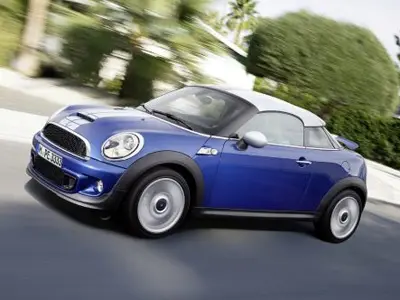
The original car is described on the classic Mini page; the estate version is the Mini Clubman and the two-seater is the Mini Coupé. More cars are in the Mini collection.
Sources
- Mini Hatch, English Wikipedia: development, generations, production
- Mini (BMW Group), German Wikipedia: model codes, plants, sales
- Mini (2001), Italian Wikipedia: power outputs, prices, One D