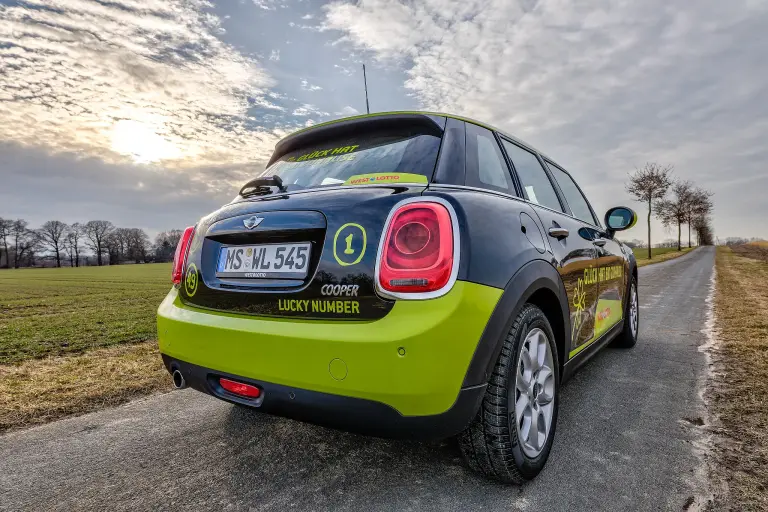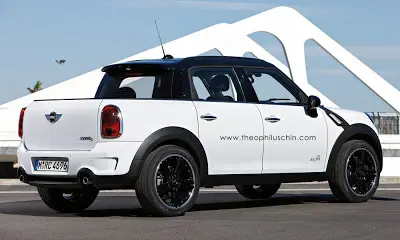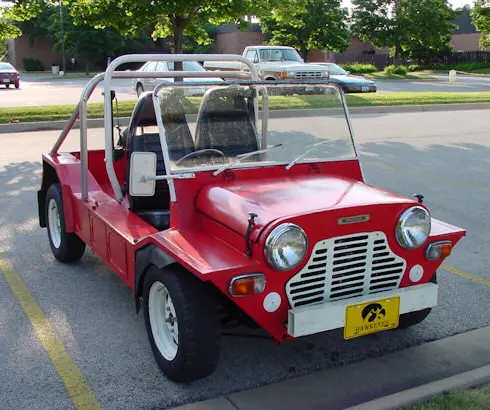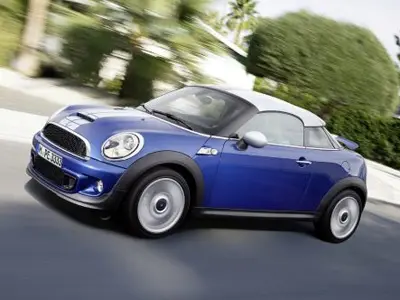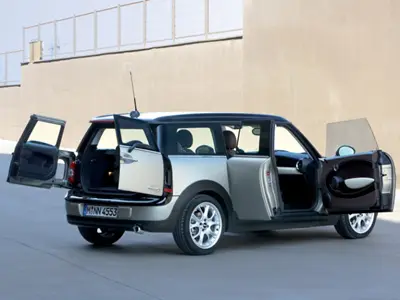
The Mini Clubman is the estate version of the Mini Hatch, introduced in 2007 and sold in two generations until 2024. It is best known for its split rear doors and, on the first generation, a single rear-hinged side door for the back seats. A panel van version, the Clubvan, was added in 2012.
Mini Clubman at a glance
| Maker | Mini, a BMW marque |
|---|---|
| Production | 2007–2024 |
| First generation | 2007, a variant of the Mini Hatch |
| Length | 240 mm longer than the hatch |
| Wheelbase | 80 mm longer than the hatch |
| Boot | 260 litres more; 920 litres with the rear seats folded, against 680 |
| Weight | 64 kg more than the two-door hatch |
| Rear doors | two-part doors hinged at the sides |
| First-generation models | One, Cooper, Cooper D, Cooper SD, Cooper S, John Cooper Works |
| Clubvan | panel van, shown June 2012 |
| Second generation | F54, from 2015; 427 cm long, four doors |
The article is based on one source, the English Wikipedia page on the 2007 Clubman. The general page “Mini Clubman” is only a list of meanings and was not used.
History of the Mini Clubman
Why the name Clubman
The name was a departure from Mini tradition. Clubman had been the name of the 1970s facelift of the classic Mini with a squared-off front, while classic Mini estates were called Traveller or Countryman. BMW did not initially own the rights to those names, but it did own Clubman, so the new estate took that one. Sketches of an estate Mini were shown at the 2000 Paris Motor Show, and a rendering of the estate concept, internally known as EXT, carried the Clubman name on its number plate.
First generation, 2007
The first Clubman was a variant of the second-generation Mini Hatch. From the B-pillar forward it was identical to the three-door, but it was 240 mm longer on an 80 mm longer wheelbase, with more leg room in the back and a load area 160 mm deeper. Boot space grew from 680 to 920 litres with the rear seats folded. The car weighed 64 kg more than the two-door.
The layout was unique on the market when it appeared. Loads went in through two rear doors that opened outwards, and rear passengers used a single side door hinged at the back, marketed as the Clubdoor. It was always on the right side of the body, whatever the market, so right-hand-drive cars in Britain put it on the road side. The Clubdoor was much smaller than the main doors and gave left-hand-drive cars better access, because the driver’s seat in a right-hand-drive car could not slide as far forward.
The engine range matched the hatchback, with the 66 kW One Diesel left out. In 2011 the Peugeot DV6 diesel was replaced by a 1.6-litre BMW unit, and the 2.0-litre version of that engine arrived with the Cooper SD. Special editions included the Hampton of 2011, in Reef Blue with a black roof, and the Bond Street of 2013, in Midnight Black with a Cool Champagne roof.
Clubvan and second generation
The Clubvan, a light commercial panel van version, was shown as a concept at Geneva in 2012 and went on sale in 2013. It was withdrawn from the United States after only 50 cars, because the American chicken tax made it dearer than the passenger car. The second-generation Clubman, coded F54, was previewed by a concept at Geneva in 2014 and went on sale in 2015. It dropped the asymmetric doors for a normal four-door layout but kept the split rear doors, and at 427 cm it was the largest Mini built up to that time.
Design and features
- Barn doors: the boot opens in two halves hinged at the sides, a layout kept in both generations.
- Clubdoor: a small rear-hinged side door on the right of the first-generation car only.
- Bigger boot: 260 litres more than the hatch, 920 litres with the seats down.
- Hatchback mechanicals: engines, gearbox and much of the rear suspension shared with the Mini Hatch.
- Clubvan: a two-seat panel van version sold from 2013.
Mini Clubman versions
- One and Cooper: the standard first-generation models.
- Cooper S and John Cooper Works: the quicker petrol versions.
- Cooper D and Cooper SD: the diesels, with the 2.0-litre SD from 2011.
- Hampton (2011): Reef Blue paint, black roof and John Cooper Works instruments.
- Bond Street (2013): Midnight Black with a Cool Champagne roof.
- Clubvan (2012): a panel van with no rear side windows.
The car it was derived from is the Mini Hatch, and the crossover of the same family is the Mini Countryman. More cars are in the Mini collection.
Video: Mini Cooper S Clubman
Video by Motorvision Deutschland on YouTube.
Sources
- Mini Clubman (2007), English Wikipedia: both generations, Clubdoor, Clubvan, editions