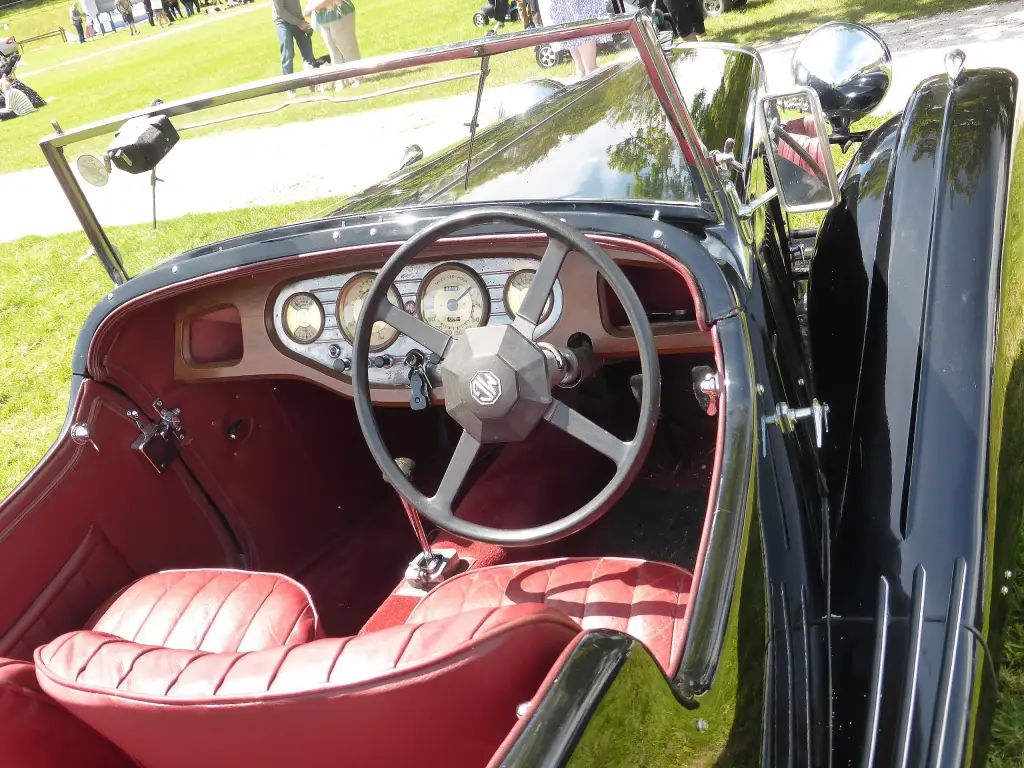
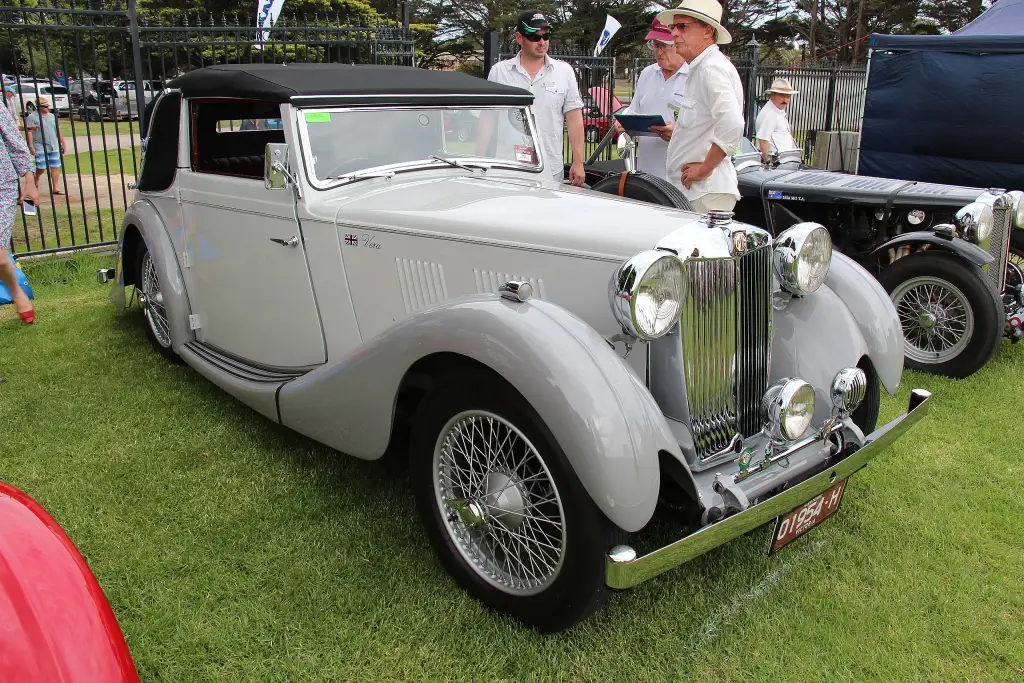
The MG VA, originally marketed as the MG 1½-litre, was produced from February 1937 to September 1939. It was the smallest of the three sports saloons MG built in the late 1930s, the others being the SA and WA.
MG VA at a glance
| Maker | MG, Abingdon |
|---|---|
| Production | February 1937–September 1939 |
| Engine | Morris TPBG overhead-valve four, tuned by MG |
| Capacity | 1.5 litres; 1,707 cc for the police version |
| Power | 54 bhp at 4,500 rpm |
| Gearbox | four-speed manual, synchromesh on the top three ratios |
| Brakes | Lockheed hydraulic, 10-inch drums |
| Wheels | 19-inch wire wheels |
| Suspension | half-elliptic springs, Luvax shock absorbers |
| Saloon price | about £325 in 1937 |
| Open cars built | 564 tourers and 591 coupés |
| Top speed | just over 76 mph (122 km/h) |
History of the MG VA
The smallest of three
The VA used a tuned version of the push-rod, overhead-valve four-cylinder Morris TPBG engine that was also fitted to the Wolseley 12/48 and the Morris Twelve Series III. In MG form it had twin SU carburettors and developed 54 bhp at 4,500 rpm. Drive went to the live rear axle through a four-speed gearbox with synchromesh on the top three ratios, though some early cars had it on the top two only. The car had 19-inch wire wheels, Lockheed hydraulically operated 10-inch drum brakes and built-in hydraulic jacks as standard, with half-elliptic springs all round and Luvax shock absorbers whose rear units could be adjusted from the dashboard.
Bodies
The four-door saloon body was made in-house by Morris and carried the traditional MG grille flanked by two large chromium-plated headlights. Unlike the SA, the front doors had no separate quarter-light windows, and the spare wheel was carried on the left front wing, with a second spare on the other side as an option. Inside there were individual seats in front and a bench at the rear, all in leather, and a fitted radio was optional. A special version was made for police use with a 1,707 cc engine and a calibrated speedometer.
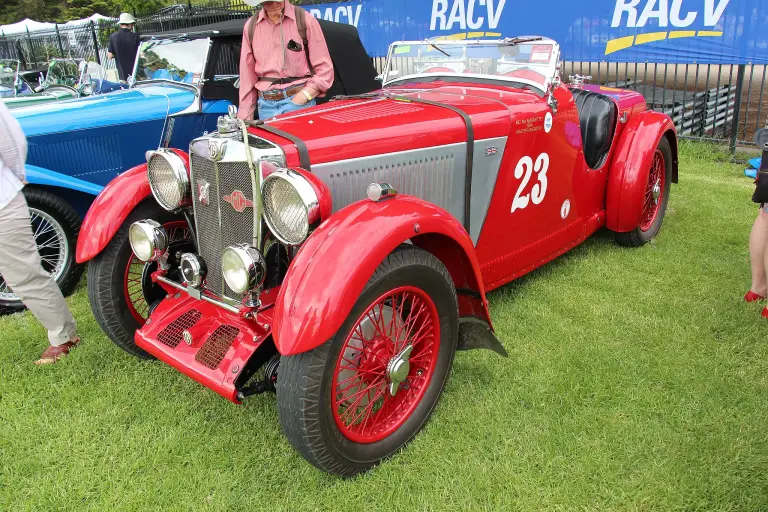
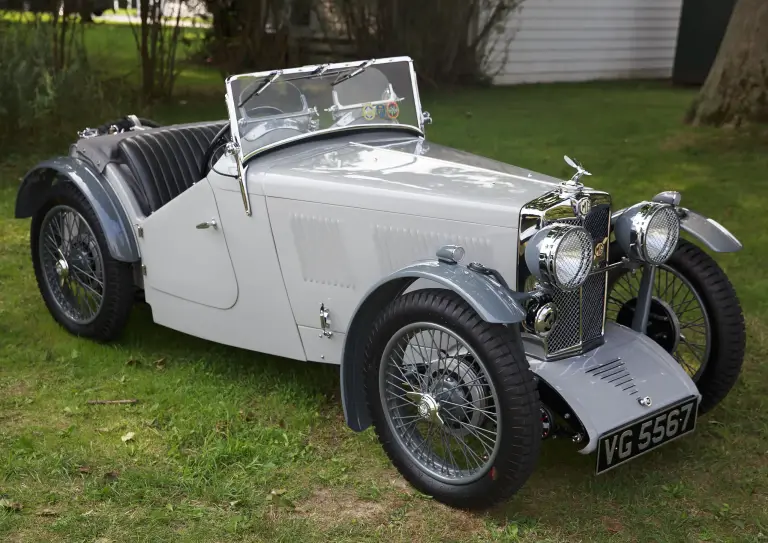
The British Motor magazine tested a VA tourer and recorded a top speed of just over 76 mph and a 0–50 mph time of 15.8 seconds; with the windscreen folded down the top speed rose to nearly 82 mph. The factory could also supply the car as a Tickford drophead coupé or as a two-door open four-seater tourer. The saloon cost around £325, the tourer £280 and the Tickford coupé £351, depending on specification, and 564 tourers and 591 coupés were made. Barely any chassis, probably only two, went to outside coachbuilders.
The end
Production stopped with the outbreak of the Second World War in 1939. After the war MG launched the Y-type to fill the small saloon slot, and the VA was never replaced directly. Its larger sisters, the SA and the WA, also ended production in 1939 and were not reintroduced in 1945.
Design and features
- Tuned Morris engine: the 1.5-litre TPBG four with twin SU carburettors and 54 bhp.
- Hydraulic brakes: Lockheed drums all round, with built-in hydraulic jacks.
- Adjustable shock absorbers: the rear Luvax units could be set from the dashboard.
- Three body styles: saloon, open tourer and Tickford drophead coupé.
MG VA versions
- VA saloon (1937): the four-door Morris-bodied car at about £325.
- VA tourer: a two-door open four-seater at £280, 564 built.
- Tickford drophead coupé: £351, 591 built.
- Police version: 1,707 cc engine and a calibrated speedometer.
The VA was the smallest of the three late-1930s MG saloons, below the SA and the WA; more cars are in the MG collection.
Video: 1938 MG VA Tourer climbing Kop Hill, 30th Aug 2014
Video by John Bannister on YouTube.
Sources
- MG VA, English Wikipedia: engine, bodies, prices, production