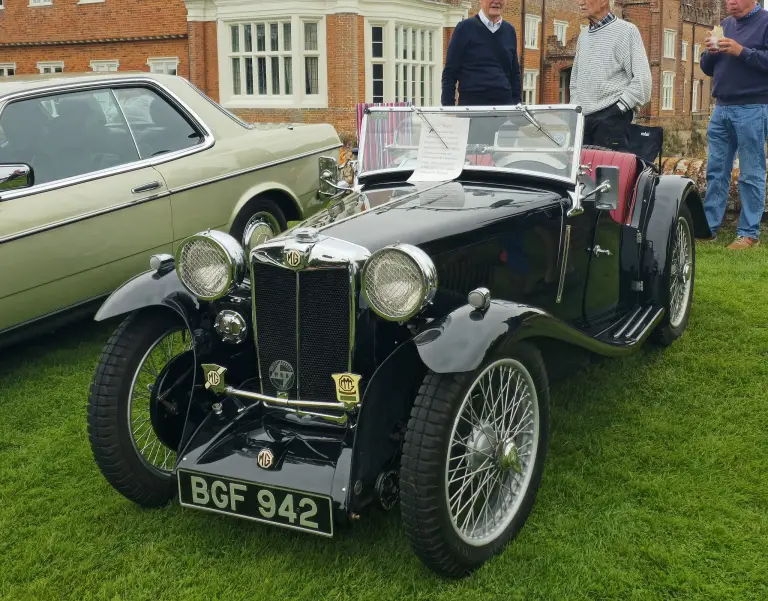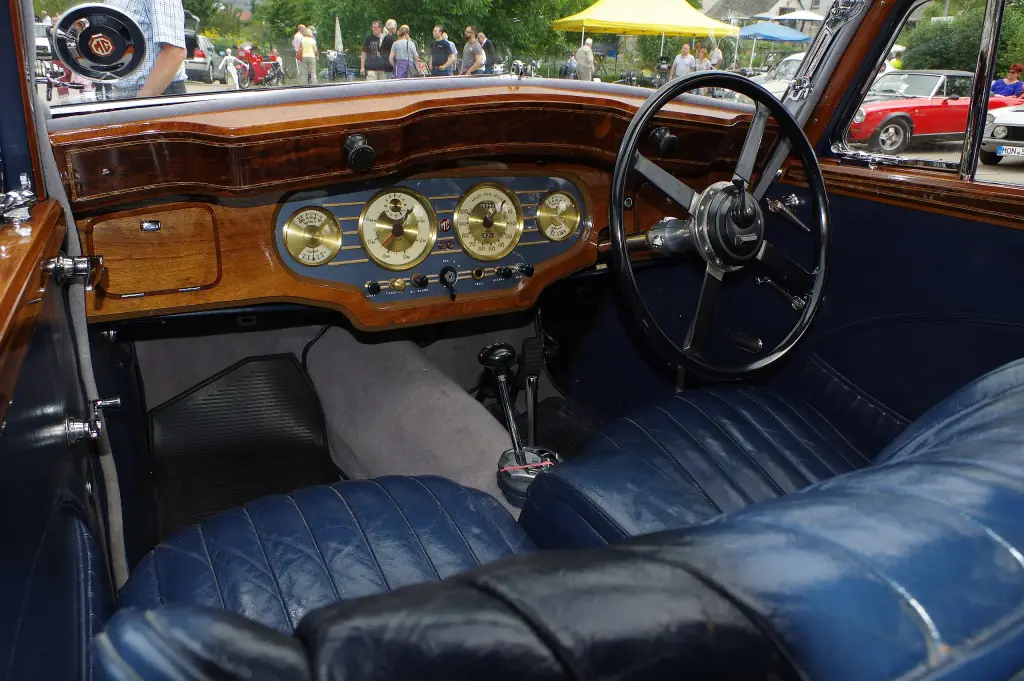
The MG SA, known at first simply as the 2-litre, was a sporting saloon produced by MG from 1936 to 1939. It had been planned as an advanced car to rival SS Cars and even Bentley, but after MG joined Morris Motors the project emerged as a much more conventional machine.
MG SA at a glance
| Maker | MG, Abingdon |
|---|---|
| Production | 1936–1939 |
| Factory code | EX150, originally designated S-type |
| Engine | six-cylinder Morris QPHG, 2,288 cc, later 2,322 cc |
| Carburettors | twin SU with horizontally mounted dashpots |
| Gearbox | four-speed manual, synchromesh on the top two ratios |
| Brakes | Lockheed hydraulic drums |
| Wheels | wire wheels |
| Saloon price | £375 in 1936 |
| Bodies | saloon, Tickford drophead coupé, Charlesworth tourer |
| Built | 2,739 cars, 350 exported |
History of the MG SA
An abandoned plan
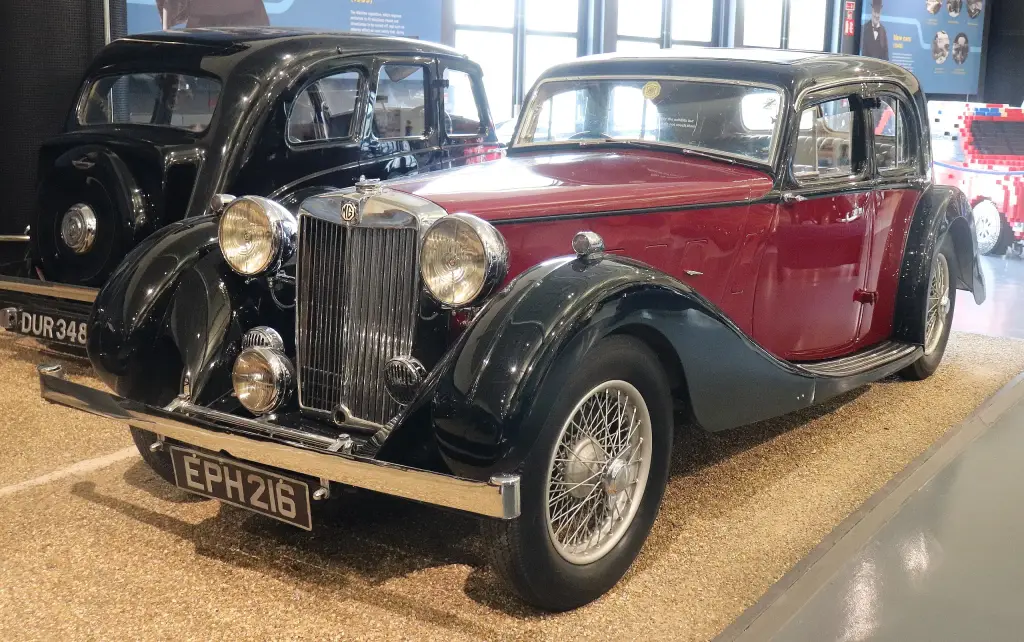
The SA was originally intended as an advanced performance saloon to rival SS Cars, later Jaguar, and even Bentley, with all-independent suspension. It was given the factory code EX150 and designated the S-type, and a prototype was built, but when MG was amalgamated with Morris Motors in 1935 development stopped. The Cowley drawing office picked the project up again, and what emerged was a much more conservative car with conventional live rear and beam front axles.
Engineering
The car used a tuned version of the six-cylinder 2,062 cc Morris QPHG engine shared with the Wolseley Super Six, enlarged to 2,288 cc and then, in 1937, to 2,322 cc to bring it into line with the Wolseley 18. The engine was tall, so to keep the bonnet line as low as possible the twin SU carburettors had their dashpots mounted horizontally. Drive went to the live rear axle through a four-speed gearbox with synchromesh on the top two ratios, wire wheels were fitted, and the drum brakes were hydraulically operated with a Lockheed system. A built-in Jackall jacking system was fitted to the chassis.
Bodies and reception
At launch the only body available was the in-house Morris saloon: a spacious four-door with the traditional MG grille flanked by two large chrome-plated headlights, the spare wheel on the boot lid, individual leather seats in front and a bench at the rear, and plenty of walnut on the dashboard and trim. A Philco radio cost 18 guineas extra.
From April 1936 a Tickford drophead coupé by Salmons joined the range at £398 against £375 for the saloon, and in July the coachbuilder Charlesworth offered a four-door tourer at £375. The tourer originally had straight-topped doors, replaced from 1938 by front doors with cutaway tops, at which point the spare wheel moved to the front wing. Of the 2,739 cars made, 350 were exported, with Germany the best market.
A new 2.6-litre car, the WA, appeared alongside the SA at the 1938 London Motor Show, probably as a replacement, but both ran in parallel until the outbreak of war in 1939 stopped production, and neither was reintroduced in 1945. A 1937 SA Tourer by Charlesworth appears in Alfred Hitchcock’s 1940 film Rebecca, driven by Laurence Olivier’s character.
Design and features
- Six-cylinder engine: the 2,288 cc Morris QPHG unit, enlarged to 2,322 cc in 1937.
- Hydraulic brakes: a Lockheed system rather than rods and cables.
- Jackall system: built-in hydraulic jacks could raise the front, the rear or the whole car.
- Coachbuilt options: Tickford drophead coupé and Charlesworth tourer bodies.
MG SA versions
- SA saloon (1936): the standard four-door at £375.
- Tickford drophead coupé (1936): by Salmons, £398.
- Charlesworth tourer (1936): a four-door open car at £375, updated in 1938.
- 2,322 cc cars (1937): the enlarged engine shared with the Wolseley 18.
The SA was the middle of MG’s three late-1930s saloons, between the VA and the WA; more cars are in the MG collection.
Video: MG SA, Keswick
Video by ilesmarktransport on YouTube.
Sources
- MG SA, English Wikipedia: development, engine, bodies, production