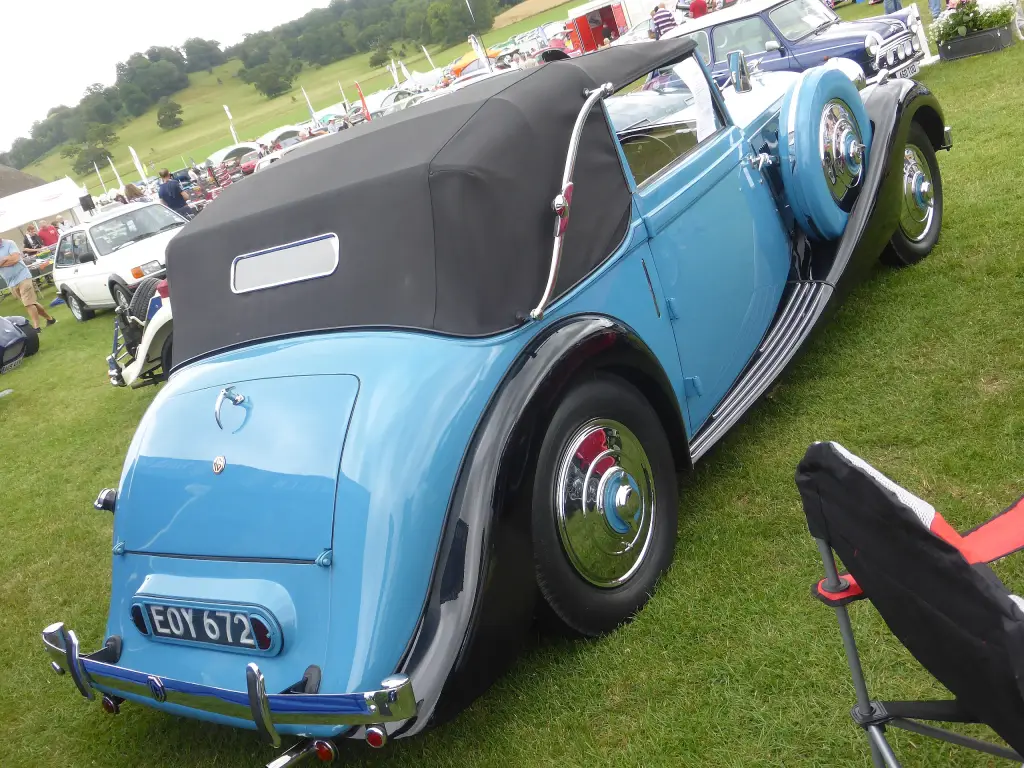
The MG WA was a sporting saloon produced between 1938 and 1939 and, at the time, the largest and heaviest car the company had built. Although similar to the SA, it had a wider track at the rear that allowed a larger body to be fitted.
MG WA at a glance
| Maker | MG, Abingdon |
|---|---|
| Production | 1938–1939 |
| Engine | six-cylinder Morris QPHG, 2,561 cc |
| Compression ratio | 7.25 to 1 |
| Crankshaft | new balanced design |
| Gearbox | four-speed manual, synchromesh on the top three ratios |
| Brakes | Lockheed hydraulic, 14-inch drums |
| Wheels | wire wheels |
| Saloon price | £442 |
| Tourer price | £450 |
| Tickford coupé price | £468 |
| End of production | 1939, not reintroduced after the war |
History of the MG WA
The largest MG
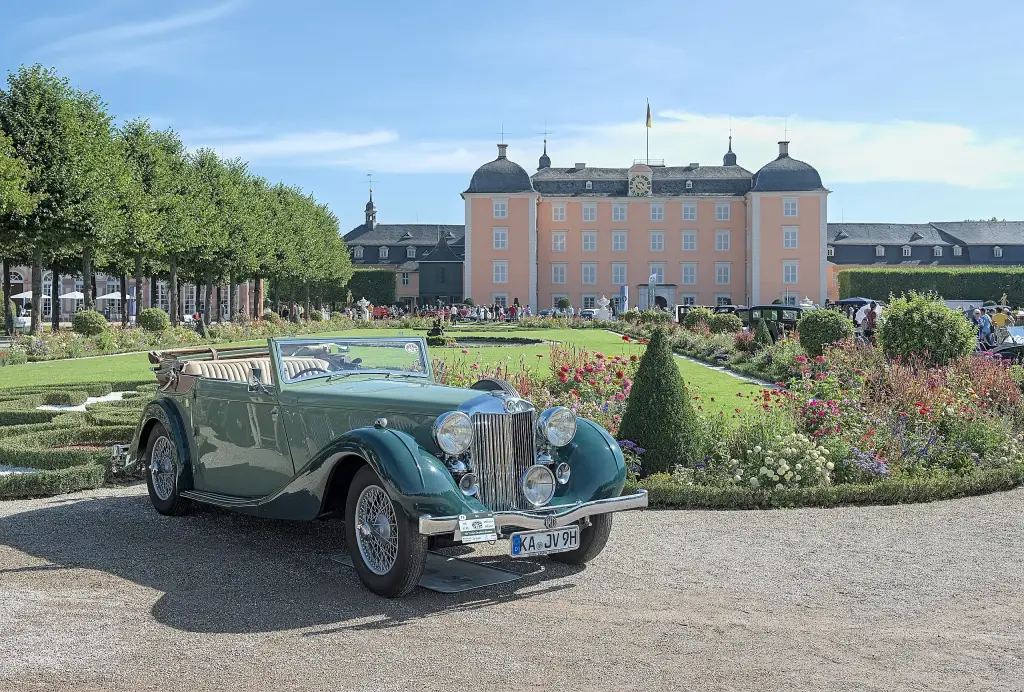
The WA was closely related to the SA but had a wider rear track, which allowed MG to fit a larger body. It was the biggest car the company had built up to that point, and it appeared at the 1938 London Motor Show alongside the SA, probably as its intended replacement; in the end both cars ran in parallel.
The engine was a tuned version of the six-cylinder Morris QPHG unit enlarged to 2,561 cc, with the compression ratio raised to 7.25 to 1 and a new balanced crankshaft. Drive went to the live rear axle through a four-speed manual gearbox with synchromesh on the top three ratios and a divided propshaft. Wire wheels were fitted and the 14-inch drum brakes were hydraulically operated with a Lockheed system.
Body and equipment
The saloon body was made in-house by Morris: a spacious four-door with the traditional MG grille flanked by two large chrome-plated headlights. It can be distinguished from the outwardly similar SA by the front bumper, which has a dip in the centre, and by the spare wheel, which was carried on the front wing rather than the boot lid. Inside there were individual seats in front and a bench with a folding centre armrest at the rear, all trimmed in leather, and a return to the traditional octagonal framed instruments.
The factory could also supply the car from its catalogue as a Tickford drophead coupé built by Salmons and Son or a four-door tourer by Charlesworth, and some chassis went to other coachbuilders including Kellner of Paris and Reinbolt of Switzerland. The saloon was priced at £442, the four-seat tourer at £450 and the Tickford coupé at £468.
The end
Production stopped with the outbreak of the Second World War in 1939 and the car was not reintroduced in 1945. MG’s post-war saloon line began again with the smaller Y-type, so the WA remained the largest car the company had built in the pre-war period.
Design and features
- 2.6-litre six: the largest engine MG had fitted to a road car up to that time.
- Wider rear track: the change that allowed a bigger body than the SA.
- Hydraulic brakes: 14-inch Lockheed drums all round.
- Coachbuilt options: Tickford, Charlesworth, Kellner and Reinbolt bodies.
MG WA versions
- WA saloon (1938): the in-house four-door at £442.
- Charlesworth tourer: a four-door open car at £450.
- Tickford drophead coupé: by Salmons and Son, £468.
- Continental coachwork: chassis supplied to Kellner of Paris and Reinbolt of Switzerland.
The WA was the largest of MG’s three late-1930s saloons, above the VA and the SA; more cars are in the MG collection.
Video: MG WA – Zwiastun JAZDY PRÓBNEJ
Video by lanserlanser100023 on YouTube.
Sources
- MG WA, English Wikipedia: engine, chassis, bodies and prices