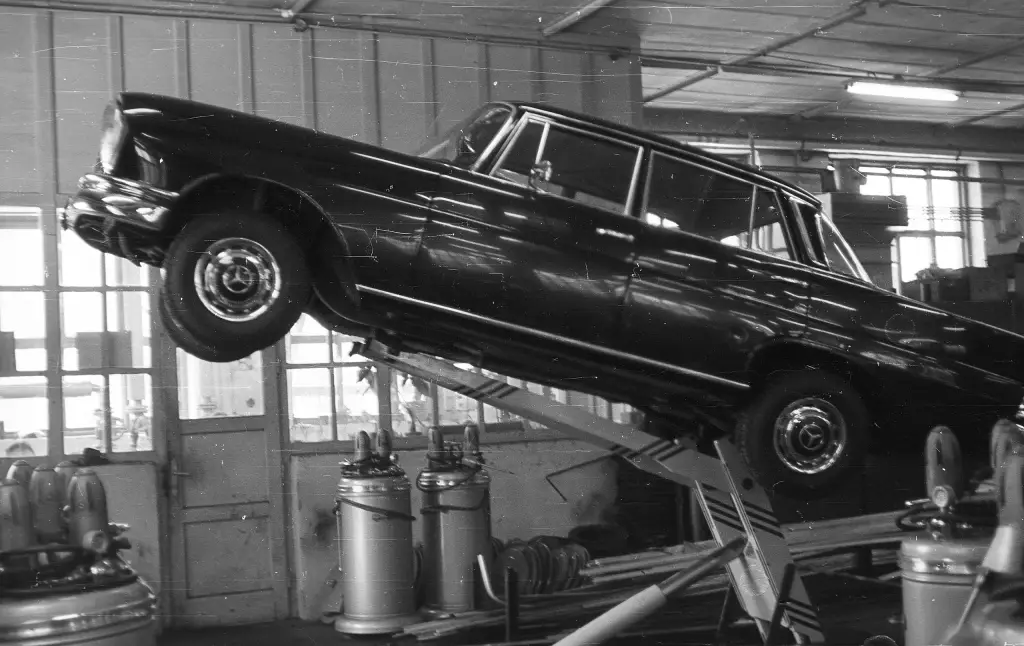
The Mercedes-Benz W111 is a line of full-sized luxury cars produced between 1959 and 1971, with four-door saloons from 1959 to 1968 and two-door coupés and cabriolets from 1961 to 1971.
Mercedes-Benz W111 at a glance
| Production | 1959–1971 |
|---|---|
| Saloons | 1959–1968 |
| Coupés and cabriolets | 1961–1971 |
| Nickname | Heckflosse, fintail |
| First saloons | 220 b, 220 Sb and 220 SEb |
| Engine | 2,195 cc M127 straight six |
| 220 b | 95 hp, 160 km/h, DM 16,750 |
| 220 Sb | 110 hp, 165 km/h, DM 18,500 |
| 220 SEb | 120 hp with fuel injection, 172 km/h, DM 20,500 |
| Later model | 230 S from May 1965 |
| Related lines | W110 four-cylinder and W112 300 SE |
| Design of the two-doors | Paul Bracq |
| Safety | front and rear crumple zones, patented retractable seatbelts |
This article is based on one source, the English Wikipedia article on the Mercedes-Benz W111.
History of the Mercedes-Benz W111
Mercedes-Benz came out of the war known for the expensive 300 Adenauer and 300 S, but it was the simple unitary Ponton that brought in most of the revenue. Work on replacing the Ponton began in 1956 with a design focused on comfort and safety. The cabin was widened and squared off with a large glass greenhouse for visibility, and the car brought front and rear crumple zones to absorb energy in a crash; the company also patented retractable seatbelts.
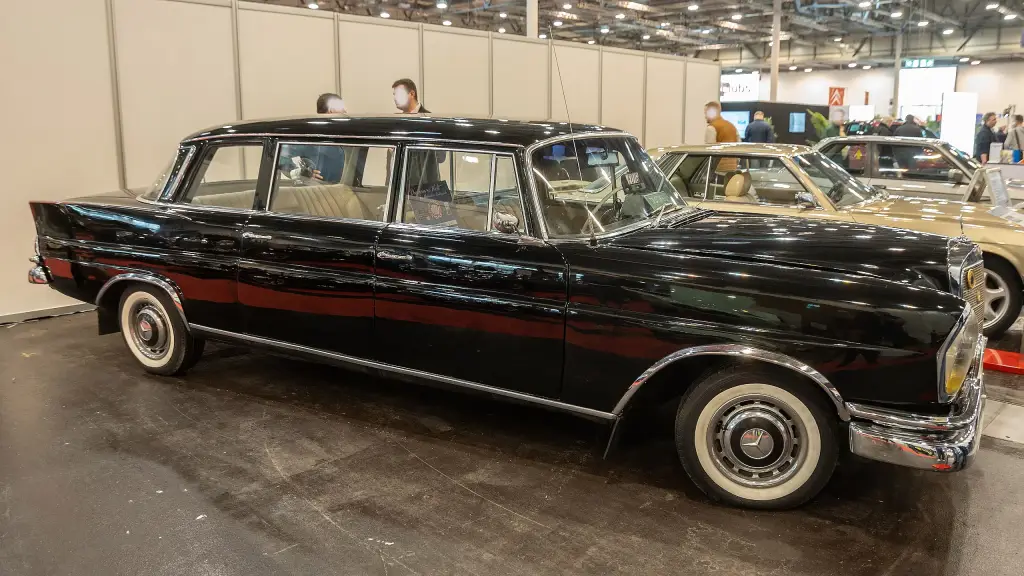
Series production of the saloon began in August 1959, with its debut at the Frankfurt show that autumn. The first cars were the 220 b, 220 Sb and 220 SEb, replacing the W105 219, the W180 220 S and the W128 220 SE. The 220 b was the entry version with little chrome, simple hubcaps and basic trim without door pockets. All shared the 2,195 cc M127 straight six: the single-carburettor 220 b gave 95 hp and 160 km/h, the twin-carburettor 220 Sb gave 110 hp and 165 km/h, and the fuel-injected 220 SEb gave 120 hp and 172 km/h with a 0 to 100 km/h time of 14 seconds. Prices were DM 16,750, 18,500 and 20,500, with sales roughly in the ratio 1:2:1.
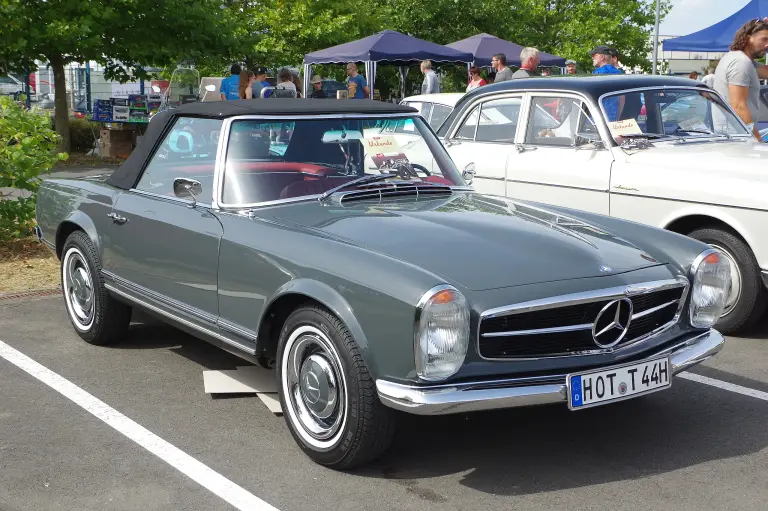
In 1961 the W111 chassis was shared both downwards, with the shorter-nosed four-cylinder W110, and upwards, with the W112 300 SE that used the W111 body and the 3-litre M189 engine of the 300 Adenauer. The coupé and cabriolet versions, designed by Paul Bracq, had their own larger coachwork and interiors. In May 1965 the 220 Sb and 220 SEb were replaced by the 230 S, visually identical to the 220 Sb but with a more powerful modernised engine. The W111 saloons gave way to the W108 and W109 in 1965 to 1968, while the two-doors continued until 1971.
Design and features
- Fintail styling: the pointed rear fins that gave the range its nickname.
- Crumple zones: front and rear deformation areas for crash protection.
- Three saloons: 220 b, 220 Sb and 220 SEb with 95, 110 and 120 hp.
- Two-door line: Paul Bracq coupés and cabriolets with their own coachwork.
Mercedes-Benz W111 versions
- 220 b (1959): the basic saloon.
- 220 Sb (1959): twin carburettors and 110 hp.
- 220 SEb (1959): fuel injection and 120 hp.
- 230 S (1965): the last saloon version.
- Coupé and cabriolet (1961): two-door models by Paul Bracq.
- W112 300 SE: the luxury version on the same body.
The W111 replaced the 219 and Ponton sixes and led to the W108 and W109; its cheaper relative was the W110. More in the Mercedes-Benz collection.
Video: Restored 1966 Mercedes-Benz 250 SE W111
Video by YouTube on YouTube.
Sources
- Mercedes-Benz W111, English Wikipedia: design, safety, saloons, prices, related lines