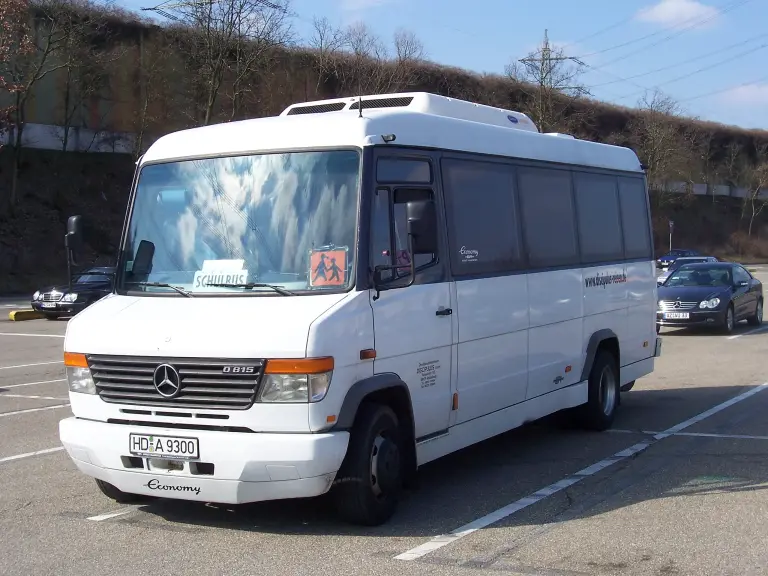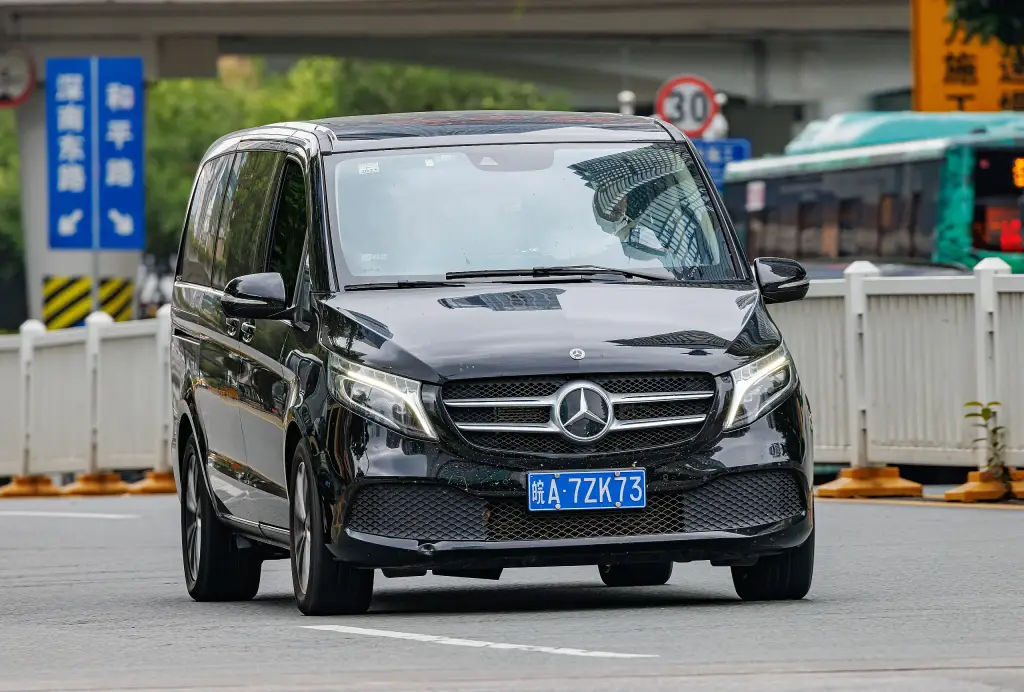
The Mercedes-Benz Vito is a mid-sized light commercial vehicle sold as a panel van, chassis cab or multi-purpose vehicle carrying up to eight passengers. It sits between the Sprinter and the Citan in the van range.
Mercedes-Benz Vito at a glance
| On sale | since 1996 |
|---|---|
| Position | between Sprinter and Citan |
| Bodies | panel van, chassis cab, multi-purpose vehicle |
| Passenger names | Vito Traveliner, V-Class and Viano |
| First generation | W638, 1996–2003 |
| First-generation drive | front-wheel drive |
| Later generations | W639 from 2004 and W447 from 2014 |
| Wheelbases | two |
| Lengths | three |
| Gearboxes | six-speed manual or five-speed TouchShift automatic |
| Electric version | Vito 108 E of 1996 |
| Facelift | 2010 |
This article is based on one source, the English Wikipedia article on the Mercedes-Benz Vito.
History of the Mercedes-Benz Vito
The first generation, the W638, was produced from 1996 to 2003 with front-wheel drive. It was powered either by a diesel engine of up to 120 bhp or a petrol engine of up to 140 bhp, and the petrol range included the 2.8-litre Volkswagen VR6, designated M104.900 in Mercedes-Benz form, alongside older Mercedes-Benz units. The same body was sold in a more luxurious and expensive version as the V-Klasse, later replaced by the Viano name.
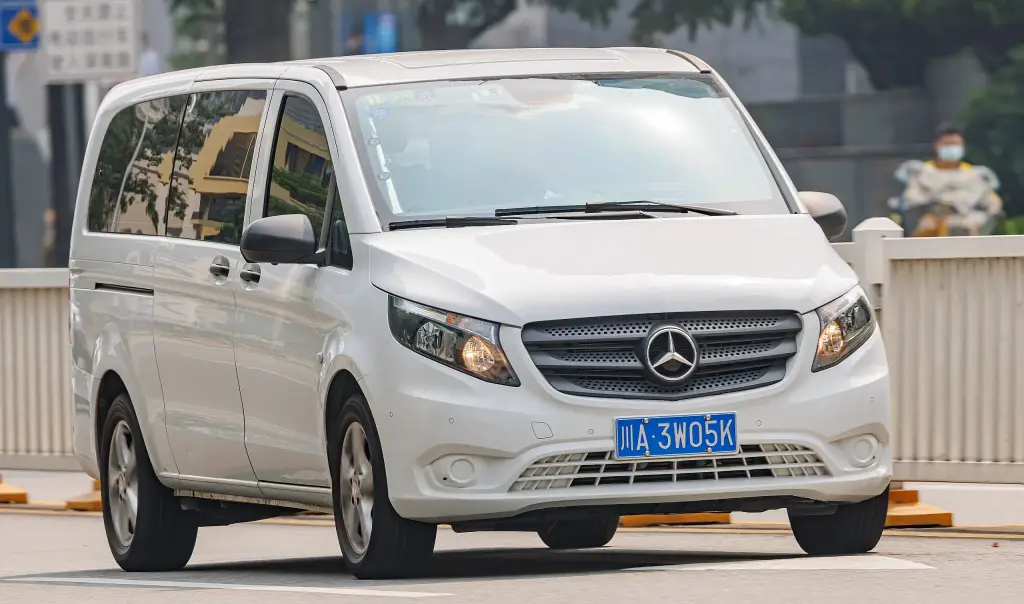
The second generation arrived in 2004 and the vehicle received the Viano name for its passenger version. In 2010 it was facelifted with revised front and rear bumpers and lights, and the interior was improved with better materials and new technology. The third generation was launched in 2014 and returned to the V-Class name. The Vito and Viano are available with rear- or four-wheel drive, in three lengths and two wheelbases, with four petrol and diesel engines plus two specialist tuned models, and with a six-speed manual or five-speed TouchShift automatic gearbox.
In July 1996 a battery-electric version of the W638 was shown as the Vito 108 E. It used a three-phase asynchronous motor of 40 kW (54 hp) with a stall torque of 190 Nm, driving through a five-speed manual gearbox. Energy came from a ZEBRA molten-salt battery under the rear bench seat weighing 420 kg, working at 280 volts with 35.6 kWh and giving a range of up to 170 km. The Vito 108 E reached 120 km/h and could carry up to 600 kg. The W638 was designed by Michael Mauer between 1989 and 1991, with the final design chosen and patented in February 1993, and it competed with vans such as the Volkswagen Transporter, Ford Transit and Renault Trafic.
Design and features
- Many bodies: panel van, chassis cab and multi-purpose vehicle.
- Rear- or all-wheel drive: from the second generation.
- Three lengths: with two wheelbases.
- Early electric van: the Vito 108 E of 1996 with a ZEBRA battery.
Mercedes-Benz Vito versions
- W638 (1996–2003): front-wheel drive, also sold as the V-Class.
- Vito 108 E (1996): battery-electric van with 170 km range.
- W639 (2004): second generation with the Viano name.
- Facelift (2010): new bumpers, lights and interior.
- W447 (2014): third generation, back to the V-Class name.
The Vito sits below the Sprinter and above the small Citan, and took over from the MB100. More in the Mercedes-Benz collection.
Sources
- Mercedes-Benz Vito, English Wikipedia: generations, engines, bodies, electric version