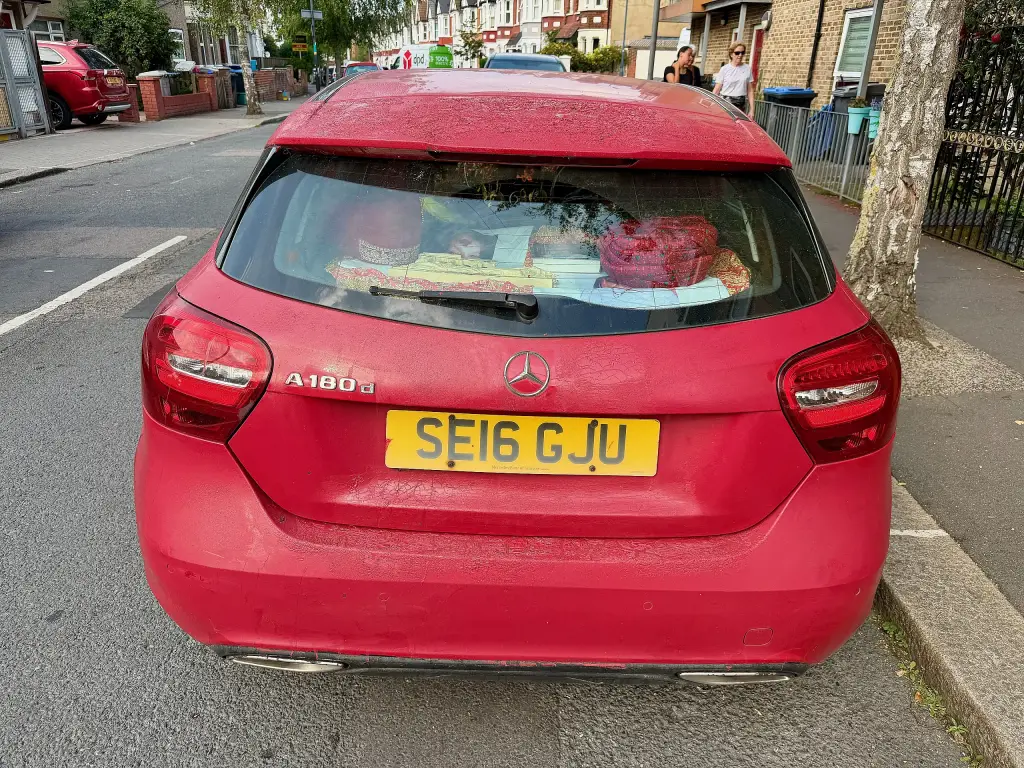
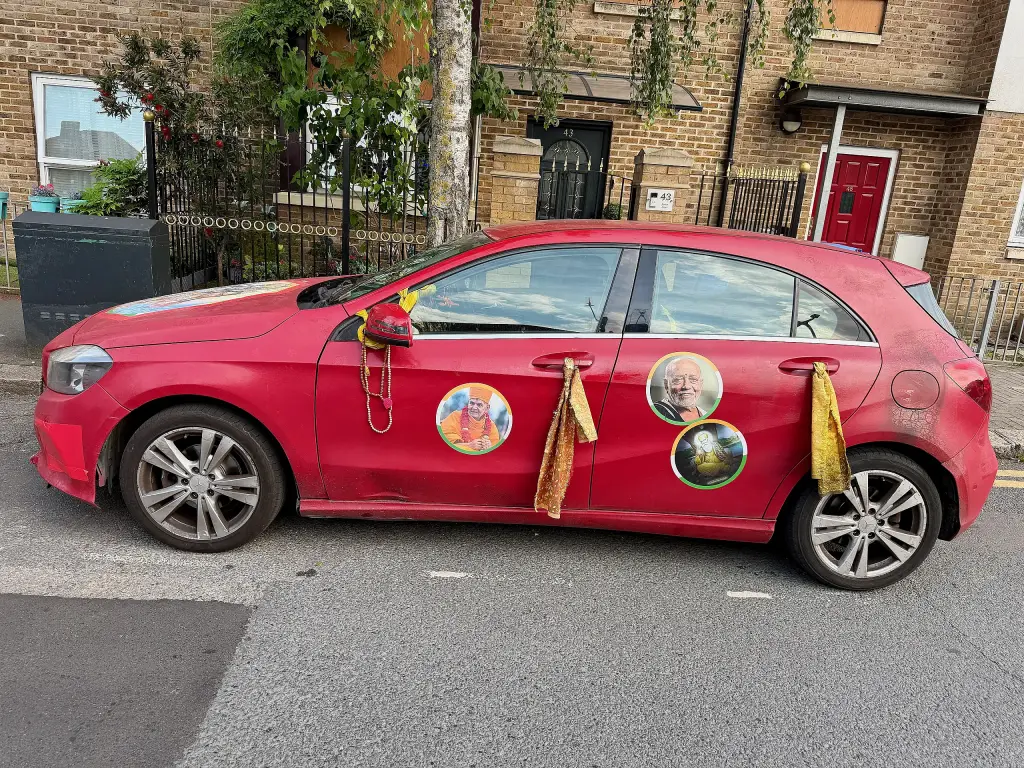
The Mercedes-Benz A-Class is a five-door hatchback and the entry-level model of the brand. It has been sold in four generations, from the W168 of 1997 to the W177 of 2018, which added a saloon version.
Mercedes-Benz A-Class at a glance
| First generation | W168, launched 1997 |
|---|---|
| Second generation | W169, late 2004 |
| Third generation | W176, 2012 |
| Fourth generation | W177, 2018 |
| Layout | front engine, front-wheel drive |
| Bodies | five-door hatchback; three-door in the second generation; saloon in the fourth |
| Designer of the first car | Steve Mattin |
| First show | Frankfurt Motor Show, 1997 |
| W168 production | 1.1 million sold between 1997 and 2004 |
| Total by 2021 | about 3.3 million |
| Notable variant | A 210 Evolution, 2,629 built |
| Fuel-cell version | A-Class F-Cell of 2004, 88 PS, 160 km range |
This article is based on one source, the English Wikipedia article on the Mercedes-Benz A-Class. Free photographs of the A-Class were not available, so the record keeps its earlier picture.
History of the Mercedes-Benz A-Class
In 1994 Mercedes-Benz confirmed that it would build a compact car, the A-Class, by early 1997. The first generation, coded W168, was shown to the press late in 1996 and launched at the Frankfurt Motor Show in autumn 1997. It was unusual for the brand, with front-wheel drive and a short, narrow but very tall body that offered interior space and equipment to match larger cars. The exterior was the first complete design by Steve Mattin, who had worked on the W210 E-Class and was also responsible for the W220 S-Class. The design was frozen in January 1995, 32 months before production began.
The W168 became famous in 1997 when it overturned during the moose test of the Swedish magazine Teknikens Värld. Mercedes-Benz first denied the problem, then recalled all 2,600 cars sold so far and stopped sales for three months while electronic stability control and a modified suspension were developed. The company had spent DM 2.5 billion on the car and a further DM 300 million on the fix. Between 1997 and 2004, 1.1 million first-generation cars were sold, although Daimler lost €1,440 on each one.
The range used four-cylinder engines, with 1.4- and 1.6-litre petrol units at launch and 1.7-litre diesels, a 1.9-litre petrol in 1999 and a 2.1 in 2002. Two AMG versions with 3.2 and 3.8 litres were built in very small numbers. The limited A 210 Evolution of 2,629 cars came only in silver or black. A fuel-cell A-Class F-Cell with an 88 PS electric motor and 160 km range followed in 2004. The second generation arrived in late 2004, the third in 2012 and the fourth in 2018, when the A-Class was first sold in the United States and Canada and gained a saloon.
Design and features
- Tall body: a short footprint with the interior space of a larger car.
- Front-wheel drive: a first for Mercedes-Benz in this class.
- Electronic stability control: added across the range after the 1997 moose-test recall.
- Wide range: petrol, diesel, AMG and fuel-cell versions.
Mercedes-Benz A-Class versions
- W168 (1997–2004): the first generation, 1.1 million sold.
- A 210 Evolution: a limited model of 2,629 cars.
- A-Class F-Cell (2004): hydrogen fuel-cell car with 88 PS.
- W169 (2004): second generation, also with a three-door body.
- W176 (2012): third generation.
- W177 (2018): fourth generation, with hatchback and saloon.
The A-Class sits below the B-Class and the C-Class, and its fuel-cell version is covered in the F-Cell article. More in the Mercedes-Benz collection.
Video: Mercedes A-Class hatchback (2012-2018) review
Video by YouTube on YouTube.
Sources
- Mercedes-Benz A-Class, English Wikipedia: generations, design, moose test, engines