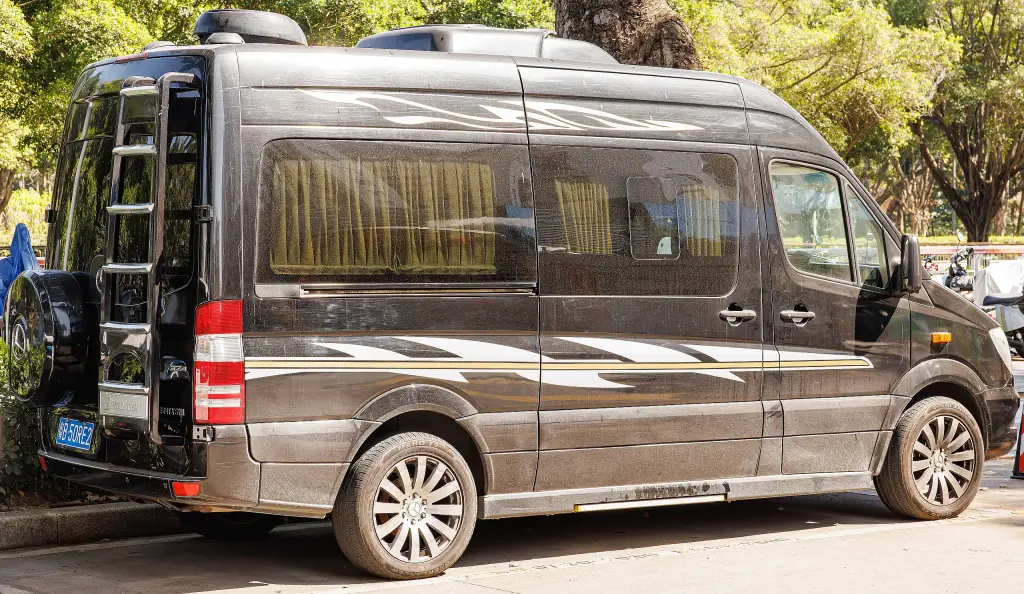
The Mercedes-Benz Sprinter is a light commercial vehicle built as a large van, chassis cab, minibus and pickup. The first generation appeared in Europe in 1995 as the replacement for the T1 van of 1977.
Mercedes-Benz Sprinter at a glance
| First generation | 1995, W903 |
|---|---|
| Replaced | Mercedes-Benz T1 |
| Named, not numbered | the first Mercedes-Benz product with a name |
| Aerodynamics | lower drag than the T1 |
| Engine position | 290 mm further forward than in the T1 |
| Brakes | four-wheel discs with ABS |
| Diesel at launch | 90 kW (120 hp) |
| Award | International Van of the Year 1995 |
| Updates | styling in 2000 and 2002, ESP standard from 2002 |
| North America | Freightliner from 2002, Dodge from 2003 |
| Japan | sold as the Transporter T1N |
| Iran | model 314 still assembled by Iran Khodro Diesel |
This article is based on one source, the English Wikipedia article on the Mercedes-Benz Sprinter.
History of the Mercedes-Benz Sprinter
The Sprinter replaced the T1 in 1995 with lower aerodynamic drag and the engine moved 290 mm forward to increase cabin space. It was the first Mercedes-Benz product to carry a name rather than an alphanumeric designation, came with four-wheel disc brakes and ABS and was driven by the most powerful diesel in its class at 90 kW (120 hp). It was voted International Van of the Year for 1995. The styling was updated in 2000 and 2002, when electronic stability control became standard.

In North America the first generation arrived for the 2002 model year, originally as a Freightliner and from 2003 also as a Dodge. DaimlerChrysler chose not to use the Mercedes-Benz badge because it feared the utilitarian van would harm the luxury image of the brand there, while Freightliner and Dodge had more experience with commercial vehicles. Cargo versions were built in Düsseldorf, partly disassembled and shipped to Gaffney, South Carolina for reassembly, which avoided the 25 per cent tax on imported light trucks; passenger vans came assembled through Mercedes-Benz in Jacksonville. The 2002 and 2003 models used the 2.7-litre OM612 five-cylinder diesel and were sold in 49 states only, while the 2004 to 2006 cars used the OM647 and met California rules. The only gearbox offered there was the five-speed 5G-Tronic.
In Japan the van was sold as the Mercedes-Benz Transporter T1N because Toyota already used the Sprinter name on a version of the Corolla, and the first-generation model 314 is still assembled in Iran by Iran Khodro Diesel. In the Mercedes-Benz van range the Sprinter is the largest model, above the mid-size Vito and the small Citan. Versions have also been sold as the Volkswagen LT and Crafter with different engines, and in North America as Freightliner and Dodge.
Design and features
- Large van range: van, chassis cab, minibus and pickup bodies.
- Improved packaging: lower drag and the engine moved forward for more cabin space.
- Safety equipment: disc brakes and ABS from the start, ESP standard from 2002.
- Name, not number: the first Mercedes-Benz model with a proper name.
Mercedes-Benz Sprinter versions
- W903 (1995): the first generation.
- Freightliner and Dodge versions (2002–2003): North American badges.
- Transporter T1N: the Japanese name.
- Iran Khodro 314: still assembled in Iran.
- Volkswagen LT and Crafter: rebadged versions.
The Sprinter replaced the T1 and is the largest van above the Vito. More in the Mercedes-Benz collection.
Video: Mercedes-Benz Sprinter production
Video by YouTube on YouTube.
Sources
- Mercedes-Benz Sprinter, English Wikipedia: launch, North America, Japan, Iran, range