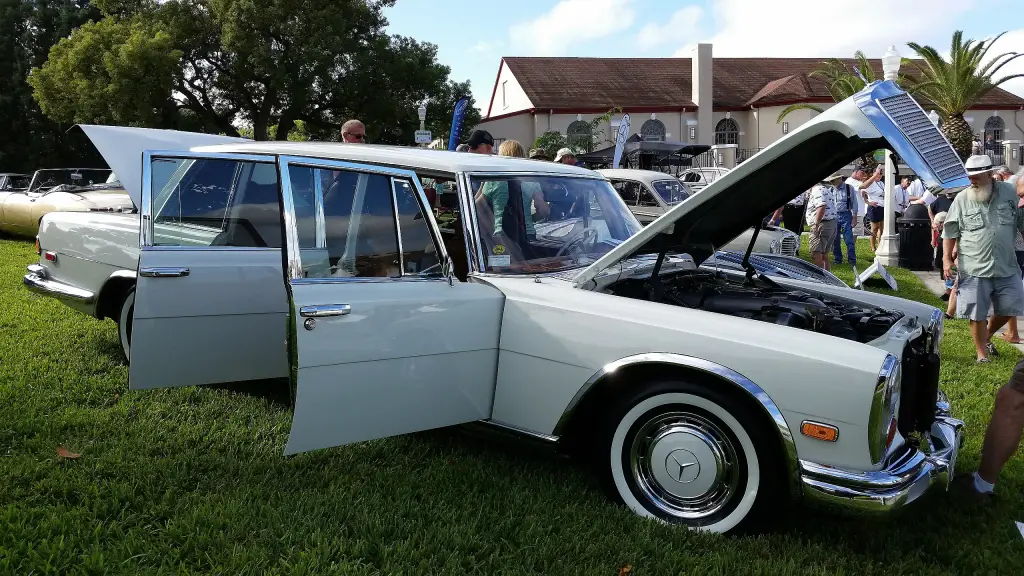
The Mercedes-Benz 600, chassis code W100, is a single generation of full-size luxury limousines made from 1963 to 1981. Nicknamed the Grosser, it was the most expensive car in the world when it appeared in 1963.
Mercedes-Benz 600 at a glance
| Production | 1963–1981 |
|---|---|
| Chassis code | W100 |
| Engine | 6.3-litre V8, M100 |
| Power | 250 PS (184 kW) |
| Fuel system | Bosch mechanical eight-point fuel injection |
| Suspension | pneumatic self-levelling |
| Wheelbases | short and long |
| Variants | saloons, Pullmans, 6-door Pullmans and landaulets |
| Built | 2,677 in total |
| Saloons | 2,190 |
| Pullmans | 304 four-door and 124 six-door |
| Landaulets | 59 |
This article is based on one source, the English Wikipedia article on the Mercedes-Benz 600.
History of the Mercedes-Benz 600
The 600 replaced the 300d (W189) limousine, the last of the 300 series that had served as the company flagship since the early 1950s and which carried the nickname Adenauer. Series production began in August 1963 for the 1964 model year and continued until 1981. Over that time 2,677 cars were built: 2,190 saloons, 304 Pullman limousines, 124 six-door Pullmans and 59 landaulets.
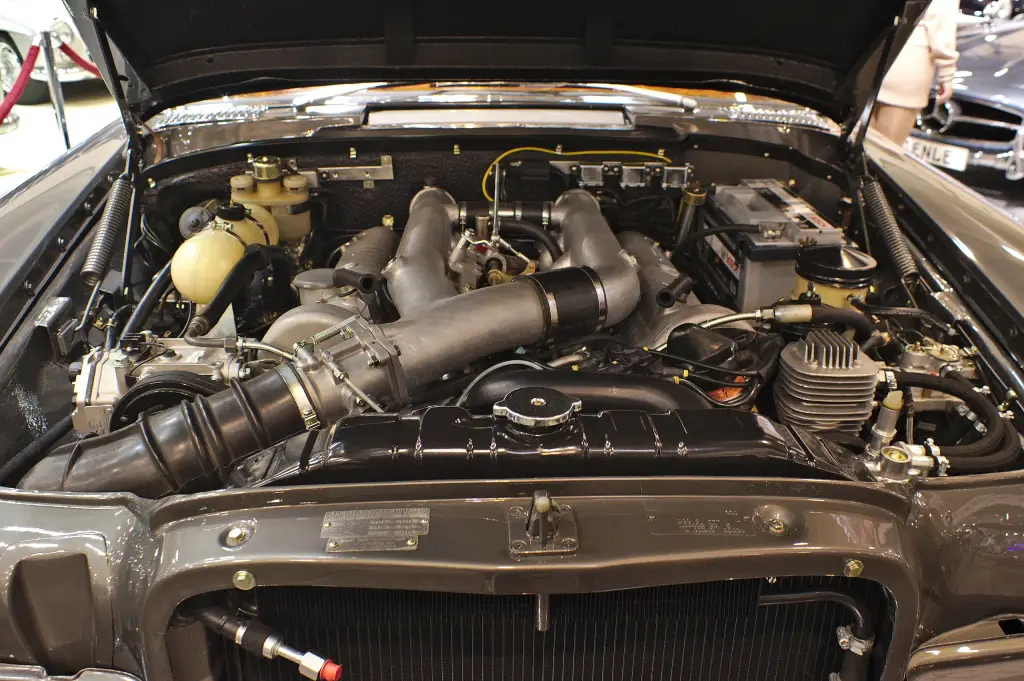
Its size, weight and many hydraulically driven amenities demanded more power than the 3-litre six-cylinder M189 could give. Mercedes-Benz therefore developed a new 6.3-litre V8, the M100, with a single overhead camshaft per bank and Bosch mechanical fuel injection, producing 250 PS. The car also used pneumatic self-levelling suspension, an advance on the 300d, and a version of the idea survives in the company’s Active Body Control. Short-wheelbase cars were usually owner driven, while long-wheelbase and limousine versions, often with a power divider window, were meant for chauffeurs.
The range had two wheelbases and three main variants: a short-wheelbase four-door saloon, a long-wheelbase four-door Pullman with two rear-facing seats, and a long-wheelbase six-door Pullman with jump seats. Many limousines were converted into landaulets with a folding roof over part or all of the rear compartment; 59 were built, including the Presidential roof versions. Mercedes also made a single two-door coupé in 1965 on a shortened 298 cm wheelbase and a single short-wheelbase four-door landaulet in 1967. Landaulets were used by the German government and by the Vatican, and a six-door long-roof car used by Josip Broz Tito sold in England in 2017 for £2.5 million.
Design and features
- 6.3-litre V8: the M100 engine of 250 PS, with Bosch mechanical fuel injection.
- Hydraulic systems: the car’s seats, windows, sunroof and suspension were driven hydraulically.
- Self-levelling suspension: pneumatic, following the 300d and preceding Active Body Control.
- Coachwork for statesmen: Pullmans and landaulets for governments, the Vatican and heads of state.
Mercedes-Benz 600 versions
- Saloon: short-wheelbase four-door, some with a divider window.
- Pullman: long-wheelbase four-door with two rear-facing seats.
- Six-door Pullman: with jump seats at the middle doors.
- Landaulet: 59 built, with a folding roof over the rear seats.
- Coupé (1965): a single two-door car.
- Short landaulet (1967): one car built for a private owner.
The 600 was the flagship above the S-Class and a successor in spirit to the pre-war 770. More in the Mercedes-Benz collection.
Video: 1972 Mercedes-Benz 600
Video by YouTube on YouTube.
Sources
- Mercedes-Benz 600, English Wikipedia: production, engine, variants, history