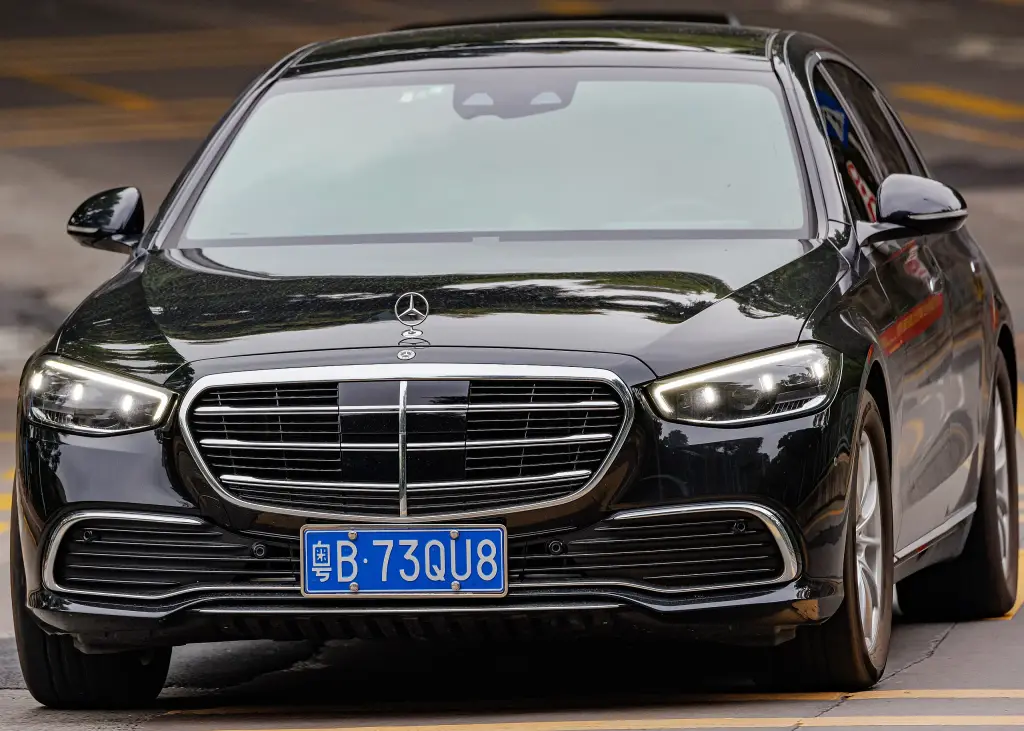
The Mercedes-Benz S-Class is a series of full-sized luxury saloons and coupés. The name comes from Sonderklasse, special class, and was officially introduced in 1972 with the W116.
Mercedes-Benz S-Class at a glance
| Name adopted | 1972, with the W116 |
|---|---|
| Meaning | Sonderklasse, special class |
| Position | flagship model of Mercedes-Benz |
| Generations under the name | six |
| Early use of S | the 170 S of 1949 |
| Coupé line | SEC from 1981, later the CL-Class |
| Coupé separated | 1996, as the CL-Class |
| Coupé reintegrated | as the S-Class Coupé |
| Convertible | A217, one generation only |
| Successors to the coupé and convertible | not planned after 2020 |
This article is based on one source, the English Wikipedia article on the Mercedes-Benz S-Class.
History of the Mercedes-Benz S-Class
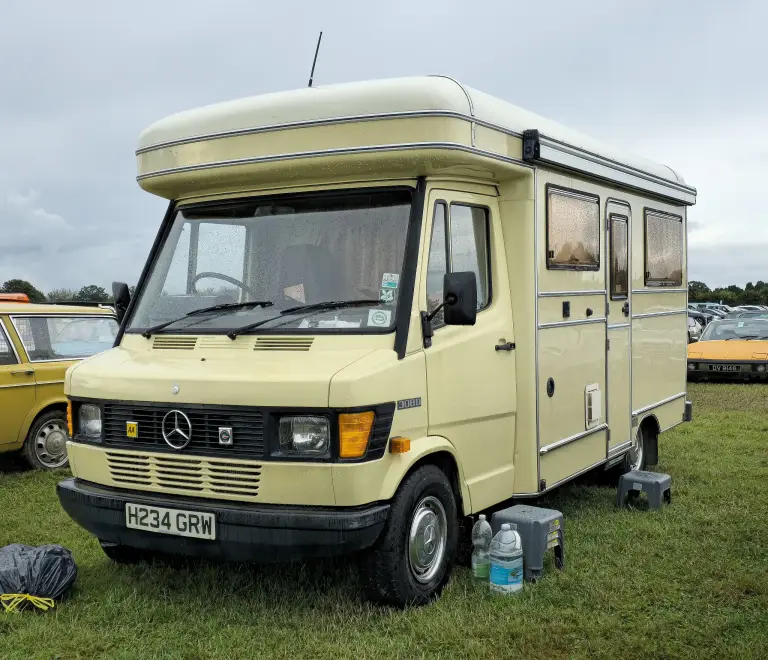
Before the Second World War each Mercedes-Benz model had its own numeric code tied to engine displacement, on the idea that a larger engine meant a more prestigious car. After the war the company used the S suffix to mark a model as special or Sonder. The 170 S of 1949, for example, was a W136 with a more modern chassis and a larger body, and in 1953 the 170 S-D and 170 S-V became the cheap models of the range, showing how a flagship can become an entry model within four years. The S could also mark a separate body style, as with the W188 300 S against the W186 300 limousine, or a facelifted model.
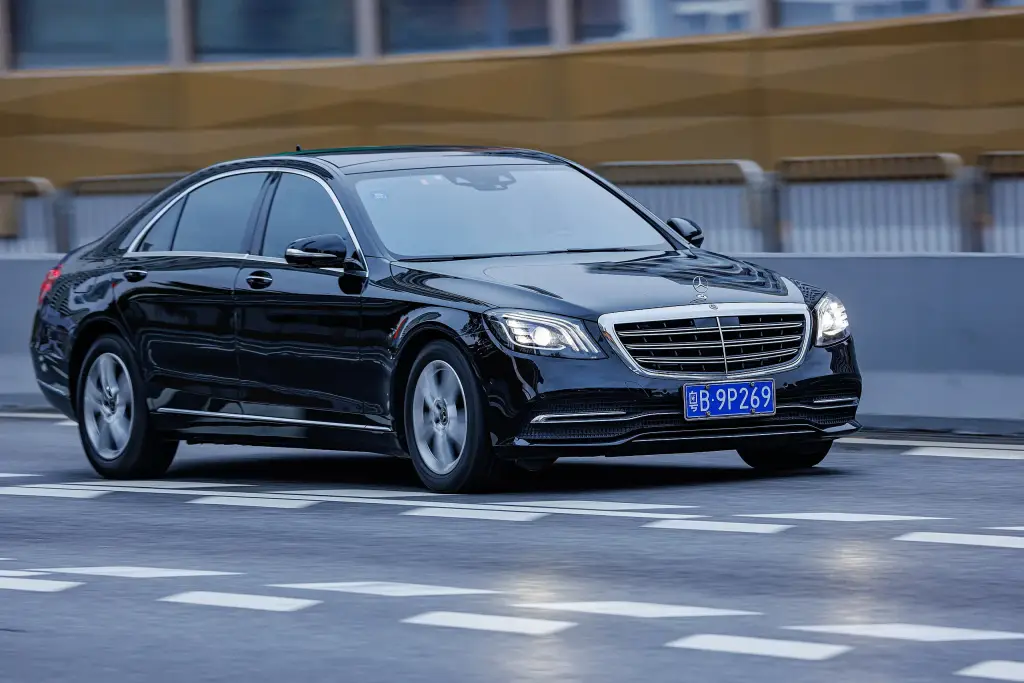
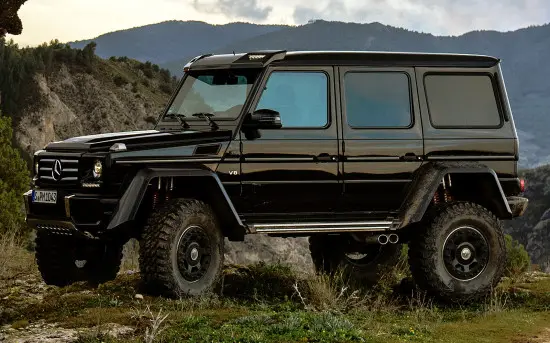
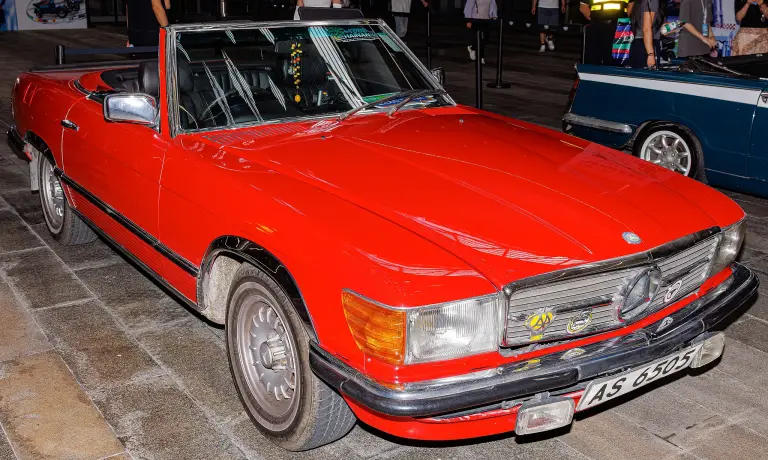
A more consistent use came in 1968 with the /8 series, when S-labelled cars received their own bodies, chassis and powertrains. In 1972 Mercedes-Benz formally branded its top range the Sonderklasse, with the new W116 saloons and the W107 two-door coupés and roadsters. Over the next two decades the S-Class became established, while the question of what belonged to it remained open: the SL roadster, the compact W201 and the W463 G-Wagen sold through normal dealers all sat awkwardly with the name.
The S-Class has introduced many of the company’s latest ideas, from drivetrain technology and interior features to safety systems such as the first seatbelt pretensioners, and it has ranked as the world’s best-selling luxury saloon. In 1981 a two-door four-seat version, the SEC, was added, sharing its V8 engines with the W126 saloon; after a new naming scheme it became the S-Class Coupé, then in 1996 was split off as the CL-Class, and later reintegrated. A convertible, internally A217, was the first S-Class open car since 1972 and lasted a single generation. After W222 production ended in 2020, no successors to the C217 coupé and A217 convertible were planned, because of low demand and the strength of the SUV market.
Design and features
- Flagship: the top of the Mercedes-Benz range since 1972.
- Innovation carrier: new safety and comfort systems appear here first.
- Six generations: saloons from the W116 to the W223.
- Coupé and convertible: SEC, CL-Class and S-Class Coupé over the years.
Mercedes-Benz S-Class versions
- W116 (1972): the first official S-Class.
- W126 and SEC (1979, 1981): saloon and coupé.
- W140 (1991): the large S-Class of the 1990s.
- W220 and W221: the 1998 and 2005 generations.
- W222 (2013): the last with a coupé and convertible.
- CL-Class: the coupé line between 1996 and 2014.
The S-Class sits above the E-Class and C-Class; earlier generations have their own pages, such as the W116 and W126. More in the Mercedes-Benz collection.
Video: Mercedes-Benz W220 S320 CDI
Video by YouTube on YouTube.
Sources
- Mercedes-Benz S-Class, English Wikipedia: naming, history, coupé line, generations