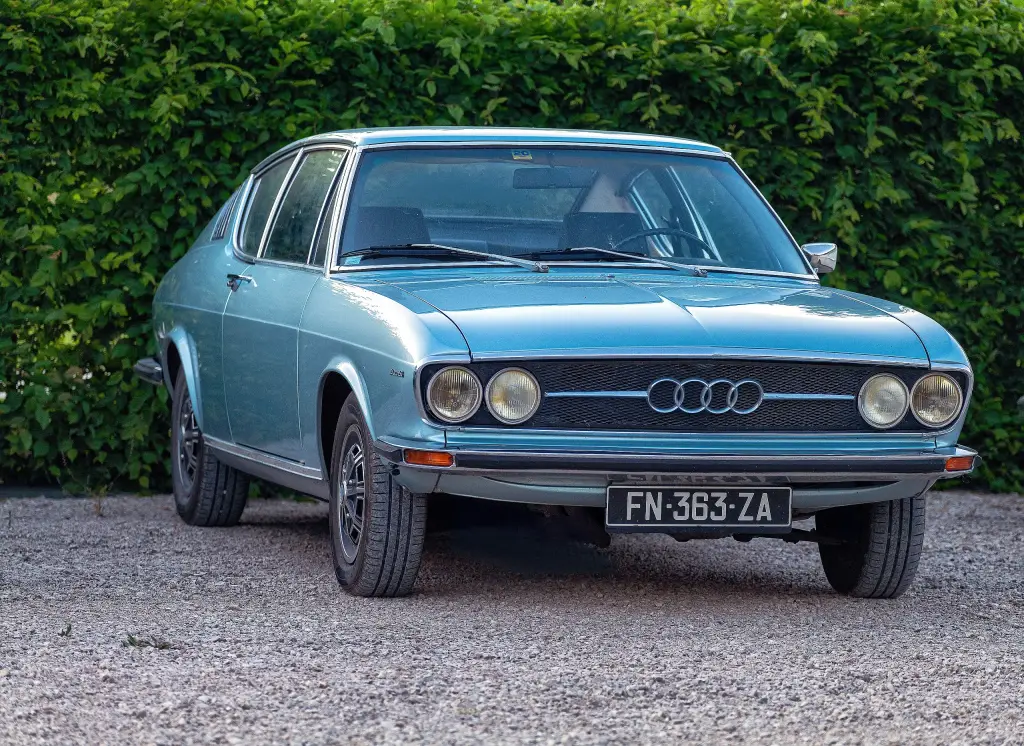
The Audi 100 is an executive car that Audi built in four generations from 1968 to 1994. It was the largest Audi of its time, it brought the five-cylinder engine to the range, and in 1994 it was renamed the Audi A6.
Audi 100 at a glance
| Sold | 1968 to 1994, four generations, C1 to C4 |
|---|---|
| Also called | Audi 5000 in North America, Audi 500 in New Zealand and South Africa |
| C1 | 1968, the first Audi 100; 827,474 cars built |
| C1 engines | 1.8-litre four-cylinders from 80 to 100 PS; the Coupé S had a 1.9 with 115 PS |
| C2 | 1976, the first production car with an inline five-cylinder petrol engine |
| C2 Avant | 1977, a five-door hatchback estate added to the range |
| C3 | 1982, drag coefficient of 0.30 |
| Galvanised body | from 1987 every C3 body was fully zinc-coated |
| quattro | four-wheel drive available from 1984, for the 1985 model year |
| C4 | 1990, new V6 engines and the S4 with a 2.2 turbo |
| Renamed | Audi A6 in July 1994 |
History of the Audi 100
C1 (1968–1976)
The first Audi 100 was unveiled as a four-door saloon on 26 November 1968. Its name came from its 100 PS output, and it was the largest car Audi had built since Volkswagen revived the brand in 1965. The 1.8-litre four-cylinder engines came in 80, 90 and 100 PS versions, and a two-door saloon followed in October 1969. In autumn 1970 Audi added the 100 Coupé S with a bored-out 1.9-litre engine of 115 PS. The C1 was a success: 827,474 cars were built, including 30,687 coupés, and the 500,000th Audi left the line in March 1971. In the United States the 100 LS of 1970 was the first Audi sold there; it was replaced by the Audi 5000 in 1977.
C2 (1976–1982)
The C2 was a completely new car, presented in August 1976. From 1977 it was offered with an inline five-cylinder petrol engine, the first of its kind in a production car, in 115 PS carburettor and 136 PS injection forms. A five-cylinder diesel of 70 PS followed in autumn 1978. In September 1977 Audi added the Avant, a five-door hatchback with a large tailgate and a folding rear seat, and the C2 was the first Audi with a five-speed gearbox. At the 1979 Frankfurt show Audi presented the 200, a more luxurious version with a turbocharged five-cylinder of 170 PS. In North America the C2 was sold as the Audi 5000 from 1978.
C3 (1982–1991)
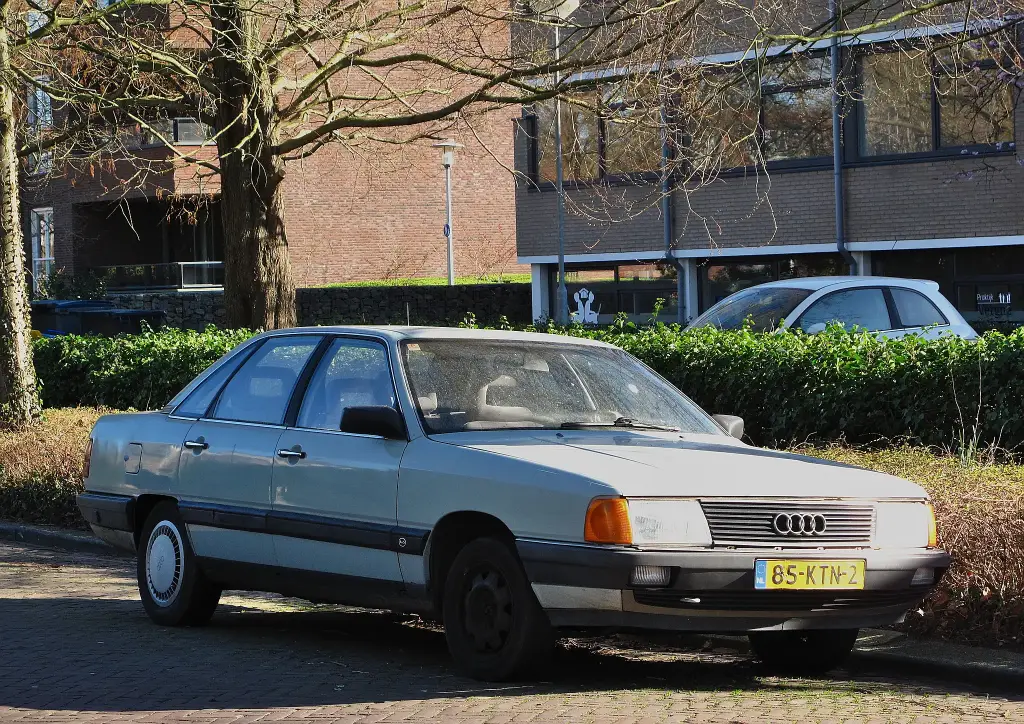
The C3, presented in August 1982, set a record for aerodynamics: its drag coefficient of 0.30 was remarkably low for a large saloon. It was built only as a four-door saloon until the Avant estate returned in mid-1983. The Audi 200 continued alongside it, now with an Avant body from summer 1984. From 1987 the body was fully galvanised, one of the first mass-production cars with a zinc-coated shell. The five-cylinder diesel gained a turbocharger in mid-1983 and became the first direct-injection TDI at the beginning of 1990. From autumn 1984, for the 1985 model year, the 100 and 200 could be ordered with quattro four-wheel drive.
C4 (1990–1994)
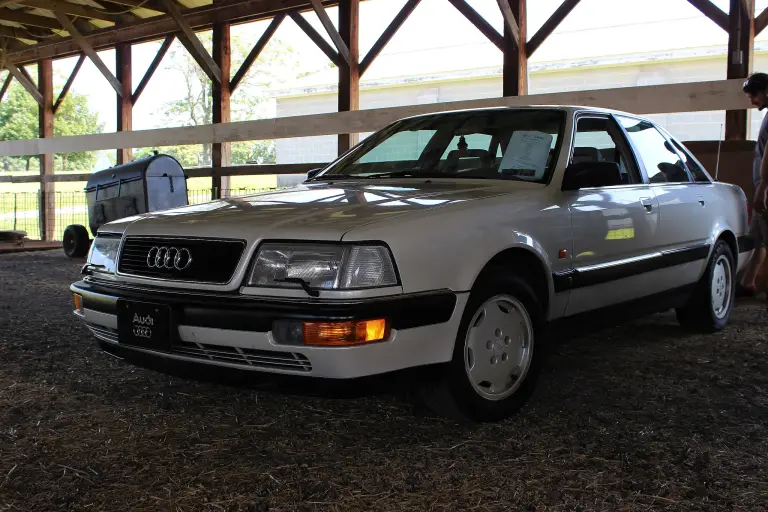
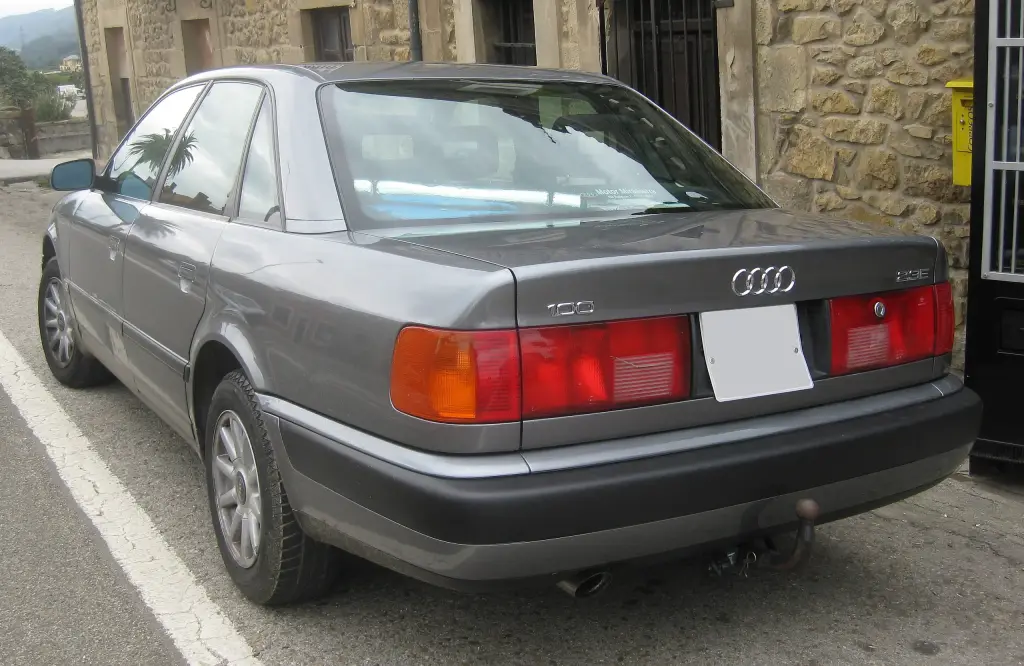
The last Audi 100 appeared at the end of 1990 without a motor show launch, because Volkswagen boss Carl H. Hahn wanted cars presented only once series production had begun. The body was almost completely new and the chassis was revised. A new 2.8-litre V6 with 174 PS joined the four- and five-cylinder engines, followed by a 2.6 V6 of 150 PS, and all petrol engines had a catalytic converter. The Avant returned in autumn 1991 as a pure estate. In mid-1991 the S4 arrived with a 2.2-litre 20-valve turbo of 230 PS and permanent four-wheel drive; from 1992 it could be ordered with the 4.2-litre V8 of 280 PS. In July 1994 the range was renamed Audi A6.
Design and features
- Five-cylinder engine: the C2 of 1976 was the first production car with an inline five-cylinder petrol engine, a layout Audi kept for two decades.
- Aerodynamics: the C3 achieved a drag coefficient of 0.30, which made it a reference point for large saloons of the 1980s.
- Galvanised body: from 1987 the C3 was fully zinc-coated, a rarity in mass production at the time.
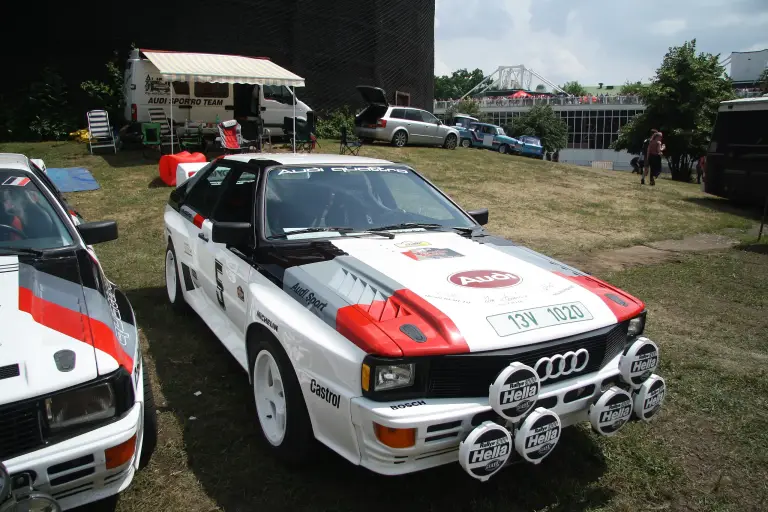
- quattro: four-wheel drive reached the 100 and 200 in 1984, four years after the original Audi Quattro.
- Safety: from 1994 every C4 left the factory with a driver airbag as standard.
Audi 100 versions
- 100 Coupé S: the 1970 fastback coupé with a 1.9-litre engine of 115 PS.
- Audi 200: the luxury version from 1979, with a turbocharged five-cylinder of 170 PS.
- 100 Avant: the estate of 1977, replaced in 1991 by a pure estate body.
- 100 quattro: the four-wheel-drive version offered from 1984.
- Audi S4: the sports model of 1991 with a 2.2 turbo of 230 PS, and a 4.2 V8 of 280 PS from 1992.
The 100 became the Audi A6, and its smaller relative was the Audi 80. The sporting version of the last generation was the Audi S4; more models are in our Audi collection.
Sources
- Audi 100, English Wikipedia: C1 and C2 history, engines, North American names
- Audi 100, German Wikipedia: production figures and the C3 and C4 generations