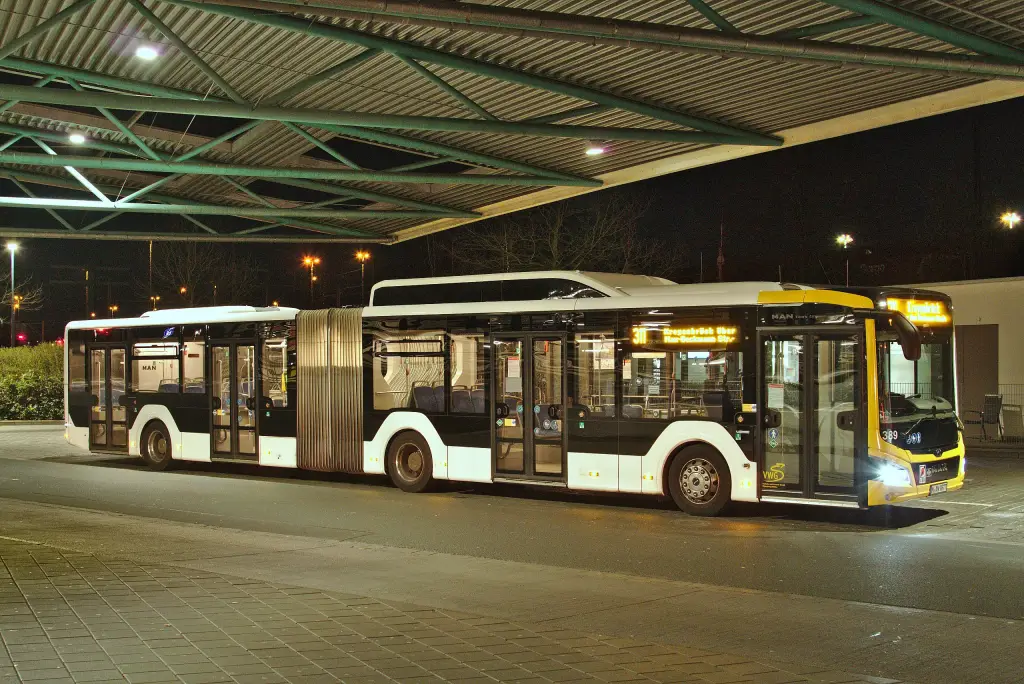
The MAN Lion’s City is the company’s range of low-floor and low-entry public buses, built since 1996 and sold under the Lion’s City name since 2004. It covers 10.5 to 20.45 metre buses, including articulated and double-decker versions, with diesel, gas, hybrid and electric drives.
MAN Lion’s City at a glance
| Production | 1996–present |
|---|---|
| Class | low-floor and low-entry city and intercity buses |
| Name introduced | 2004, with a facelift of the existing models |
| First models | NÜ xx3 (A20) 1996, NL xx3 (A21) 1997, NG xx3 (A23) 1998 |
| Current models | Lion’s City 12, 12 G, 12 E, 18, 18 G, 18 E, M, C, L, G, LE and their variants |
| Engines | six-cylinder turbocharged diesel, CNG or LPG |
| Hybrid | Lion’s City Hybrid with supercapacitors and two 67 kW motors, from 2010 |
| Electric | battery-electric Lion’s City 12 E and 18 E |
| Main plants | Starachowice and Sady, Poland; also Germany, Turkey and Malaysia |
The English and German articles describe the same range with slightly different model lists; this page follows the English one and uses the German article for the development history.
History of the MAN Lion’s City
The first model was the 12-metre low-floor intercity bus NÜ xx3 (A20) in 1996, followed by the 12-metre city bus NL xx3 (A21) in 1997 and the articulated NG xx3 (A23) in 1998. As with earlier MAN bus models, the power rating formed part of the name, so buses of 260 and 310 hp were called NÜ 263 and NÜ 313. The name Lion’s City has been used since 2004, when MAN’s public bus models, until then marketed separately, were gathered into one range and most received a facelift.
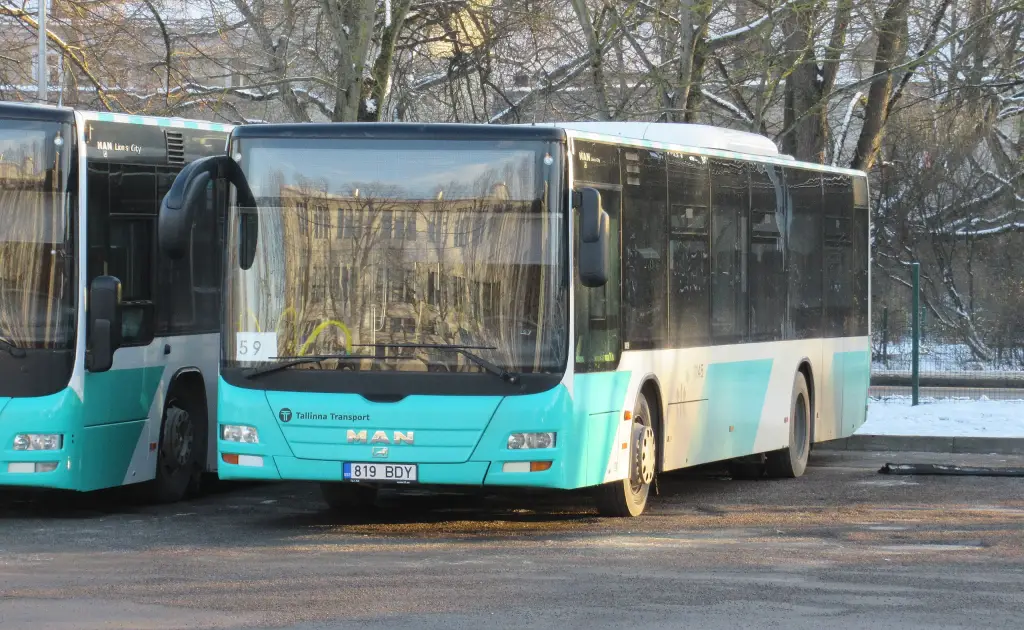
Growth of the range
The range grew with 15-metre versions in 2000, midibuses built by Göppel Bus in Augsburg and later Nobitz, a low-entry line and a double-decker. In 2006 the extended articulated Lion’s City GL appeared as a sister model of the Neoplan N 4522, and in 2007 the four-axle 20.45-metre Lion’s City GXL was shown, although only one was built and sold to St. Gallen. The low-entry Lion’s City T and TÜ were renamed LE and LE Ü in 2008. A new generation with a completely new city bus platform and new design was announced in July 2017 and went into series production in 2019.
Drives and production
Models are available with a six-cylinder turbocharged engine running on diesel, compressed natural gas or liquefied petroleum gas. Versions with hydrogen fuel cell drive, hydrogen combustion engines and diesel-electric hybrid drive have been tested, and the production Lion’s City Hybrid with supercapacitors and two 67 kW electric motors has been available since 2010; hybrid buses use 30% less fuel in urban traffic. Most low-floor buses were built at Starachowice in Poland, with double-deckers at Plauen and low-entry models in Ankara. In October 2023 MAN presented the Lion’s City 12 E LE, and from model year 2024 all Lion’s City models moved to a new electronics platform with a 12-inch digital driver display.
Design and features
- One range: low-floor and low-entry buses from 10.5 to 20.45 metres, including articulated and double-decker models.
- Many drives: diesel, CNG, LPG, hybrid and battery-electric versions.
- Hybrid since 2010: supercapacitors and two 67 kW motors cut fuel use by about 30% in town.
- Polish production: most buses are built at Starachowice, with other plants in Germany, Turkey and Malaysia.
MAN Lion’s City versions
- Lion’s City 12: 12-metre single-decker, also as 12 G (CNG) and 12 E (electric).
- Lion’s City 18: 18-metre articulated bus, also as 18 G and 18 E.
- Lion’s City M: 10.5-metre midibus.
- Lion’s City L and C: 14.7-metre and 13.7-metre single-deckers.
- Lion’s City G and GL: 18-metre and 18.75-metre articulated buses.
- Lion’s City LE: low-entry versions for city and intercity work.
- Lion’s City Ü: low-floor intercity bus.
- Lion’s City DD and GXL: 13.73-metre double-decker and 20.45-metre articulated bus.
The coach version of the range is described in the MAN Lion’s Coach article, and the earlier standard bus in the MAN NL202 article. More MAN buses are in the MAN collection.
Sources
- MAN Lion’s City, English Wikipedia: range, variants, drives, production
- MAN Lion’s City, German Wikipedia: development, renaming, new generation