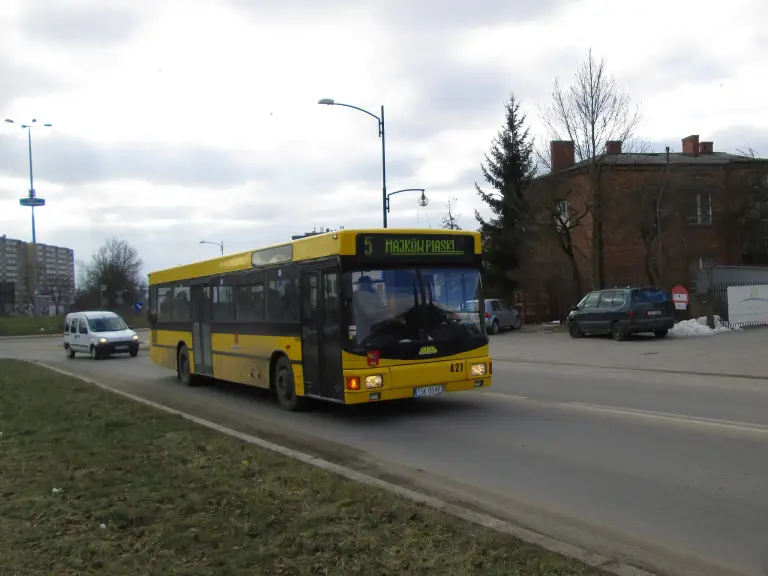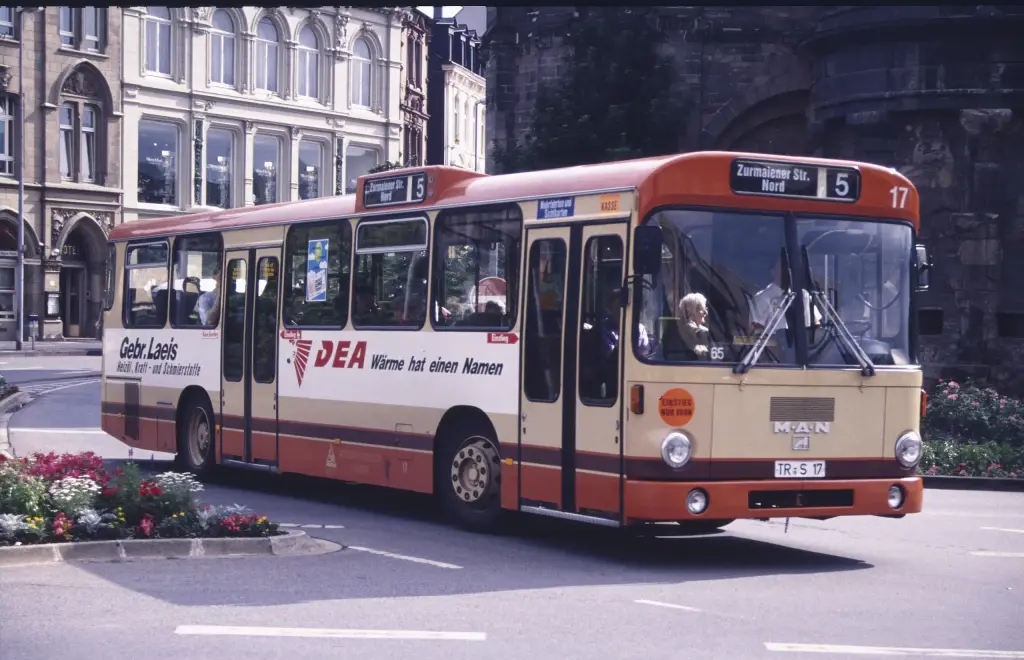
The MAN SL200 was a transit bus built from 1973 to 1988 on the first-generation German VöV standard bus body design. It was MAN’s most successful bus, with more than 5,500 of the standard left-hand-drive version built.
MAN SL200 at a glance
| Production | 1973–1988 |
|---|---|
| Class | standard city bus (VöV first generation) |
| Predecessor | MAN SL 192 |
| Successor | MAN SL202 |
| Built | more than 5,500, left-hand drive |
| Bodies | VöV front or StÜLB front |
| Gearboxes | ZF four- and five-speed manual; Voith, ZF and Renk automatics |
| Update | 1980: three-chamber rear lights, new dashboard, adjustable steering wheel |
| Electric | SL-E battery buses from 1974, 22 built |
| Exports | right-hand-drive chassis for Australia and New Zealand |
The English article gives production as 1973–1988; the German one says series production ended in 1986, with the remaining years covering export chassis.
History of the MAN SL200
The SL200 was designed to the VöV rules for a standard city bus and arrived in 1973 as a development of the MAN SL 192. It was first built until 1975 at the former Büssing works in Salzgitter-Watenstedt alongside the SL 192. Like its predecessor it was offered with the VöV front, with horizontally curved windscreens, or the StÜLB front, with screens curved vertically at the sides; the SL 200 came from the standard bus family in which Mercedes-Benz and Magirus-Deutz also offered largely similar models.
Success and updates
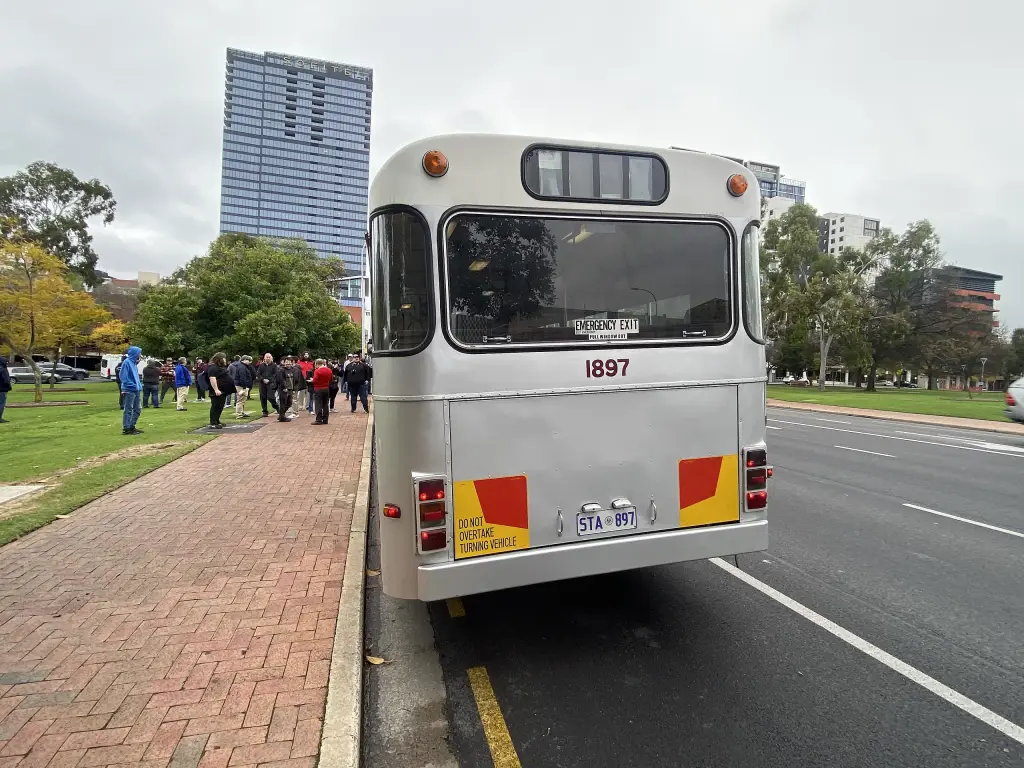
With about 5,500 built the SL 200 was probably MAN’s most successful bus and served many German operators. It was available with ZF four- and five-speed manual gearboxes and with automatic transmissions from Voith, ZF and Renk, and several axle ratios could be ordered. From 1980 the buses received three-chamber rear lights, a revised dashboard and an adjustable steering wheel. In the mid-1980s the second-generation standard bus, the MAN SL 202, replaced it, and production ended in 1986; the SL200 was still built for export chassis markets until 1988. The buses have largely disappeared from German streets, though some remain in eastern Europe, where they were often sold used.
Electric and trolleybus versions
In February 1970 RWE pushed for an electric city bus based on an MAN Metrobus, powered by a Varta lead-acid battery. The 1.4-tonne battery travelled in a single-axle trailer. After trials in Koblenz, with the Rheinbahn in Düsseldorf and at the 1972 Munich Olympics, further battery buses were built from 1974 under the name MAN SL-E on the SL 200 basis, again with the battery in a trailer; 22 existed, the first eight for Mönchengladbach and 14 for the Düsseldorf Rheinbahn, where the last electric bus was retired in 1988. A single SL 200 trolleybus was built in 1984 with electro-hydraulic-mechanical drive, a 180 kW electric motor and a diesel engine as well, making it a de facto duo-bus; it was used by MAN as a demonstrator with the Basel and Lausanne trolleybus systems.
Design and features
- VöV standard: designed to the first-generation German standard bus rules, with VöV or StÜLB front ends.
- Many transmissions: manual and automatic gearboxes from ZF, Voith and Renk.
- SL-E battery bus: 22 electric buses with the traction battery in a single-axle trailer.
- Exports: right-hand-drive chassis for Australia and New Zealand.
MAN SL200 versions
- SL 200 with VöV front: horizontally curved windscreen.
- SL 200 with StÜLB front: windscreen curved vertically at the sides.
- 1980 update: three-chamber rear lights and a new dashboard.
- SL-E: battery-electric bus built from 1974.
- SL 200 trolleybus: one 1984 duo-bus with electric and diesel drive.
- Right-hand-drive chassis: exported for local bodywork.
The SL200 was replaced by the MAN SL202, which in turn was followed by the low-floor MAN NL202. More MAN buses are in the MAN collection.
Sources
- MAN SL200, English Wikipedia: production, customers, exports
- MAN SL 200, German Wikipedia: development, transmissions, SL-E and trolleybus