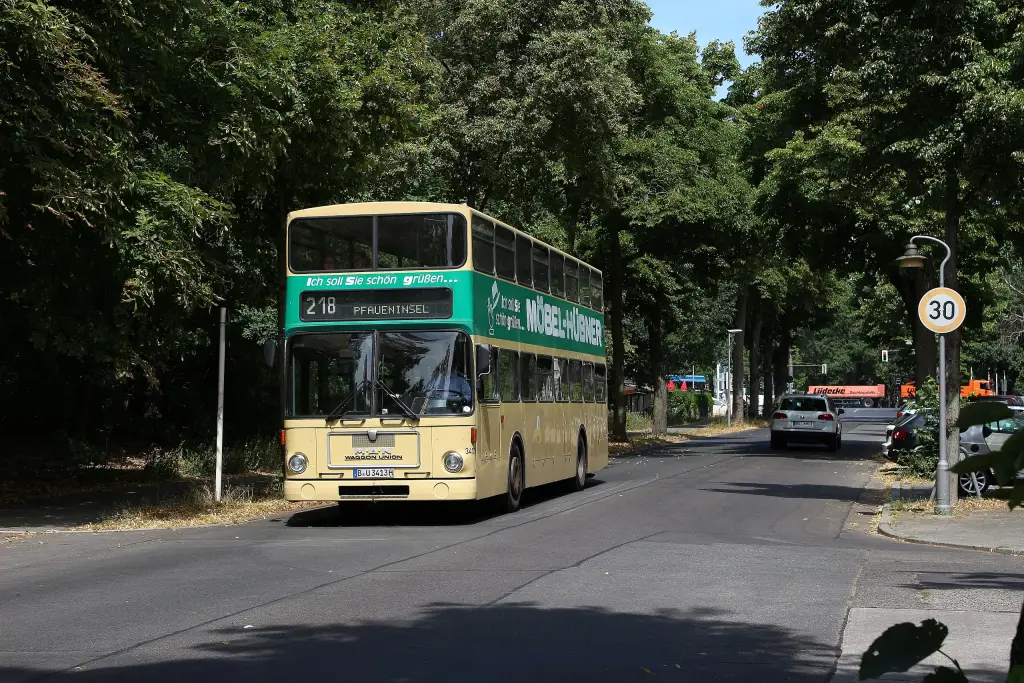
The MAN SD200 was a double-decker bus designed for West Berlin’s city services. It appeared in 1973 as the successor to the Büssing DE and was built until 1985, mainly for the BVG.
MAN SD200 at a glance
| Production | 1973–1985 |
|---|---|
| Class | double-decker city bus |
| Predecessor | Büssing DE |
| Successor | MAN SD202 |
| Chassis | MAN with MAN diesel and Voith automatic |
| Bodies | Gaubschat, Waggon Union and Orenstein & Koppel |
| BVG fleet | 956 buses |
| Other buyers | Lübeck-Travemünder Verkehrsgesellschaft, 8 buses |
| Baghdad order | 600 buses, deliveries from mid-1980 |
| Last in service | 2003, Berlin |
The SD200 has no English Wikipedia article; this page is written from the German one.
History of the MAN SD200
The SD200 was designed for West Berlin’s city bus network and appeared in 1973 as the successor to the Büssing DE. The bodies were built by the Berlin coachbuilders Gaubschat, Waggon Union and Orenstein & Koppel on MAN chassis with a MAN diesel engine and a Voith automatic gearbox under the rear platform. The self-supporting body had a steel-tube frame for the lower deck and mezzanine and aluminium profiles for the upper deck, with riveted aluminium panels outside. The design followed the VöV standard bus guidelines of the late 1960s, but the bus received the StÜLB front with windscreens curved vertically at the sides, like the BVG’s other standard buses.
Into service
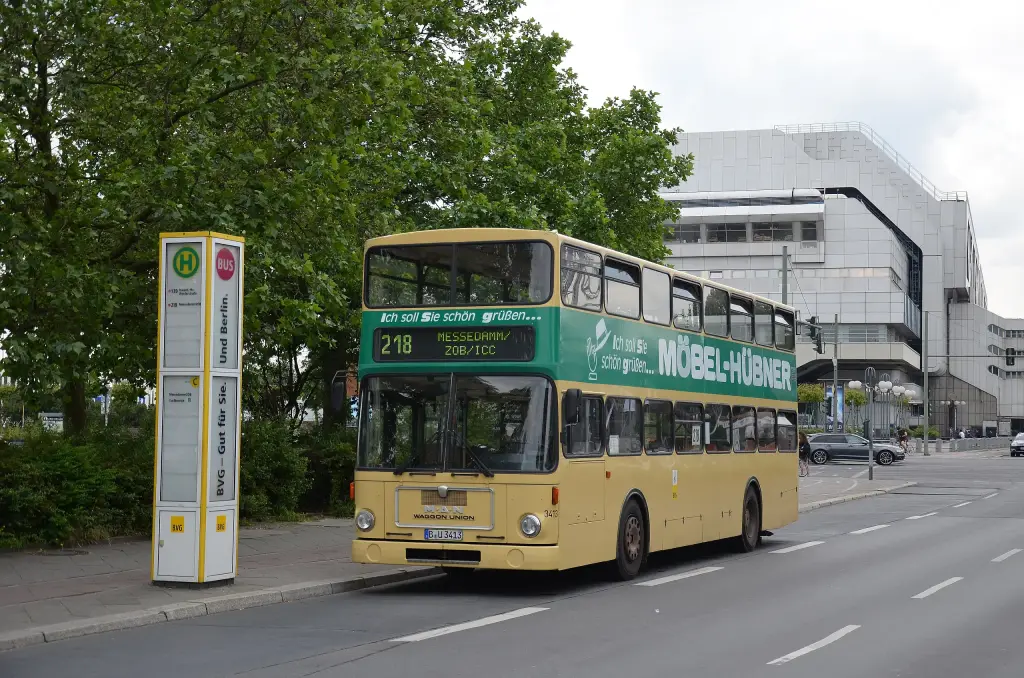
Two prototypes with a slightly different appearance were built by Gaubschat and shown at the IAA in September 1973. Series production began in August 1974, and the first series, SD 74 (vehicles 2623–2645), entered service in February 1975. The BVG received 956 buses of the SD 200 range; eight more went to the Lübeck-Travemünder Verkehrsgesellschaft. In Berlin the buses were known internally as SD followed by the last two digits of the order year, for example SD 78 for 1978. The middle door, which had been an exit only, lost its folding bars and gained a spring-loaded step that kept the door open under load, making it easier for passengers with prams. From 1976 a three-stage Voith gearbox and, from 1975, planetary axles gave the buses their unmistakable sound; from 1978 a second staircase behind the driver improved passenger flow, and from the SD 81 series the facelift of the standard bus was adopted.
Baghdad and afterwards
In 1979 MAN received an order from Baghdad’s state transport company for 400 two-axle double-deckers, increased to 600 in 1980, with deliveries starting in mid-1980. The bodies were built by Waggon Union on a modified MAN standard bus floorpan and the buses had ZF 4 HP 500 automatic gearboxes with retarder; because of their height they left Berlin-Spandau by barge for the ports of Hamburg and Bremen. In 1980 and 1983 three prototypes of the successor SD 202 were built, and SD 200 production ended in 1985. The last SD 200 left Berlin service in 2003. Many were converted into open-top sightseeing buses, and some Hamburg operators replaced the MAN engines with Mercedes-Benz units for better emissions.
Design and features
- Made for Berlin: a double-decker designed around the BVG’s requirements, with the StÜLB front.
- Three coachbuilders: Gaubschat, Waggon Union and Orenstein & Koppel built the bodies on MAN chassis.
- Passenger improvements: a spring-loaded middle-door step and a second staircase from 1978.
- Baghdad order: 600 buses for Iraq, shipped by barge from Berlin-Spandau.
MAN SD200 versions
- SD 74 to SD 83: BVG series named after the order year.
- Prototypes 2514 and 2515: the two 1973 show buses.
- LVG buses: eight vehicles for Lübeck–Travemünde.
- Baghdad buses: 600 two-axle double-deckers on a modified floorpan.
- Sightseeing conversions: open-top buses with a removable roof.
The SD200 was replaced by the MAN SD202, and the single-decker of the same generation is the MAN SL200. More MAN buses are in the MAN collection.
Sources
- MAN SD 200, German Wikipedia: development, BVG fleet, Baghdad order, sightseeing conversions