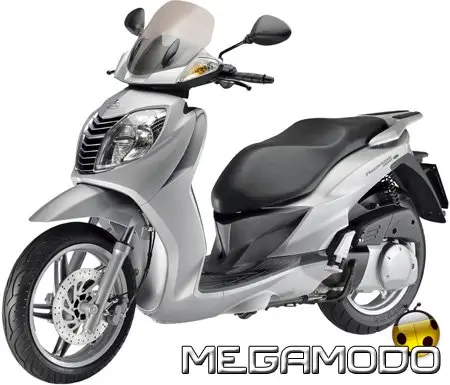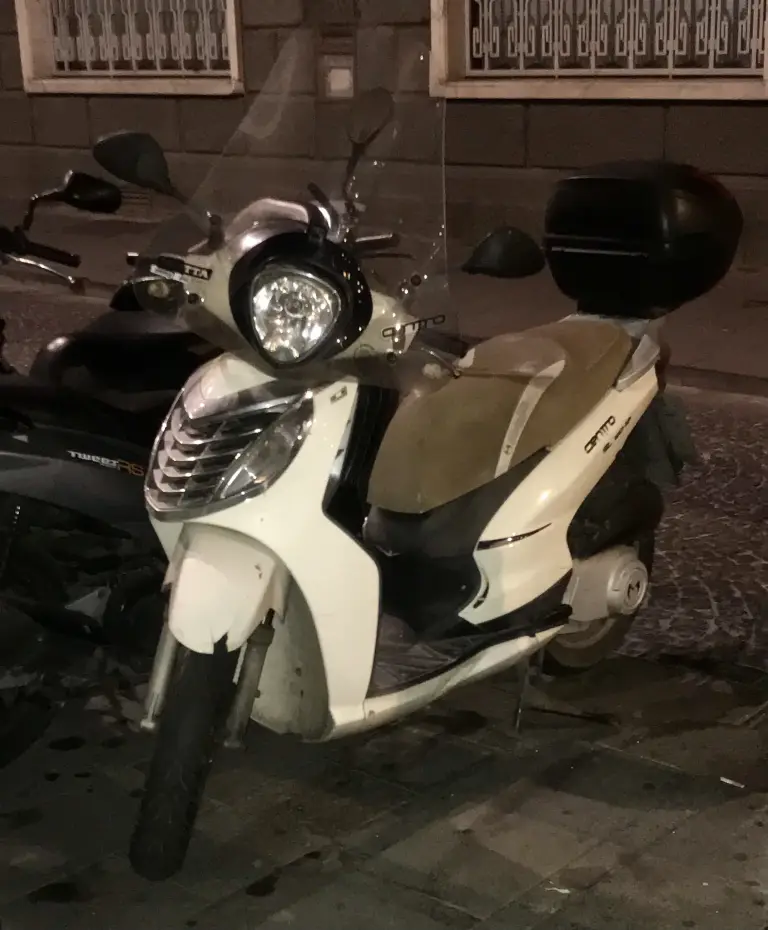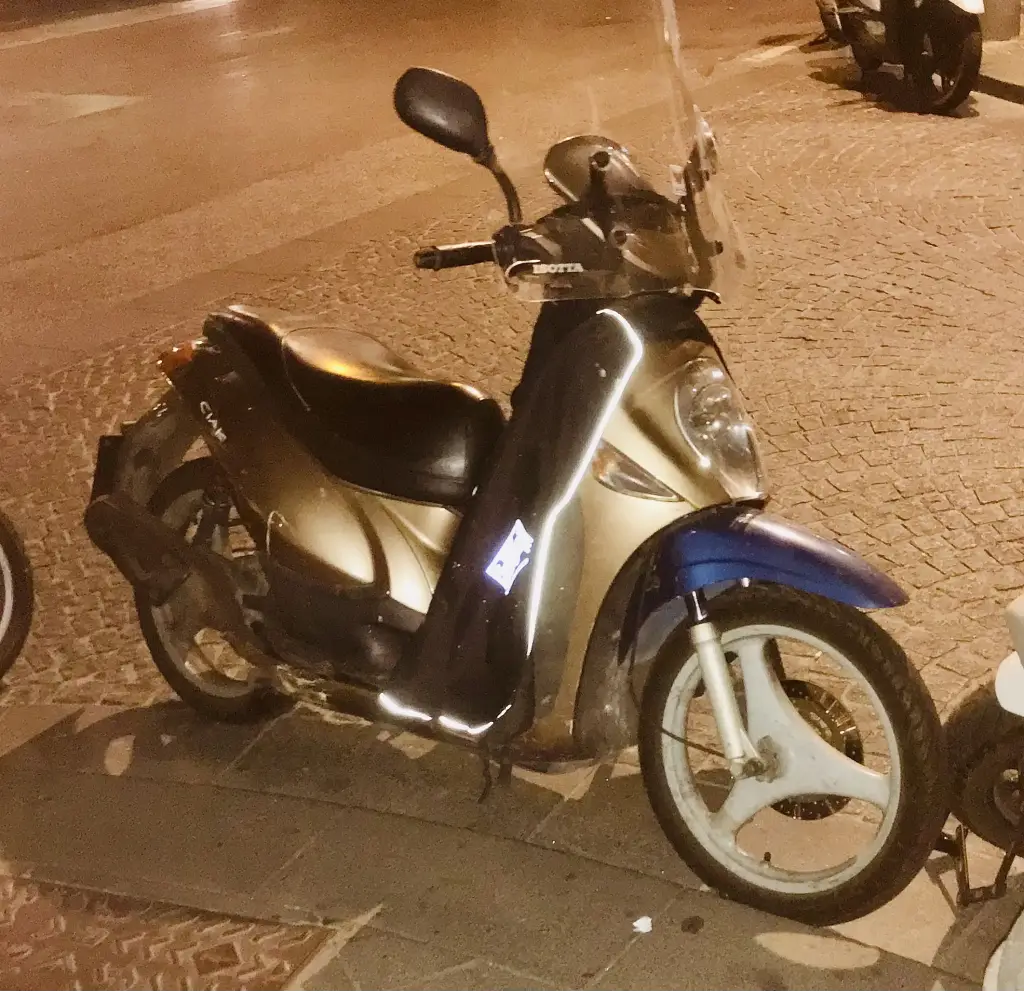
The Malaguti Ciak is a high-wheeled scooter produced by Malaguti from 1999 to 2011 at the historic factory in Castel San Pietro Terme. With 16-inch wheels and a flat platform, it replaced the ageing Centro 50 and became one of the brand’s best-selling models.
Malaguti Ciak at a glance
| Maker | Malaguti, Castel San Pietro Terme (Bologna) |
|---|---|
| Production | 1999–2011 |
| Presented | Intermot Munich, October 1998 |
| Wheels | 16-inch |
| First engines | 50 and 100 cc Yamaha-Minarelli two-stroke, Euro 2 |
| Added in 2000 | 125 and 150 cc Kymco four-stroke four-valve |
| 2003 restyling | Ciak Master: new shield, headlight, three-spoke wheel and saddle |
| 2005 range | 50 cc four-stroke Piaggio; Ciak 200 with Kymco engine |
| Electric version | Ciak Electric Power, from November 2000 |
| Production ended | April 2011 |
Based on one source: the English Wikipedia article on the Malaguti Ciak.
History of the Malaguti Ciak
The Ciak was presented at the Intermot show in Munich in October 1998 together with the maxiscooter Madison, both part of Malaguti’s strategy of renewed products. It was a high-wheeled scooter with 16-inch wheels and a flat platform with a compartment under the saddle able to take a demi-jet helmet. Production began in the spring of 1999 and the model was intended to replace the elderly Centro 50, in production since 1992. At its debut the engine range consisted of 50 and 100 cc Yamaha-Minarelli two-strokes approved to Euro 2. The Ciak immediately found favour with the public and became one of the best-selling models of the brand; the following year the 125 and 150 were introduced, with single-cylinder four-stroke four-valve engines produced by Kymco.
In September 2001 an update brought a double disc braking system front and rear, available for a fee, and a prototype of the four-stroke Ciak 100 was shown with a new Piaggio engine intended to replace the old 100 two-stroke Minarelli. The 100 four-stroke never reached production and the older two-stroke, fitted with a catalytic converter, continued until 2003.
The Ciak Master
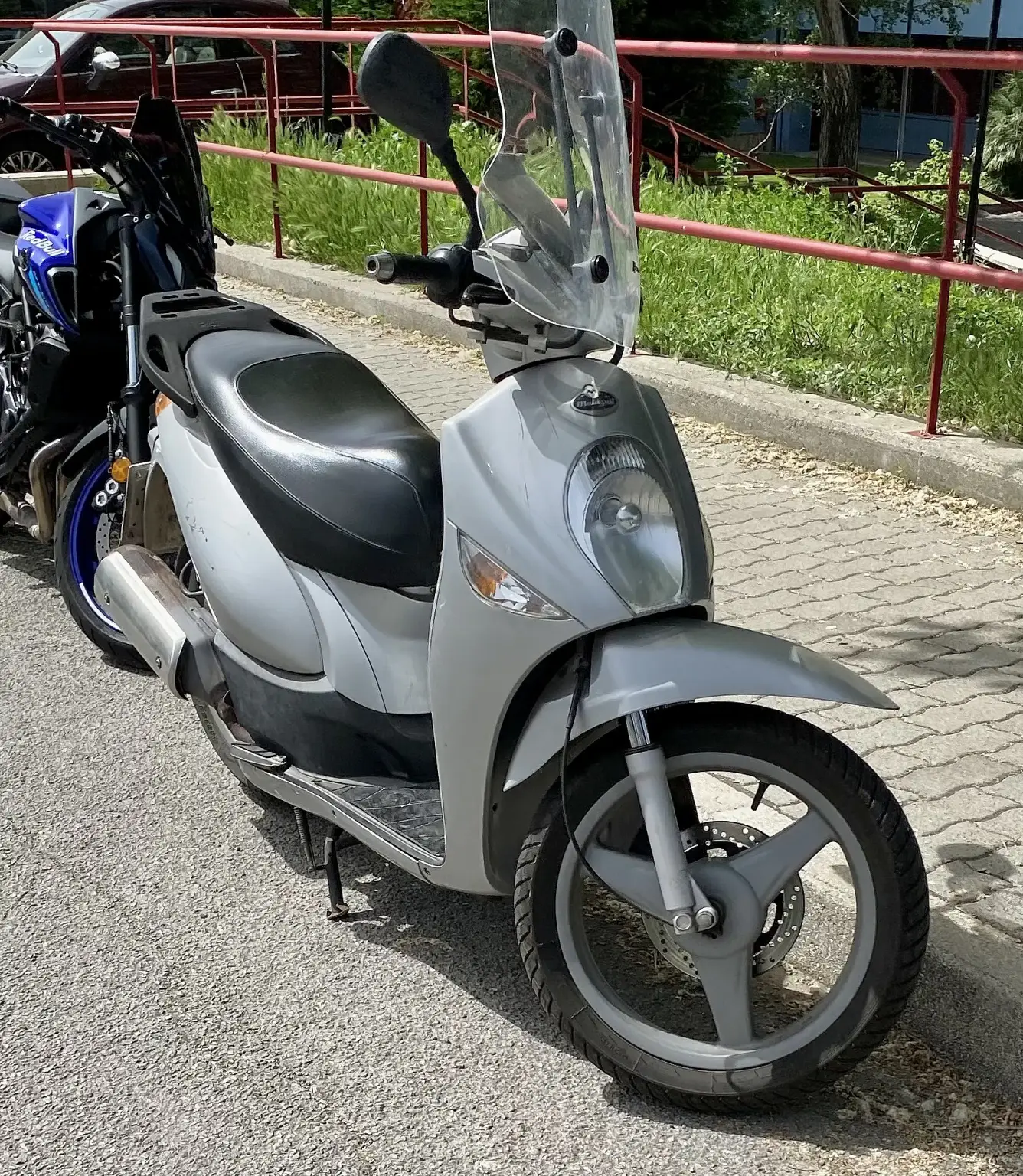
In November 2003 the Ciak received its first restyling: the front shield and headlight were changed, a front wheel with a new three-spoke design and a new saddle made their debut. The 100 engine went out of production and was permanently replaced by the 125, while the 50 remained in production in its pre-restyling form. In the spring of 2004 the 50 two-stroke was restyled too and adopted the name Ciak Master. A 2005 update of the range introduced the new 50 four-stroke with Piaggio engine and the top-of-the-range Ciak 200 with a four-stroke Kymco engine; the Ciak 150 went out of production in 2006. Production of all Ciak models ended in April 2011 following the financial difficulties of the parent company.
Ciak Electric Power
In November 2000 the Ciak Electric Power, the first electric moped produced by Malaguti and developed with Engines Engineering, also went into production. It had the same bodywork as the petrol Ciak but carried four maintenance-free 12 V lead-acid batteries connected in series for a total of 48 V. Three batteries sat on the platform, which was no longer flat, and the fourth in the compartment under the saddle; the wheels were 12 inches instead of 16 and the instrumentation was a dedicated LCD. The electric motor delivered 1.23 kW at 1,400 rpm and a maximum torque of 17 Nm. Charging took three hours for 80 per cent of capacity and six hours for 100 per cent, the weight was 145 kg including 66 kg of batteries, and the range was between 45 and 60 km with a limited top speed of 45 km/h, matching the approval of a 50 cc scooter.
Design and features
- 16-inch wheels: large wheels and a flat floor, the classic Italian high-wheel layout.
- Storage: an under-saddle compartment able to take a demi-jet helmet.
- Mixed engines: Yamaha-Minarelli two-strokes at first, then Kymco and Piaggio four-strokes.
- Electric Power: Malaguti’s first electric moped, with lead-acid batteries and a 45 km/h limit.
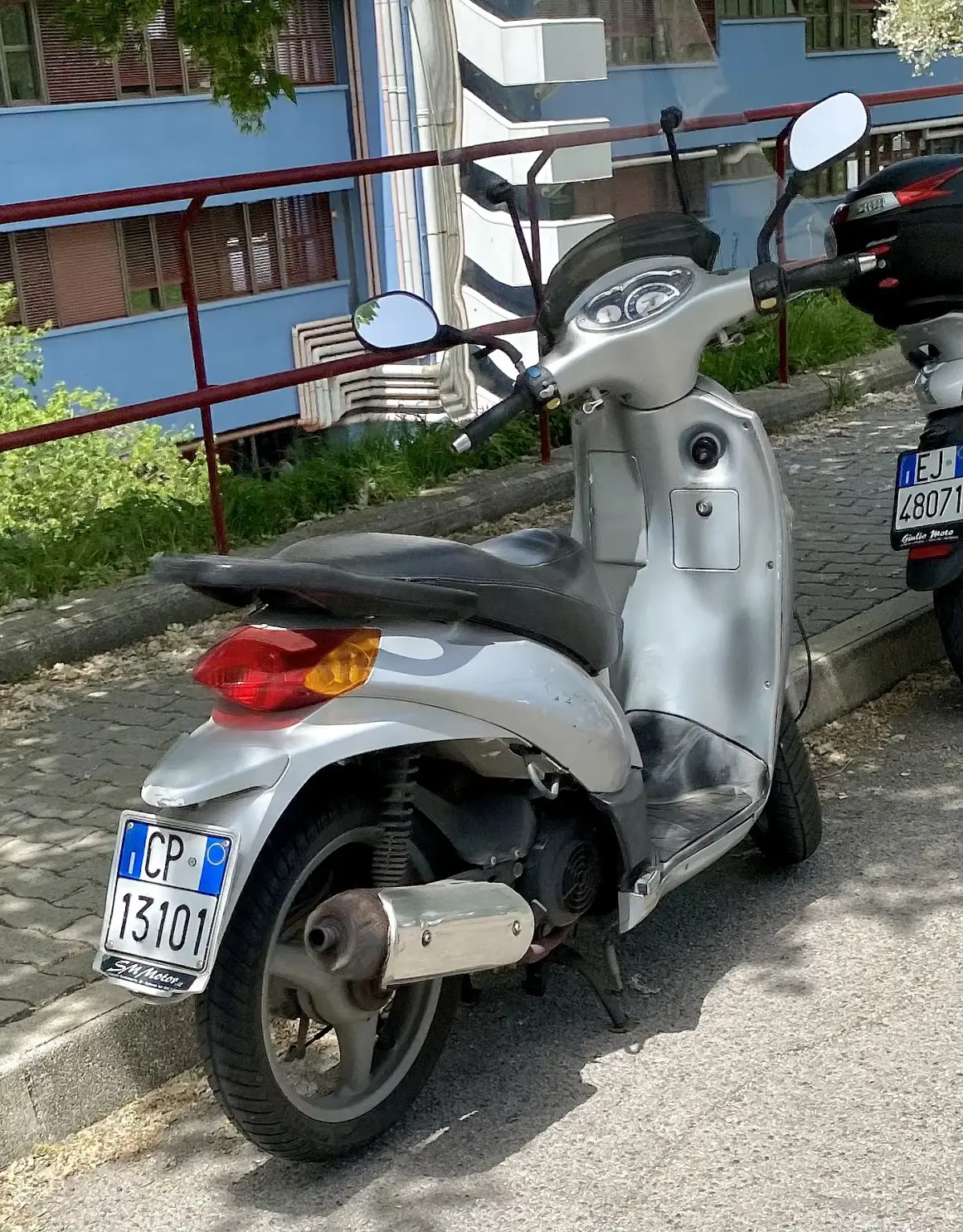
Malaguti Ciak versions
- Ciak 50 and 100 (1999): Yamaha-Minarelli two-strokes, Euro 2.
- Ciak 125 and 150 (2000): Kymco four-stroke four-valve engines.
- Ciak Electric Power (2000): 48 V lead-acid electric moped, 12-inch wheels.
- Ciak Master (2003): restyled shield, headlight, wheel and saddle; 125 replaces the 100.
- Ciak 50 four-stroke and Ciak 200 (2005): Piaggio and Kymco four-stroke engines.
- Ciak 50 two-stroke (2004): restyled and renamed Ciak Master.
The Ciak replaced the Malaguti Centro in the range and was presented alongside the Madison. The Password later joined it in the price lists. More models are in the Malaguti collection.
Sources
- Malaguti Ciak, English Wikipedia: history, engines, restyling, Electric Power