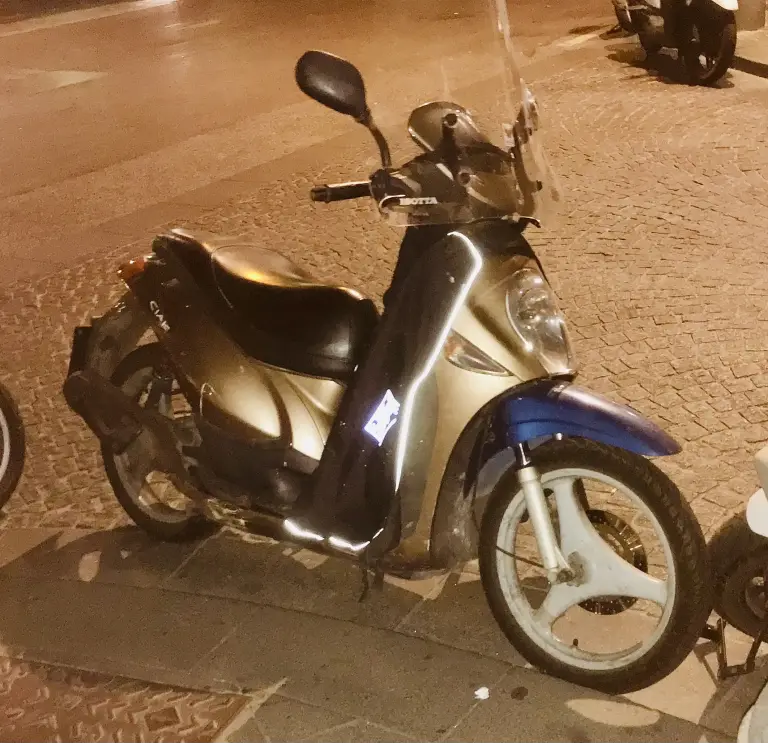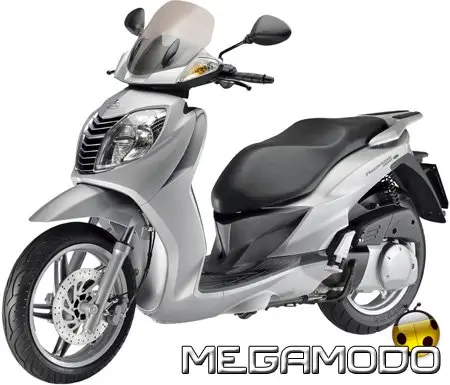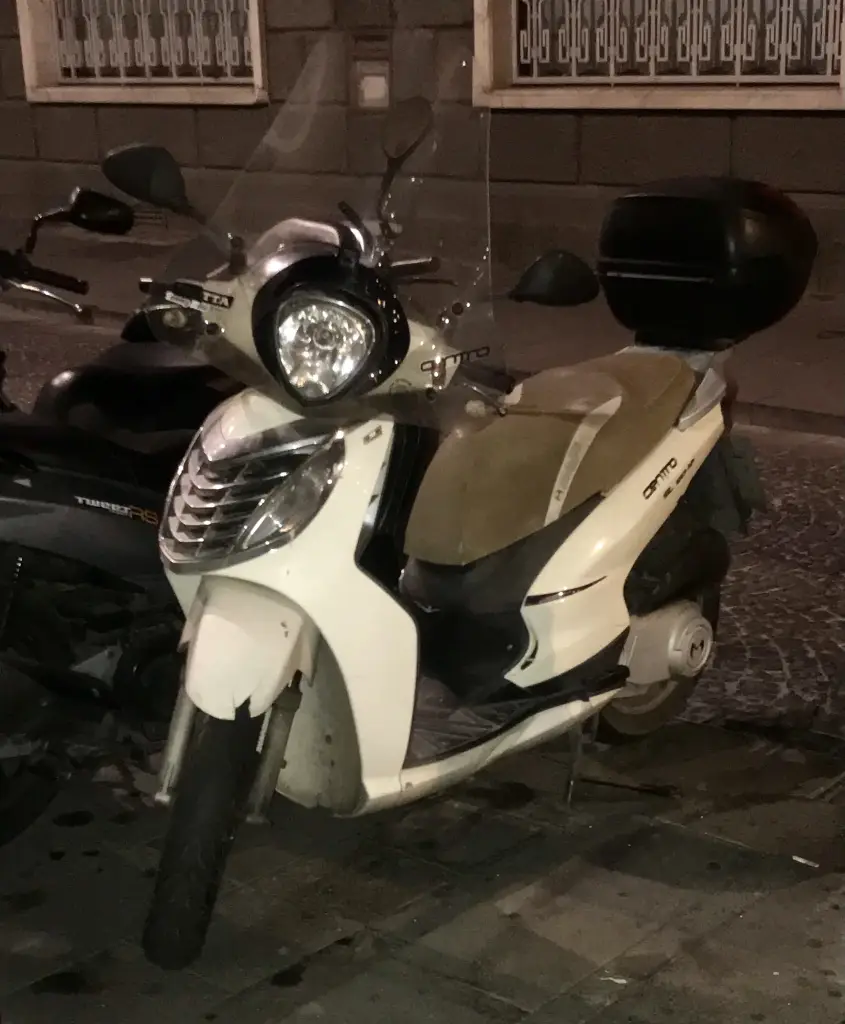
The Malaguti Centro is a high-wheeled scooter produced by Malaguti in two generations. The first ran from 1992 to 2002 at the Castel San Pietro Terme factory; the second was presented in 2007 and remained in production until April 2011, when the company’s financial difficulties ended it.
Malaguti Centro at a glance
| Maker | Malaguti, Castel San Pietro Terme (Bologna) |
|---|---|
| First generation | 1992–2002 |
| Second generation | 2007–2011 |
| Layout | high-wheeled step-through scooter |
| First engine | 49.2 cc two-stroke single, air cooled |
| First-generation brakes | 200 mm front disc, rear drum |
| 1994 update | new instruments, front grille and indicators; SL version |
| 1999 | catalytic converter standard |
| Second-generation engines | 125 and 160 cc; 50 cc from 2008 |
| Seat height, second generation | 780 mm |
| Production ended | April 2011 |
Based on one source: the English Wikipedia article on the Malaguti Centro.
History of the Malaguti Centro
First generation (1992–2002)
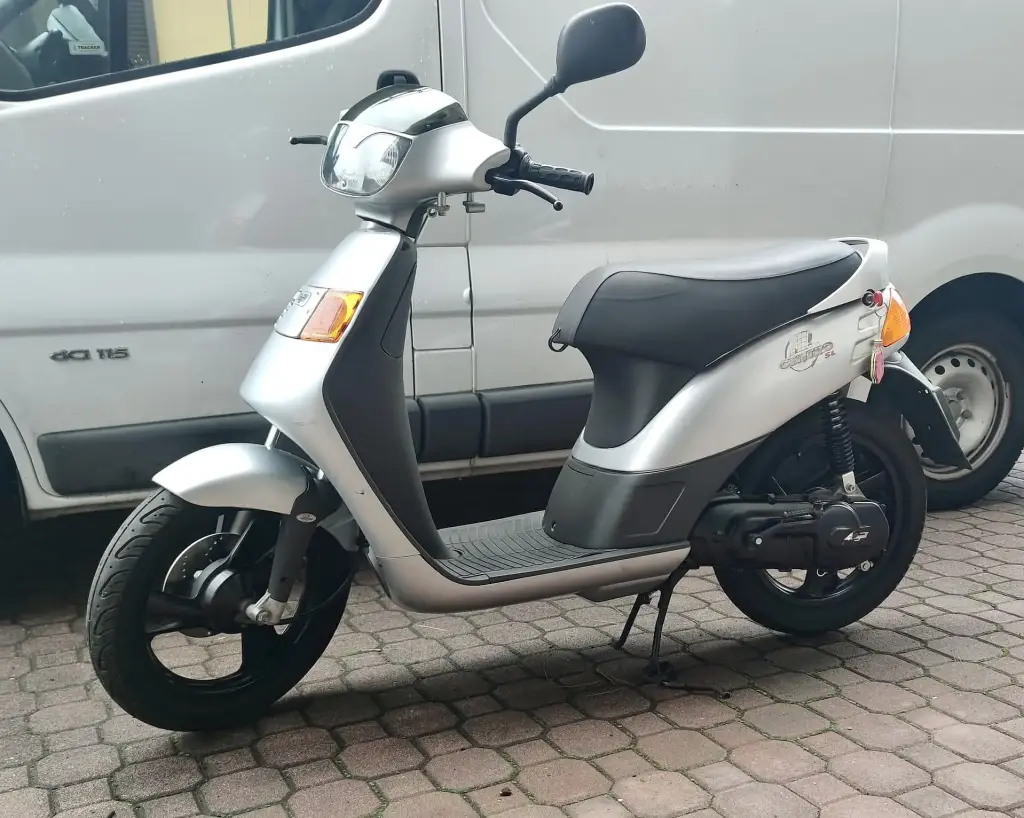
The first series debuted in 1992 and was the first high-wheeled scooter built by Malaguti at its Castel San Pietro plant. It was initially offered in Italy with a single-seat saddle only, while the two-seat saddle was already available abroad. The engine was a 49.2 cc two-stroke single with air cooling, electronic ignition and a continuously variable automatic transmission with a dry centrifugal expansion clutch. The frame was made of steel tube of differentiated section, with a 26 mm hydraulic telescopic fork in front and, at the rear, an oscillating engine with a hydraulic shock absorber and helical spring.
The braking system consisted of a 200 mm front disc with hydraulic transmission and a rear drum. In December 1994 a restyling brought new instrumentation, a new front grille with new direction indicators and new body colours, and added the better-equipped SL version at the top of the range. In 1999 the catalytic converter became standard. Production of the first generation ended in 2002.
Second generation (2007–2011)
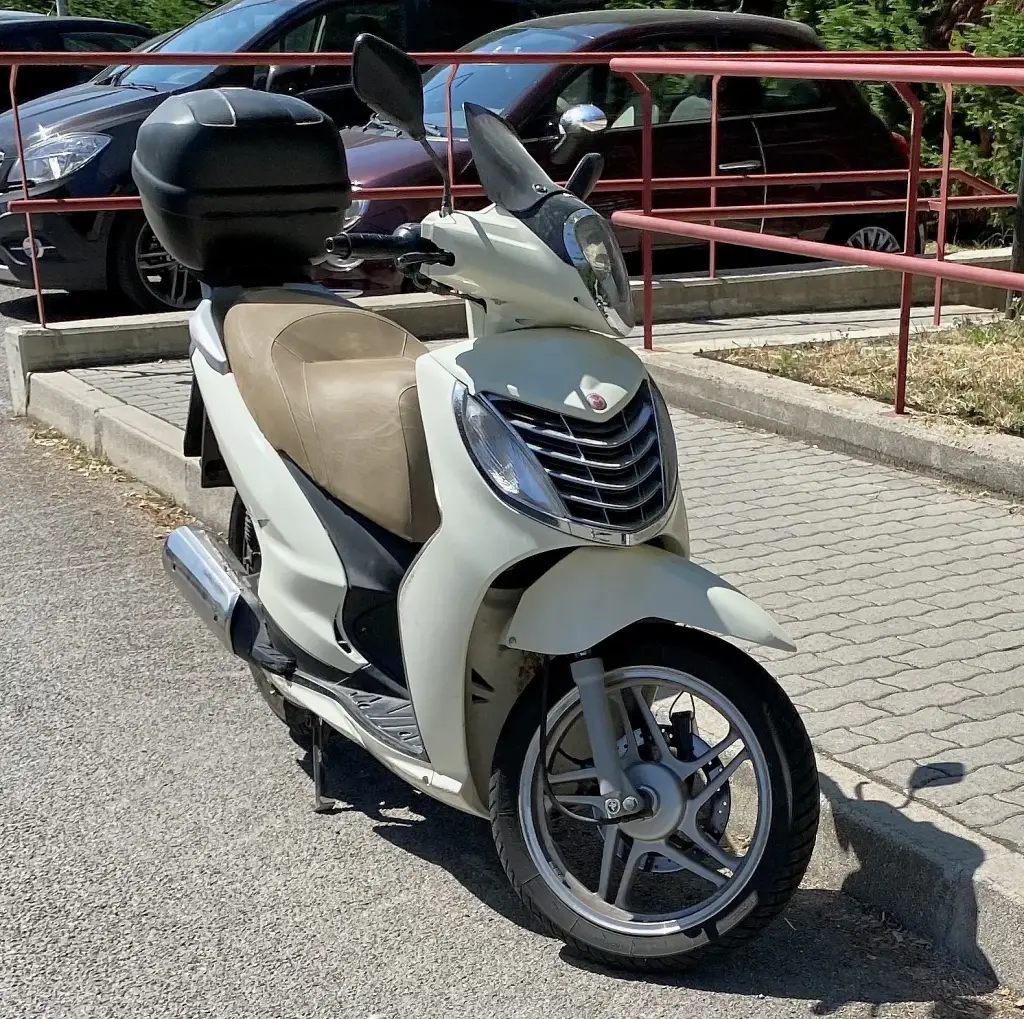
The second generation was presented in May 2007 as a high-wheeled scooter with a low seat, aimed at the middle of the segment in direct competition with the Honda SH, Kymco People S and Piaggio Liberty. At the presentation Antonino Malaguti said the model would sit alongside the Ciak and the Password in the price lists without replacing them. It was developed over 18 months in Italy at the San Lazzaro di Savena research centre, while the engine, initially offered in 125 and 160 cm³, was developed jointly by Malaguti, Ducati Energia and the Tongji University of Shanghai under the “Electronic injection” programme financed by the Italian Ministry of the Environment and its Chinese counterpart. Only the engine block was made in China; it was shipped to Italy and assembled there with the other Italian-made components.
In September 2008 the Centro 50 was presented with a 50 cm³ Piaggio four-stroke Euro 4 engine, introduced to broaden the range after the good commercial success of the 125 and 160. It differed aesthetically from the larger models but kept the 780 mm seat height. In January 2010 the top SL version made its debut, available with all three engines: it brought new chrome plating on the front shield and sides, a new dashboard, a rear shield compartment cover in the body colour and a more comfortable seat with a coloured insert and printed logo. The SL did not replace the basic version. Production ended in April 2011 following the financial difficulties of the parent company.
Design and features
- High wheels: the Centro was Malaguti’s first scooter with large-diameter wheels, in the Italian high-wheel tradition.
- Two lives: a 1990s workhorse and a 2007 relaunch, separated by five years.
- Joint-venture engine: the 125 and 160 units came from an Italian-Chinese programme with Ducati Energia and Tongji University.
- SL trim: chrome, a new dashboard and a restyled seat, offered from 1994 and again from 2010.
Malaguti Centro versions
- Centro 50 (1992–2002): the original 49.2 cc air-cooled two-stroke.
- Centro SL (1994): the better-equipped first-generation version.
- Centro 125 and 160 (2007): the new-generation four-strokes with jointly developed engines.
- Centro 50 (2008): Piaggio four-stroke Euro 4 engine, 780 mm seat.
- Centro SL (2010): chrome trim and a new dashboard, available with all three engines.
The original Centro 50 was replaced in the range by the Malaguti Ciak, and the second-generation car sat alongside the Password. More models are in the Malaguti collection.
Sources
- Malaguti Centro, English Wikipedia: both generations, engines, equipment, dates