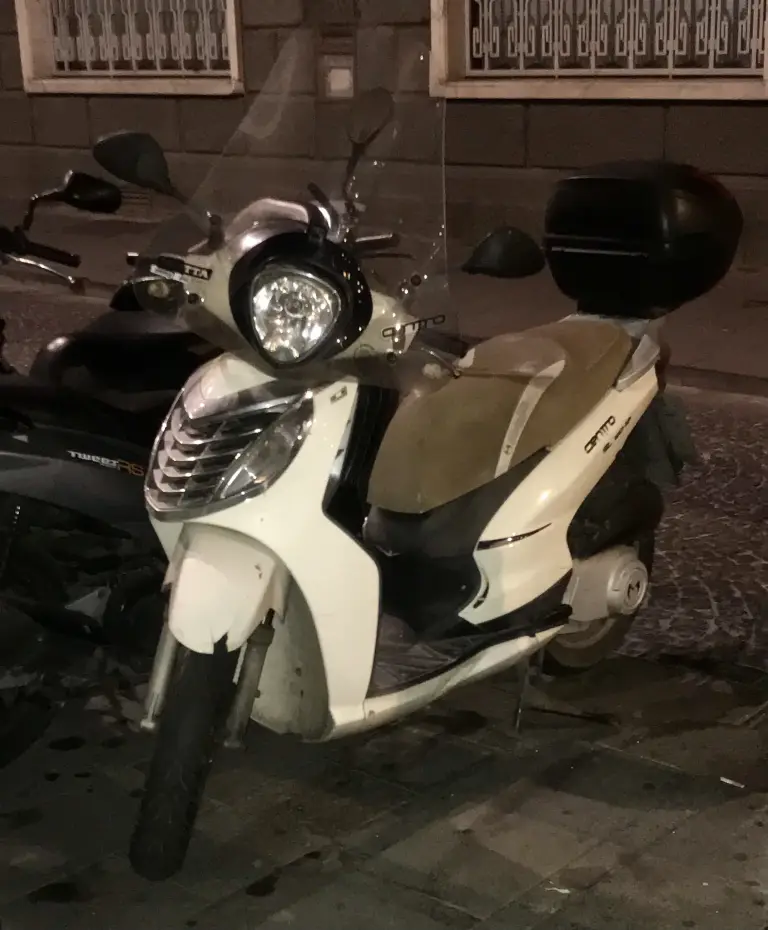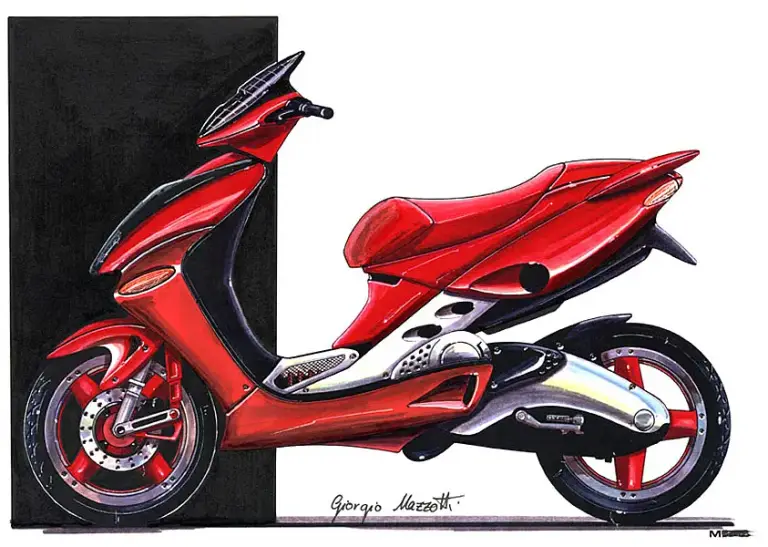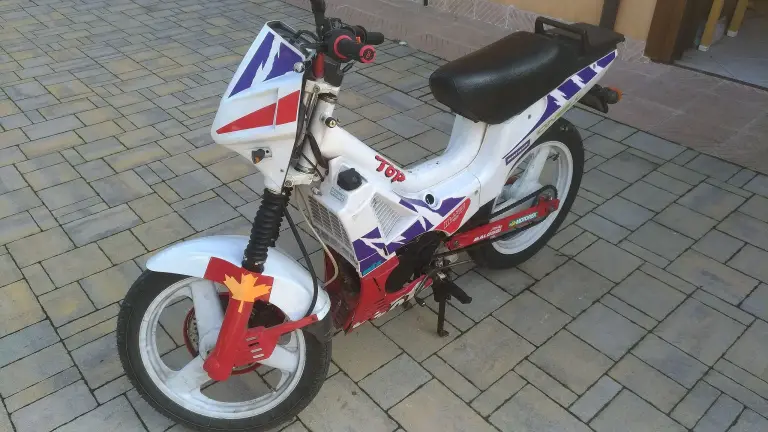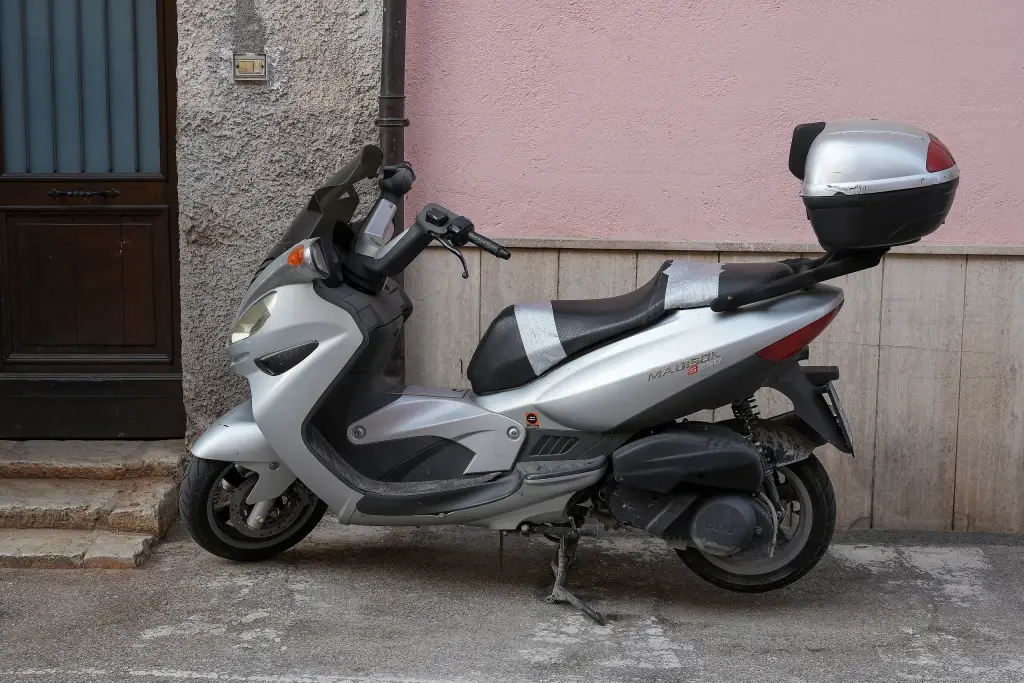
The Malaguti Madison is a maxiscooter produced by Malaguti in four generations. The first three were built between 1999 and 2011 at the historic factory in Castel San Pietro Terme; the fourth, from 2019, is made in China by the Zongshen-Piaggio joint venture.
Malaguti Madison at a glance
| Maker | Malaguti, Castel San Pietro Terme (Bologna) |
|---|---|
| Generations | four: 1999–2006, 2002 facelift, 2006–2011, 2019 |
| Presented | Bologna Motor Show, November 1998 |
| First engines | 125, 150 and 250 cc; the 250 a Yamaha four-stroke |
| 2001 additions | 180 cc Piaggio and Madison K400 with 383 cc Morini |
| 2002 facelift | R125, T150, R180, S200 and K400 names |
| Madison 3 (2006) | new frame, 36 mm Paioli fork, 240 mm discs |
| Madison 3 weight | 158 kg for the 250, 153 kg for the 125 |
| Fourth generation | rebadged Gilera Nexus/Aprilia SR Max, 300 cc |
| Spanish version | Rieju Cityline, assembled from 2014 |
| Production ended | April 2011 for the Bologna-built models |
Based on one source: the English Wikipedia article on the Malaguti Madison.
History of the Malaguti Madison
First generation (1999–2006)
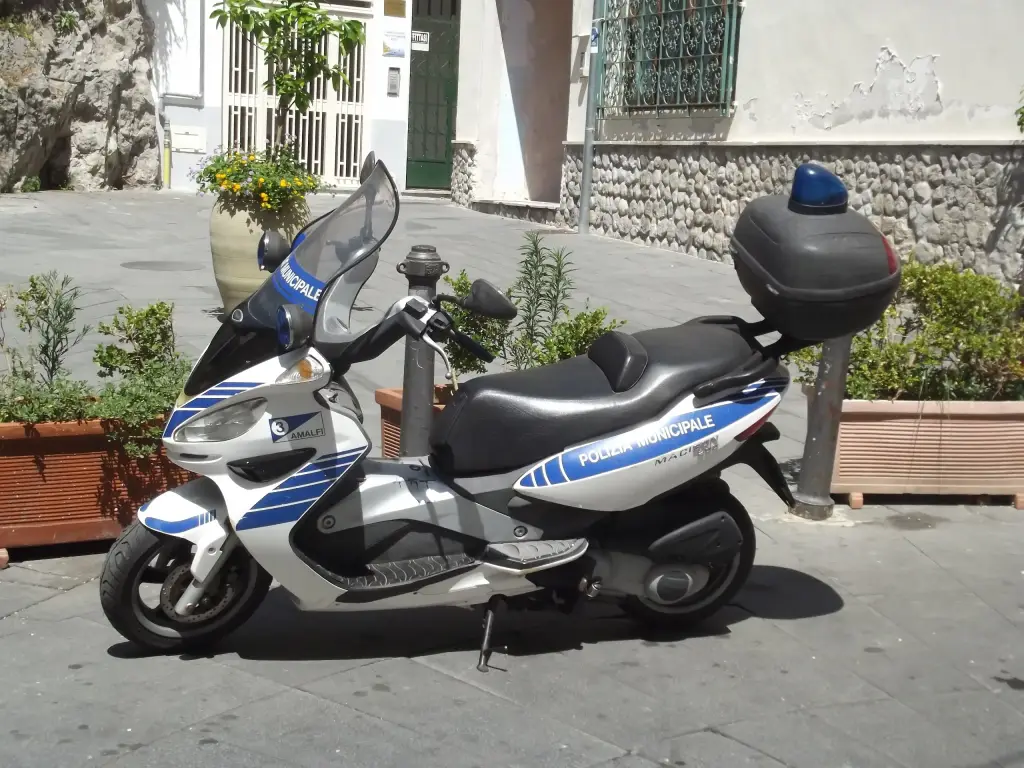
Presented in November 1998 at the Bologna Motor Show, the Madison was the first model of the Malaguti house in the maxiscooter segment, after a production made up mainly of 50 cc scooters. At the presentation the 250 was shown, with a four-stroke Yamaha horizontal single-cylinder engine with liquid cooling that allowed it to reach 125 km/h. Aesthetically it had a sporty and sleek design. The name Madison derives from the homonymous American avenue, but also from a tribe of North American Indians. Shortly after the debut the reduced-displacement versions, the 125 and 150, were announced, and production and sales started in the spring of 1999 with a range of 125, 150 and 250 engines.
In September 2001 the range was enriched with two new engines alongside the three already offered: the 180 and the top-of-the-range Madison K400 with a 400 engine. The 180 was fitted with a Piaggio engine and inherited details and finishes from the 250, including the ICE system that warns of ice at temperatures below 4 °C. The 400 adopted a new Franco Morini four-stroke of 383 cm³ with 31 hp.
Second generation (2002–2006)
In May 2002 an aesthetic facelift updated the lights and the front shield, and the range changed its nomenclature by introducing a letter before the engine size: R125, T150, R180, the new S200 destined to replace the old 250, and the K400. The 200 engine was of Piaggio origin and the other engines were updated to Euro 2. In 2003 the 150 and 180 left the scene. In the spring of 2004 the Madison 250 RS made its debut, an updated version of the previous 250 with a slight aesthetic restyling, higher-quality plastics and the new Piaggio Quasar engine delivering 22 hp at 8,250 rpm and 20.2 Nm at 6,500 rpm, which replaced the old Yamaha 250. Production of the second series ended at the beginning of 2006. From its debut in 1999 to 2006 more than 75,000 units were sold.
Third generation: the Madison 3 (2006–2011)
Designed by Engines Engineering with styling elaborated at the Malaguti style centre, the third series was a totally new model with a more pointed and streamlined nose, new multireflector headlamps, the indicators in the front shield and the mirrors mounted on the handlebar. The new frame was more rigid and compact, with the wheelbase reduced by 80 mm to 1,410 mm. Suspension came from Paioli: a 36 mm fork in front and, at the rear, a pair of shock absorbers adjustable in spring preload. The braking system used 240 mm discs front and rear, with a two-piston hydraulic caliper at the front. The tyres were larger than before, 120/70 at the front and 140/60 at the rear on 14-inch tubeless rims. The seat was 795 mm from the ground, 40 mm lower than on the old series.
The third generation was renamed by the house the Madison 3, and the first model to debut was the 250 with the Piaggio Quasar four-stroke, which thanks to the new frame and lower centre of gravity weighed 5 kg less, for a total of 158 kg. In July 2006 the 125 was presented with a Euro 3 Piaggio four-stroke engine and a weight of 153 kg. The Madison 3 had 95 per cent of its components of Italian production. The 400 was no longer proposed, replaced by the SpiderMax 500 maxiscooter. Madison production ended in April 2011 following the financial difficulties of the parent company, which forced the closure of the Castel San Pietro factory.
Fourth generation and the Rieju Cityline
In 2018 the Malaguti family granted the Austrian group KSR a licence to use the brand in order to launch new models. KSR presented a new range of Piaggio-origin Malaguti-branded vehicles at EICMA, among them a new Madison that is none other than the old Gilera Nexus/Aprilia SR Max, whose production rights KSR had acquired once it left the scene. The new Madison therefore results from a rebadging operation: it differs from the original Nexus only in the front logo and the fully digital instrumentation, as well as in its 300 engine of Piaggio origin, approved to Euro 4. Both the engine and the whole scooter are made in China by the Zongshen-Piaggio joint venture.
In 2012 the Spanish company Rieju acquired the assembly lines and the licence for the Phantom and Madison models after the closure of the Malaguti plant in Castel San Pietro. The two models were presented at EICMA 2013 and relaunched on the market from March 2014 in an updated version assembled in the Catalan factory, rebadged respectively Rieju RS 50 and Rieju Cityline. The Cityline had slight aesthetic updates, Piaggio engines and a new 260 mm front disc; it went out of production in 2017.
Design and features
- Four generations: from a Yamaha-engined 250 of 1999 to a Chinese-built 300 of 2019.
- Yamaha and Piaggio engines: the 250 started with a Yamaha unit and later used the Piaggio Quasar.
- Madison 3 chassis: a stiffer frame, Paioli suspension and 240 mm discs at both ends.
- ICE warning: the 180 inherited the ice warning system for temperatures below 4 °C.
- Rieju Cityline: the Spanish-assembled continuation sold from 2014 to 2017.
Malaguti Madison versions
- Madison 125, 150 and 250 (1999): the original range, the 250 with Yamaha engine.
- Madison 180 and K400 (2001): Piaggio 180 and Franco Morini 383 cm³.
- R125, T150, R180, S200 and K400 (2002): the facelifted second series.
- Madison 250 RS (2004): restyled plastics and the 22 hp Piaggio Quasar.
- Madison 3 250 and 125 (2006): the new-generation maxiscooter.
- Madison 300 (2019): the KSR-built rebadged Aprilia SR Max.
The Madison was the larger stablemate of the Ciak and the Password, and was eventually replaced at the top of the range by the Spidermax. More models are in the Malaguti collection.
Sources
- Malaguti Madison, English Wikipedia: four generations, engines, specifications, Rieju Cityline