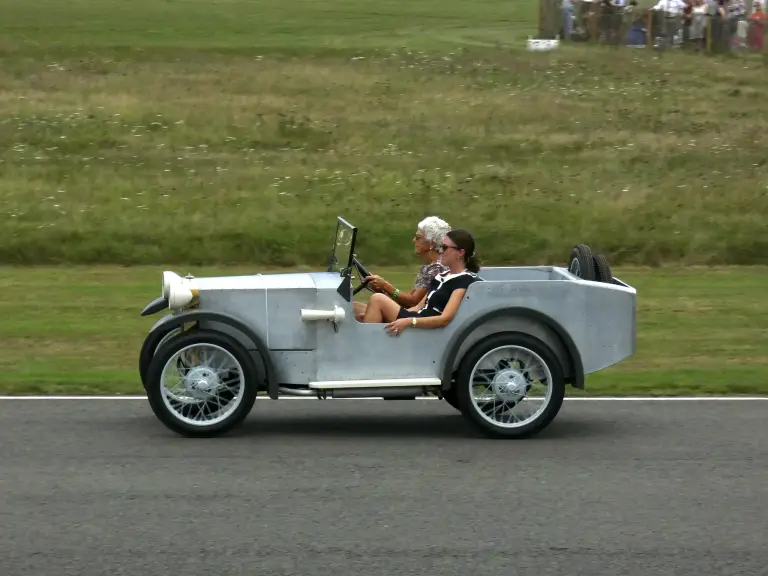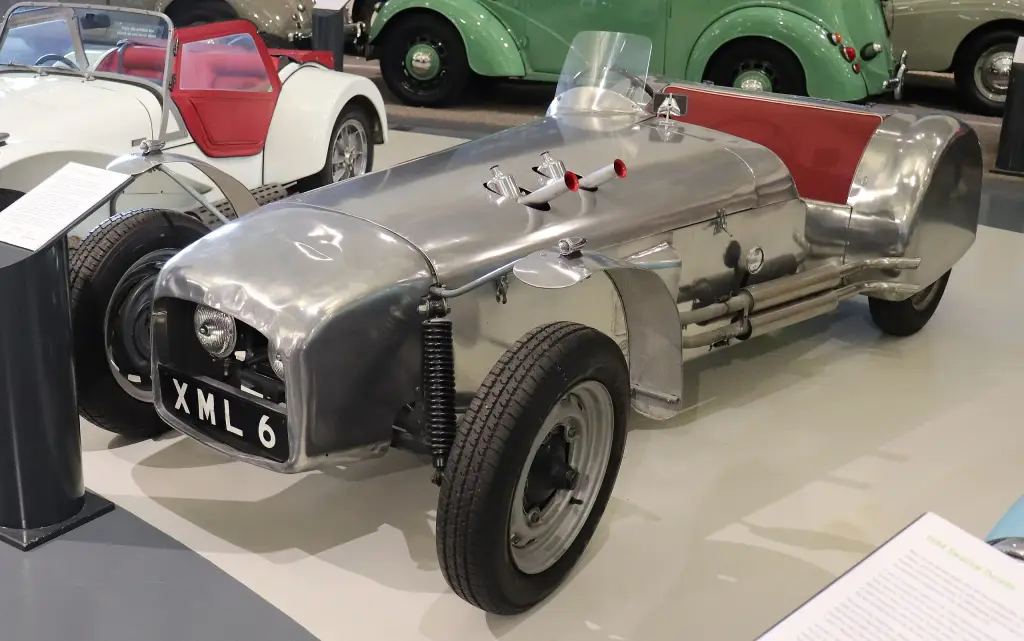
The Lotus Mark VI is the first production car from Lotus Cars. Colin Chapman introduced it in 1952, after building several trials and road racing cars, and sold it to the public as a kit into which the customer could install the engine and gearbox of their choice, making it eligible for a wider range of formulae.
Lotus Mark VI at a glance
| Introduced | 1952 |
|---|---|
| Designer | Colin Chapman |
| Type | kit car |
| Chassis | semi-space frame, 55 lb (25 kg) |
| Body | aluminium by Williams & Pritchard |
| Prototype chassis | Progress Chassis Company |
| Mechanical parts | Ford Prefect |
| Engines | 1,172 cc Ford 10, 1,250 or 1,500 cc MG TF, 1,500 cc Consul, Coventry Climax |
| Power | 50 bhp at 5,000 rpm (Ford E93A) |
| Weight | 432 kg |
| Built | about 110 |
Based on one source (English Wikipedia).
History of the Lotus Mark VI
The Mark VI reflected Chapman’s engineering background: the design came from a stress analysis of loads in the frame, was extremely light — the space frame alone weighed 25 kg — and used the latest suspension ideas. The Progress Chassis Company built the prototype chassis and the panel beaters Williams and Prichard made the aluminium body; both firms later supplied chassis and bodies for subsequent models. Cheap, readily available mechanical parts came from the Ford Prefect.
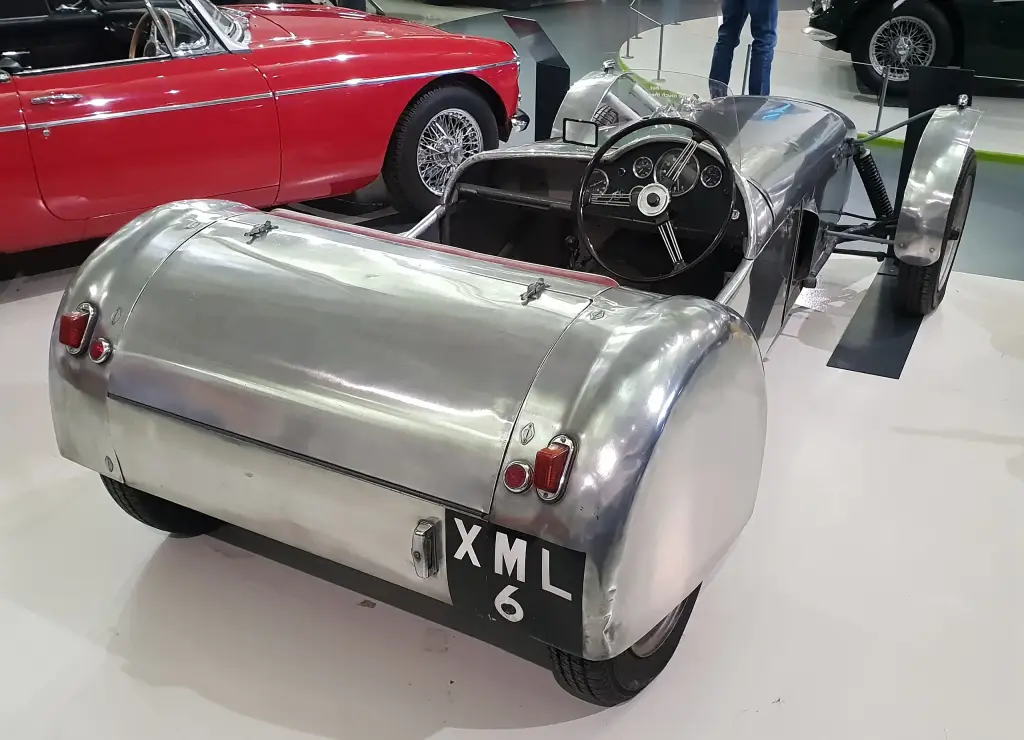
The car became a common sight on British racetracks and a frequent winner, beating many more powerful and expensive cars, and it earned praise for its handling and acceleration. Part of the kit’s success was Chapman offering a comprehensive package with most of the special parts needed, not just a chassis. The frame came with mounting points for several engines, including the 1,172 cc Ford 10, the 1,250 or 1,500 cc MG TF, the 1,500 cc Consul and the Coventry Climax.
Standardised as far as possible for volume production, some cars were customised to their owners’ wishes, and Lotus even modified customers’ own parts when needed. In its usual Ford E93A form the car had a 1,172 cc sidevalve four with SU carburettors, a Ford three-speed gearbox and rear-wheel drive, producing 50 bhp at 5,000 rpm and 77 N·m at 3,000 rpm. It weighed 432 kg, reached 60 mph in 15 seconds and had a top speed of 93 mph. The Mark VI’s success in competition and sales — 100 built by 1955 and about 110 in all — established Chapman as a manufacturer of speciality cars.
Design and features
- Kit car: the customer chose and fitted the engine and gearbox.
- Light space frame: 25 kg for the bare frame, thanks to stress analysis.
- Ford Prefect parts: cheap and easy to find.
- Engine flexibility: Ford, MG, Consul or Coventry Climax power.
- Racing success: a frequent winner against more powerful cars.
Lotus Mark VI versions
- Mark VI (1952–1955): the kit car, about 110 built with various engines.
The Mark VI followed Chapman’s early trials cars such as the Lotus Mark II and was replaced as the entry-level Lotus by the Lotus Seven. More cars are in the Lotus collection.
Sources
- Lotus Mark VI, English Wikipedia: design, engines, production, specifications