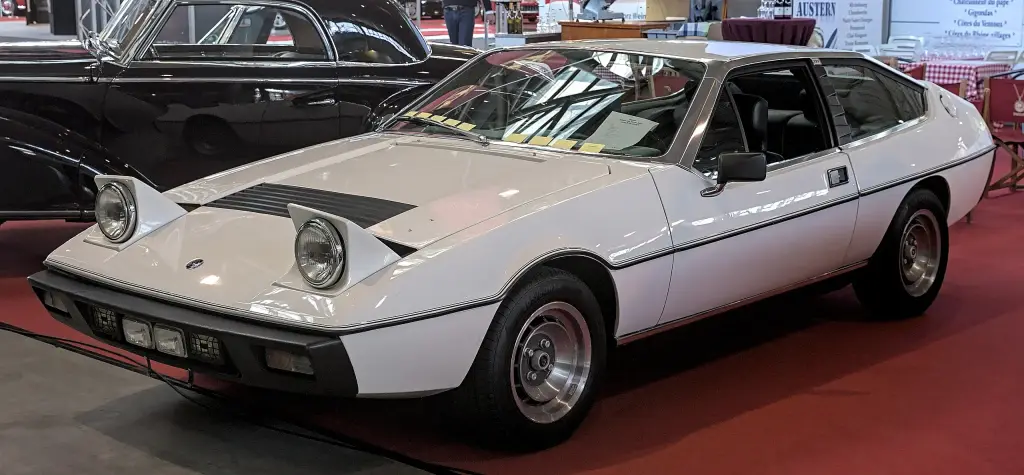
The Lotus Éclat, types 76 and 84, is a sports car built from 1975 to 1982. It was based on the Elite but had a fastback body that offered more practicality with storage in the boot, though less headroom above the rear seats. The lower half of the fibreglass bodywork was identical to the Elite’s, and the car was initially to be called the Elite Coupe.
Lotus Eclat at a glance
| Production | 1975–1982 |
|---|---|
| Lotus types | 76 and 84 |
| Based on | Lotus Elite |
| Body | fibreglass fastback |
| Engine (S1) | 1,973 cc Lotus 907 four, 160 hp |
| Engine (later) | 2,174 cc Lotus 912 four, same power, more torque |
| Gearboxes | Ford four-speed, Lotus five-speed, later Getrag five-speed; three-speed automatic optional |
| Brakes | front discs, inboard rear drums |
| Equipment codes | 520, 521, 522, 523, 524 |
| Built | about 1,500 |
Based on one source (English Wikipedia).
History of the Lotus Eclat
The Éclat Series 1 was announced in October 1975 with the 1,973 cc Lotus 907 engine of 160 hp. Cars from 1980 to 1982 used the larger 2,174 cc Lotus 912, which produced the same power because of emission regulations but more torque, improving performance. Both were versions of the 900 engine series.
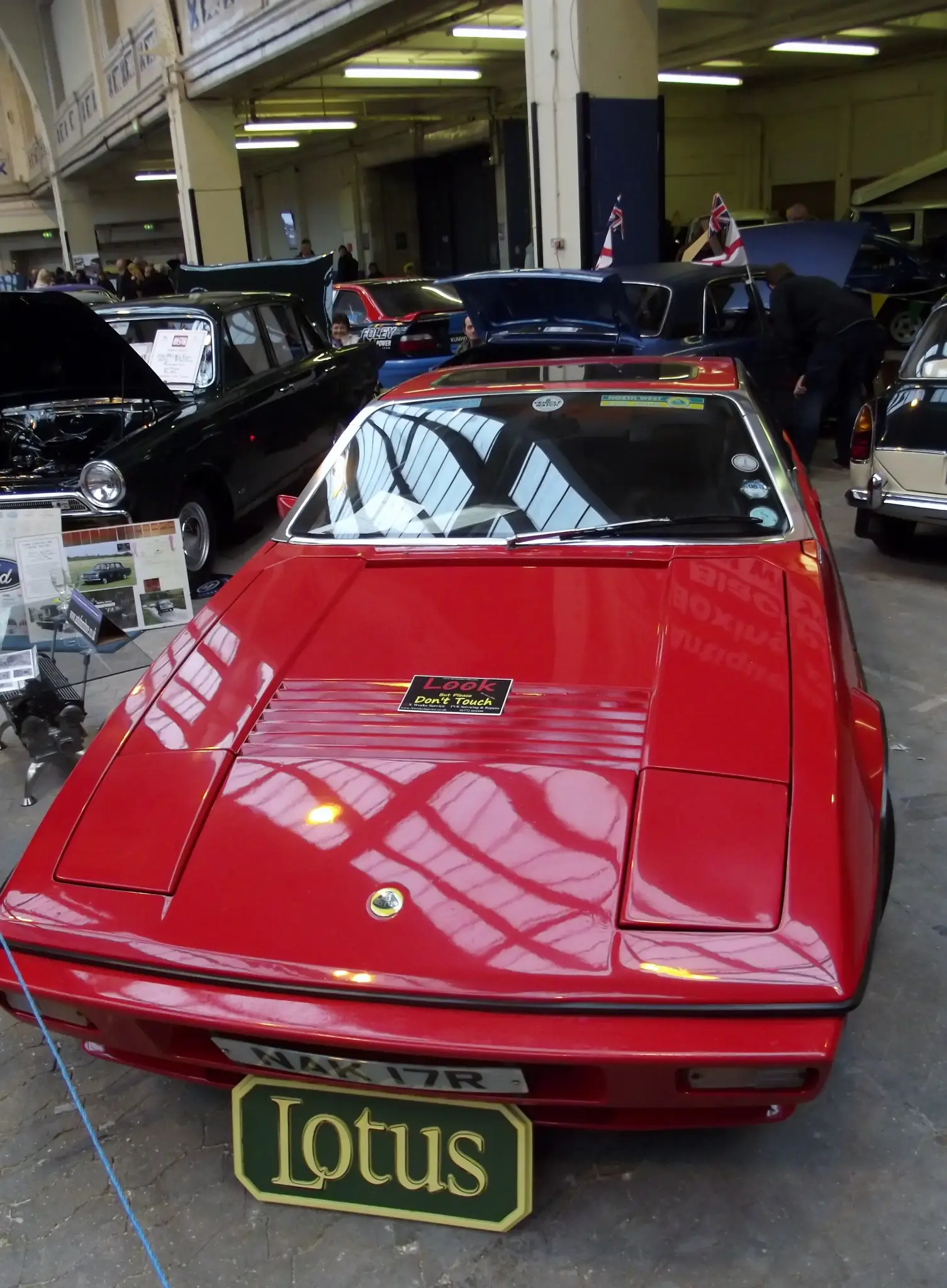
Early cars had either a four-speed Ford gearbox or a five-speed derived by Lotus from Austin Maxi components, and later cars a Getrag five-speed, with a three-speed automatic optional. There were disc brakes at the front and inboard drum brakes at the rear, and air conditioning and power steering were options.
The equipment levels of the Series 1 were called 520, 521, 522, 523 and 524. The 520 had a four-speed transmission, Ford bolt pattern, steel wheels and smaller brakes; the rest of the range had a 114.3 mm bolt pattern, the Elite’s disc brakes and GKN alloy wheels, plus a twin exhaust, clock and cigar lighter. The 522 added power steering and the 523 air conditioning, while the 524 was a 523 with automatic transmission. Sporty versions of the 520 and 521 were sold as the Éclat Sprint with a black-and-white paint job, an oil cooler and other performance upgrades.
The original mild steel chassis had a strip of felt between body and crossmember; in damp climates the felt trapped water and the chassis corroded from the rear, crumbling away. Replacing the chassis was not initially cost-effective, which hurt resale values. Series 2 cars had a galvanised chassis as standard, and many Series 1 cars have since been fitted with replacements, usually galvanised.
The motoring press received the car well, praising its handling and grip, and its fuel consumption was considered reasonable next to the larger multi-cylinder engines of rival GT cars. In 1981 Lotus introduced the Type 84, the Éclat S 2.2 Riviera, available for two years with a removable roof panel, vinyl roof, vented bonnet and rear spoiler; 73 of the 223 Series 2.2 Éclats were Rivieras. In 1982 the Éclat was developed into the Éclat Excel, later badged simply as the Lotus Excel, with the same engine but a modified chassis, altered bodywork and a Toyota gearbox, driveline and brakes. About 1,500 Éclats were produced in total.
Design and features
- Fastback body: more boot space than the Elite, with less rear headroom.
- Lotus 907 and 912 engines: 2.0 litres, then 2.2 litres with more torque.
- Equipment codes: five Series 1 levels from the basic 520 to the automatic 524.
- Éclat Sprint: a sporty black-and-white version of the 520 and 521.
- Galvanised chassis: standard on Series 2 cars after corrosion problems.
Lotus Eclat versions
- Éclat Series 1 (1975–1980): 2.0-litre Lotus 907 engine, equipment levels 520 to 524.
- Éclat Sprint: sporty version of the 520 and 521.
- Éclat Series 2 (1980–1982): 2.2-litre Lotus 912 engine and galvanised chassis.
- Éclat S 2.2 Riviera (1981–1982): removable roof panel, vinyl roof, vented bonnet and rear spoiler, 73 built.
- Éclat Excel (1982): the development into the Lotus Excel.
The Éclat was the fastback sister of the Lotus Elite and was developed into the Lotus Excel. More cars are in the Lotus collection.
Sources
- Lotus Éclat, English Wikipedia: models, engines, equipment, chassis, Riviera