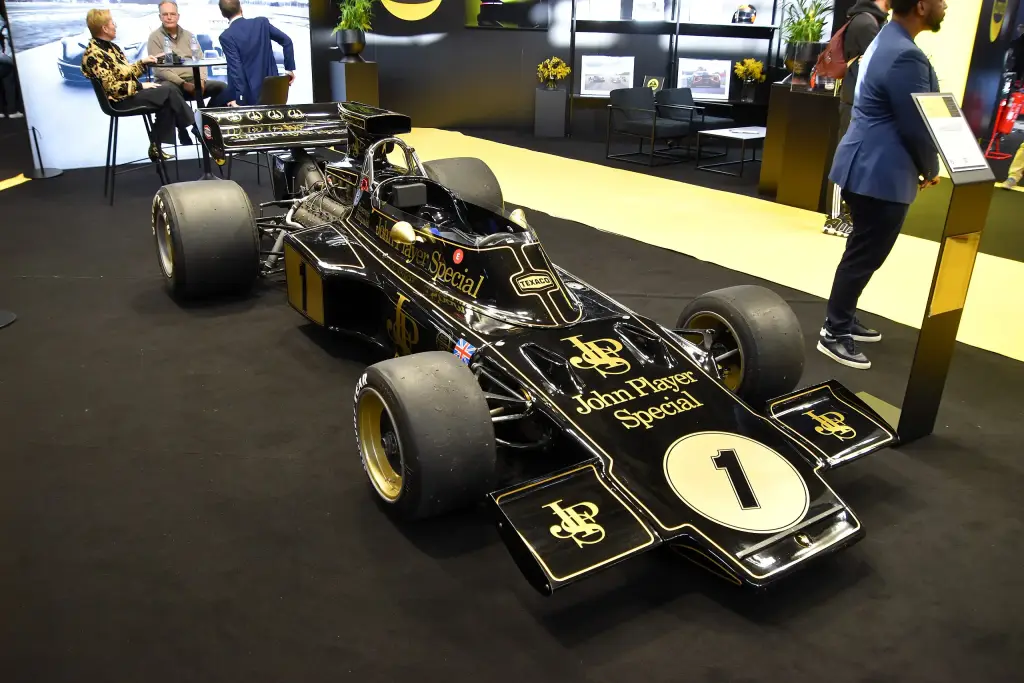
The Lotus 72 was designed by Colin Chapman and Maurice Philippe for the 1970 Formula One season. It was a pioneering design with inboard brakes, side-mounted radiators in sidepods instead of nose-mounted ones, and aerodynamic wings producing downforce.
Lotus 72 at a glance
| Season | 1970–1975 Formula One |
|---|---|
| Designers | Colin Chapman, Maurice Philippe |
| Shape | wedge, inspired by the Lotus 56 |
| Innovations | inboard brakes, side radiators in sidepods, aerodynamic wings |
| Engine | Ford Cosworth DFV, stressed member |
| Chassis | nine built |
| Rindt 1970 | four wins before his death at Monza |
| Fittipaldi 1972 | youngest world champion at the time |
| Total | 20 wins, two drivers’ and three constructors’ titles |
| Replaced by | Lotus 77 for 1976 |
Based on one source (English Wikipedia).
History of the Lotus 72
The 72’s shape resembled a wedge on wheels, inspired by the earlier Lotus 56 gas turbine car, and it cut through the air better: in a back-to-back test with the Lotus 49 it was 12 mph faster with the same Cosworth engine. Taking the stressed-engine layout of the 49 and adding advanced aerodynamics produced a car years ahead of its rivals. At first the anti-dive and anti-squat suspension gave so little feel that the handling had to be sorted out, and front inboard brake shafts failed, but once the suspension was modified there were no further major problems. Nine chassis were built.
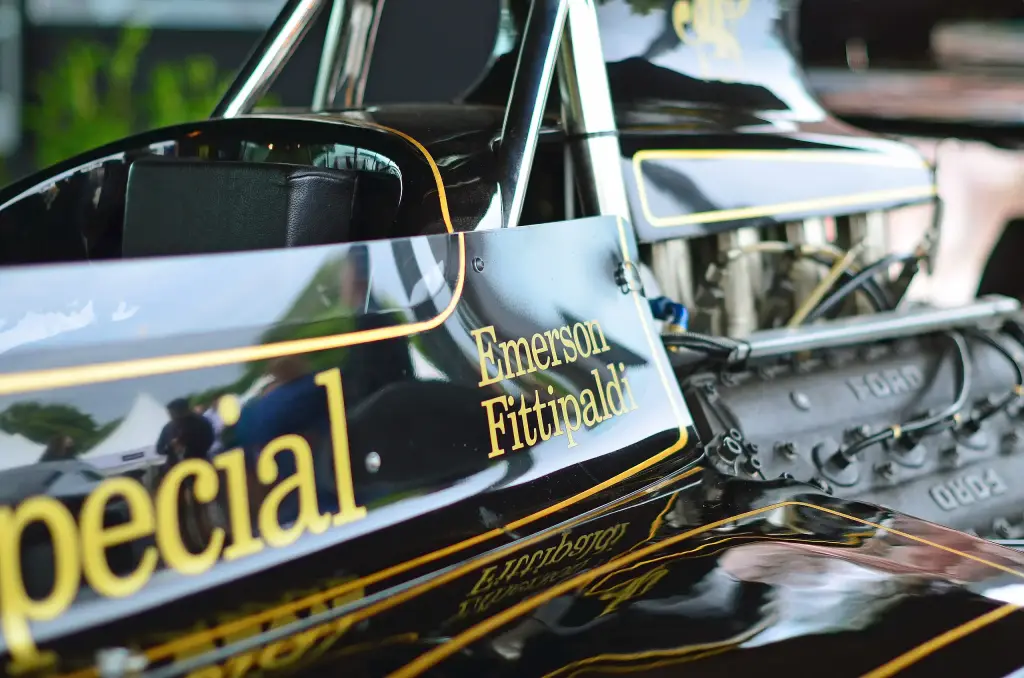
The car appeared at the 1970 Spanish Grand Prix, the second race of the season, in the red, cream and gold colours of Gold Leaf cigarettes. Jochen Rindt and John Miles drove it, but it was withdrawn after Spain for suspension work. Re-entered in Holland, Rindt won the Dutch, French, British and German Grands Prix in quick succession and was set for the title when he was killed in a qualifying crash at Monza, driving a 72 with its wings removed, after a front brake shaft failed. His replacement Emerson Fittipaldi won in the United States, helping Rindt become Formula One’s only posthumous world champion and Lotus to its fourth constructors’ title.
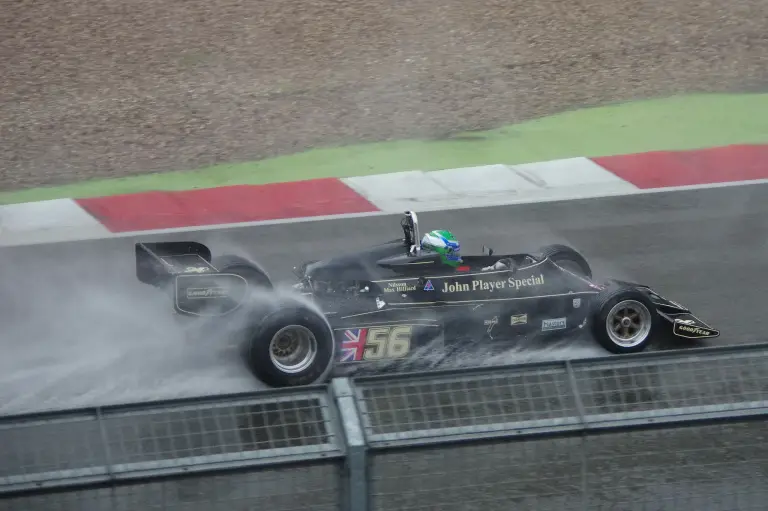
Tony Rudd, who had come from BRM, developed the car through 1971, redesigning the rear suspension and modifying the rear wing for more downforce. Fittipaldi finished sixth that year, then in 1972 became the youngest world champion in Formula One history with five wins, Lotus taking the constructors’ title again, now in the black and gold of John Player Special.
New safety rules for 1973 required deformable side structures, so the 72 gained integrated sidepods, larger bodywork and new wing mounts. Ronnie Peterson joined Fittipaldi and won four races to his team-mate’s three, but retirements let Jackie Stewart take the drivers’ title while Lotus kept the constructors’ championship. Fittipaldi left for McLaren in 1974 and Peterson became team leader alongside Jacky Ickx; the planned Lotus 76 flopped, so the 72 was updated with a wider track and Peterson won three more races on the way to fourth in the constructors’ table. Without a replacement in 1975 the old car was pressed into service again, but it was no match for the Ferrari 312T and Lotus finished sixth. After 20 wins, two drivers’ and three constructors’ championships, the 72 was retired for 1976 and replaced by the Lotus 77.
Design and features
- Wedge shape: inspired by the Lotus 56 and 12 mph faster than the 49 in back-to-back testing.
- Side radiators: mounted in sidepods instead of the nose.
- Inboard brakes: at the front, reducing unsprung weight.
- Aerodynamic wings: downforce designed into the car from the start.
- Long life: raced from 1970 to 1975 and won 20 Grands Prix.
Lotus 72 versions
- 72 (1970): the original Gold Leaf-liveried car.
- 72C and 72D: developed versions with revised suspension and wings.
- 72E (1973–1975): with integrated sidepods for the new safety rules and a wider track.
The 72 followed the Lotus 49, took the lead from the troublesome Lotus 77 and was developed into the ground-effect Lotus 78. More racing cars are in the Lotus collection.
Sources
- Lotus 72, English Wikipedia: design, seasons 1970–1975, results