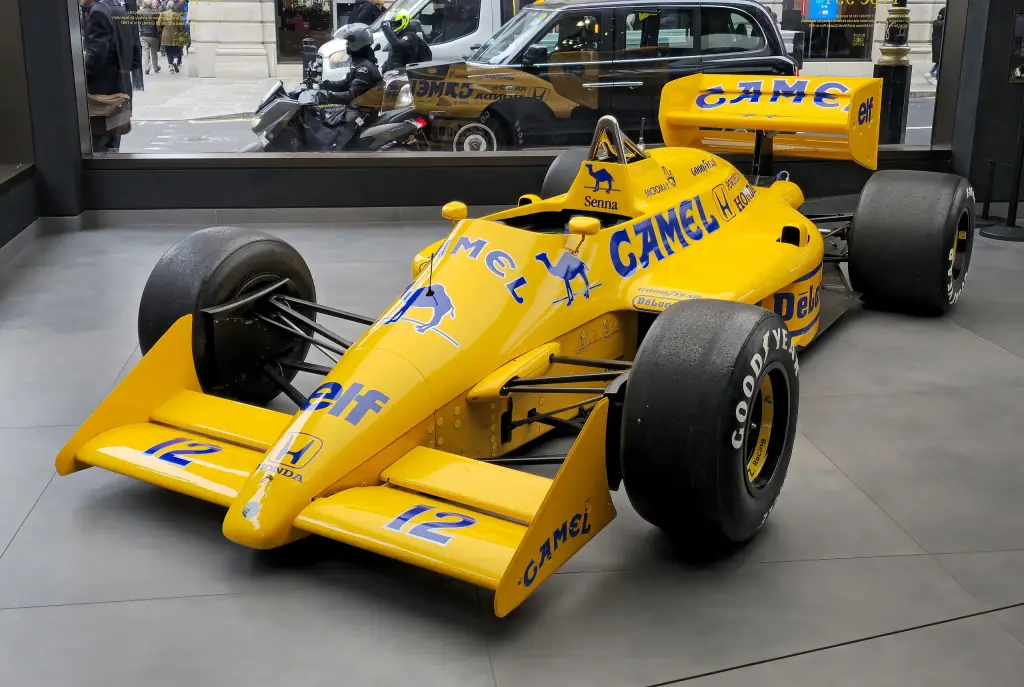
The Lotus 99T was designed by Gérard Ducarouge for Team Lotus in the 1987 Formula One World Championship. After Renault left Formula One at the end of 1986, Lotus signed with Honda for its turbocharged 1.5-litre engine, and with a new title sponsor the car appeared in Camel’s yellow and blue instead of John Player’s black and gold.
Lotus 99T at a glance
| Season | 1987 Formula One |
|---|---|
| Designer | Gérard Ducarouge |
| Engine | Honda RA166E 1.5-litre turbo V6, about 900 bhp |
| Drivers | Ayrton Senna, Satoru Nakajima |
| Suspension | electronic active suspension |
| Cost of the system | about 25 kg and 5% of engine power |
| Senna | 2 wins (Monaco, Detroit), 6 other podiums, 3rd in the championship |
| Nakajima | 12th, 7 points, best finish 4th at Silverstone |
| Livery | Camel yellow and blue |
| Successor | Lotus 100T |
Based on one source (English Wikipedia).
History of the Lotus 99T
Honda’s existing deal with Williams gave that team exclusive use of the 1987-spec RA167E, so Lotus ran the previous season’s RA166E, rated at about 900 bhp under the year’s 4.0 bar boost limit. As part of the agreement Lotus signed Honda’s test driver Satoru Nakajima as team-mate to Ayrton Senna.
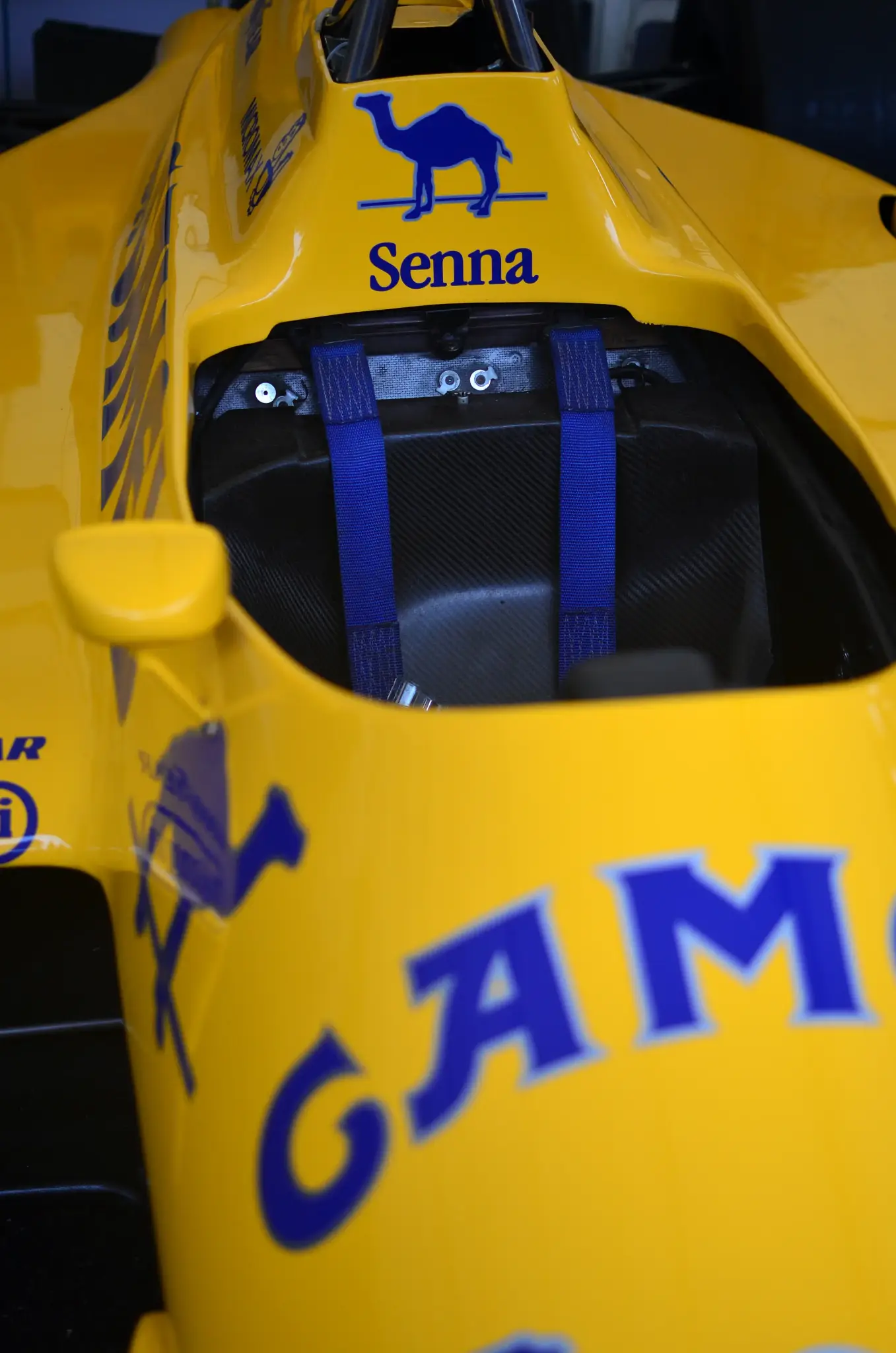
The 99T was the second Lotus chassis with electronic active suspension, after the team had experimented with the system on the Lotus 92 in the first part of 1983. It kept the ride height constant with no pitch or roll, but added about 25 kg and took roughly 5 per cent of the Honda’s power. Ducarouge clawed much of that back in the wind tunnel, though by the end of the season Senna described the car as nothing more than the previous year’s 98T with a Honda engine. The 99T was generally regarded as the bulkiest of the cars that won a Grand Prix in 1987, with the Williams FW11B, McLaren MP4/3 and Ferrari F1/87 all better aerodynamically, but it was often among the fastest in a straight line because the active suspension let Lotus run less wing.
After pre-season testing at Jacarepaguá Senna insisted on using the active suspension all season, believing it would offset the older Honda engine; one benefit was lower tyre wear, which allowed less wing and more top speed. The car won on the bumpy street circuits at Monaco and Detroit but proved difficult to set up elsewhere. Senna won twice and scored six other podiums, finishing third in the drivers’ championship and helping Lotus to third among the constructors; his Detroit win was the last Grand Prix victory for Team Lotus. At Monza he came within a handful of laps of winning but, on badly worn tyres, made a mistake that let Nelson Piquet through.
Nakajima was overshadowed by his team-mate but steady, preferring fast circuits such as Silverstone, Hockenheim, the Österreichring, Monza and Suzuka and struggling on tighter ones. He qualified 17th at Monaco and finished tenth, crashed out on the first lap in Detroit and retired in Hungary with a broken driveshaft; his best finish was fourth at Silverstone and he ended the season twelfth with seven points. His best qualifying performance came at the first Japanese Grand Prix since 1977, eleventh at Suzuka, just under a second behind Senna. The 99T was updated into the 100T for 1988, with a redesigned nose, longer wheelbase and tighter rear bodywork, and without the active suspension.
Design and features
- Active suspension: electronic control kept the ride height constant with no pitch or roll.
- Honda RA166E: about 900 bhp from the previous season’s turbo V6.
- Camel colours: yellow and blue replaced John Player’s black and gold.
- Street-circuit wins: Monaco and Detroit suited the car best.
- Last Lotus win: Senna’s Detroit victory was the team’s final Grand Prix success.
Lotus 99T versions
- Lotus 99T (1987): the works car for Senna and Nakajima.
The 99T followed the Lotus 98T and was updated into the Lotus 100T. More cars are in the Lotus collection.
Sources
- Lotus 99T, English Wikipedia: engine deal, active suspension, season, Nakajima, 100T update