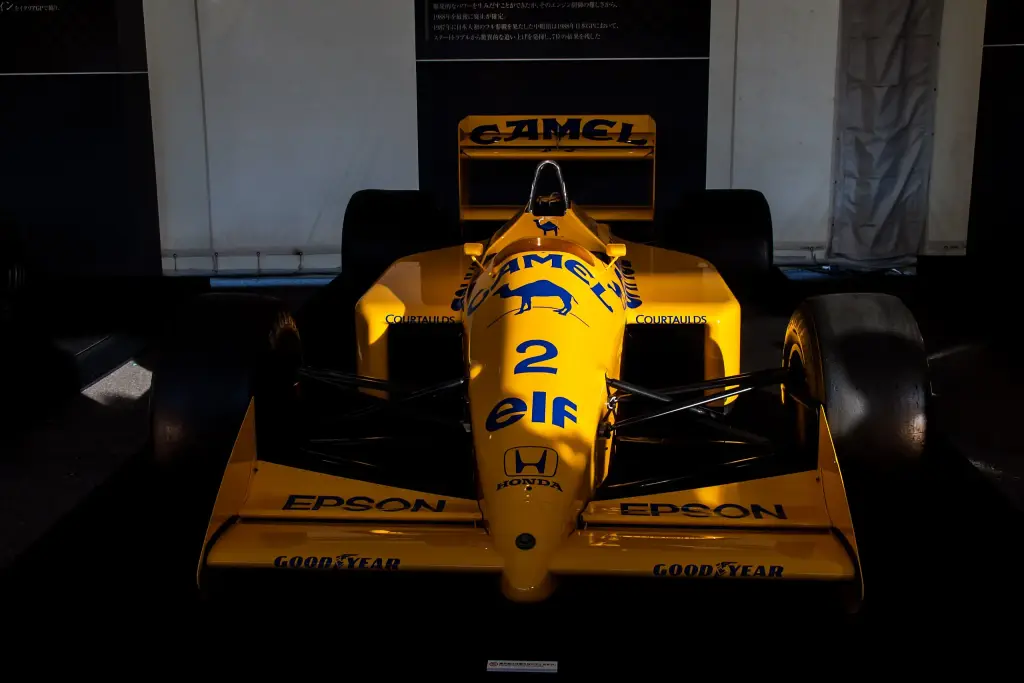
The Lotus 100T was the car with which Team Lotus contested the 1988 Formula One World Championship. Designed by Gérard Ducarouge and Martin Ogilvie, it was an update of the previous 99T, but it gave up the active suspension that had marked its predecessor and relied on a conventional layout with Bilstein dampers.
Lotus 100T at a glance
| Season | 1988 Formula One World Championship |
|---|---|
| Designers | Gérard Ducarouge, Martin Ogilvie |
| Based on | Lotus 99T |
| Engine | 1.5-litre turbocharged Honda V6, 640 bhp |
| Suspension | conventional, Bilstein dampers (active suspension dropped) |
| Drivers | Nelson Piquet, Satoru Nakajima |
| Piquet | 6th in the championship, 22 points |
| Nakajima | 16th, 1 point |
| Constructors | 4th, 23 points |
| Best results | third in Brazil, San Marino and Australia |
| Replaced by | Lotus 101 (Judd V8, 1989) |
| Notable | first Honda turbo car to fail to qualify |
Based on one source (English Wikipedia).
History of the Lotus 100T
The 100T followed the 99T, the car with which Ayrton Senna had won twice in 1987. Technically it was almost unchanged, but Lotus dropped the electronic active suspension that Senna had asked for the year before. The team calculated that the system weighed about 25 kg and cost roughly five per cent of engine power to run, and with the FIA having cut turbo boost from 4.0 to 2.5 bar the Honda V6 had already lost some 300 bhp. A conventional setup with Bilstein dampers replaced it, and the nose and rear bodywork were redesigned.
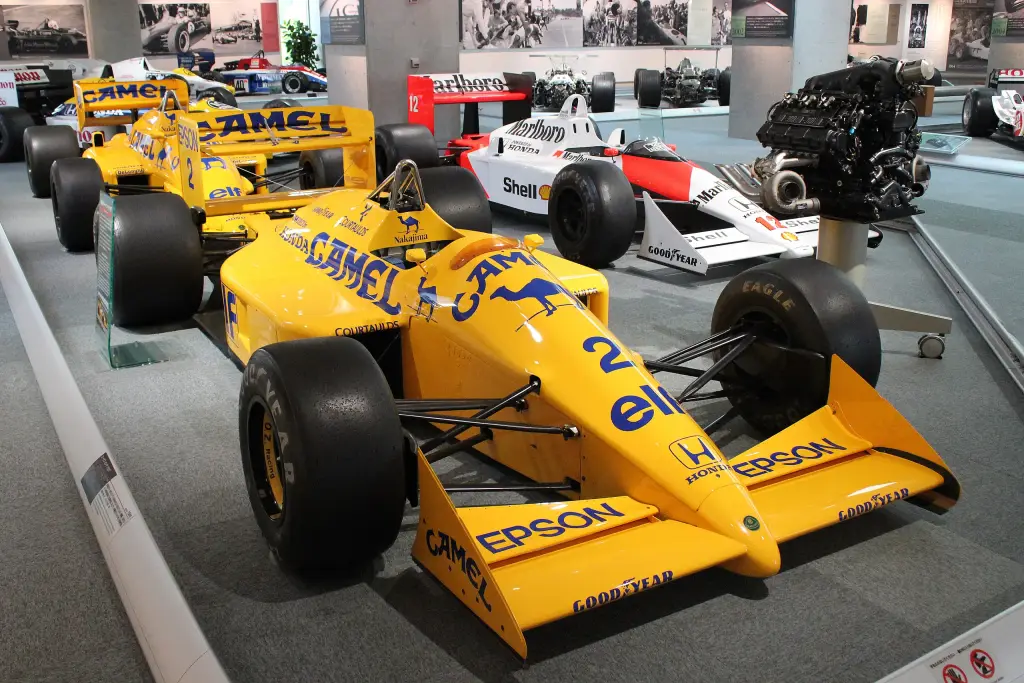
The engine was the same 1.5-litre turbocharged Honda V6 that carried McLaren to fifteen wins in sixteen races that season, rated at 640 bhp. With Senna gone to McLaren, Lotus signed the reigning World Champion Nelson Piquet alongside the Japanese driver Satoru Nakajima, but the car was not competitive. Piquet took three third places, in Brazil, San Marino and Australia, and finished the season sixth with 22 points; Nakajima scored one point for sixth in the opening race in Brazil and ended sixteenth. Lotus finished fourth in the constructors’ championship with 23 points, 176 behind McLaren, and went through a season without a win or a pole position for the first time since 1981.
The low point came at Monaco. Nakajima failed to qualify, the first time a Honda turbo-powered Formula One car had missed the grid, and he failed again in Detroit. The car’s problems were later confirmed by Jackie Stewart, who tested it at Snetterton late in the year and found the carbon fibre and Kevlar monocoque flexing under the abrupt power delivery of the turbo engine. He also complained that the driving position was cramped and rated the 100T as one of the more disappointing cars he had driven. Turbocharged engines were banned at the end of 1988, so the 100T was replaced by the Judd V8-powered Lotus 101 for 1989, and Ducarouge left the team after five years.
Design and features
- Conventional suspension: the active system of the 99T was dropped for weight and power reasons, with Bilstein dampers in its place.
- Honda turbo power: the same 640 bhp 1.5-litre V6 that dominated 1988 in the McLaren.
- Redesigned bodywork: a new nose and rear bodywork distinguished the car from the 99T.
- Champion driver: Nelson Piquet joined Lotus to defend his title.
- Stiff chassis: test driver Jackie Stewart found the monocoque flexing under turbo power.
Lotus 100T versions
- 100T (1988): the standard works car, run by Piquet and Nakajima.
The 100T followed the Lotus 99T, the first Lotus with active suspension, and it came after the ground-effect Lotus 98T. More racing cars are in the Lotus collection.
Sources
- Lotus 100T, English Wikipedia: design, season results, Stewart test