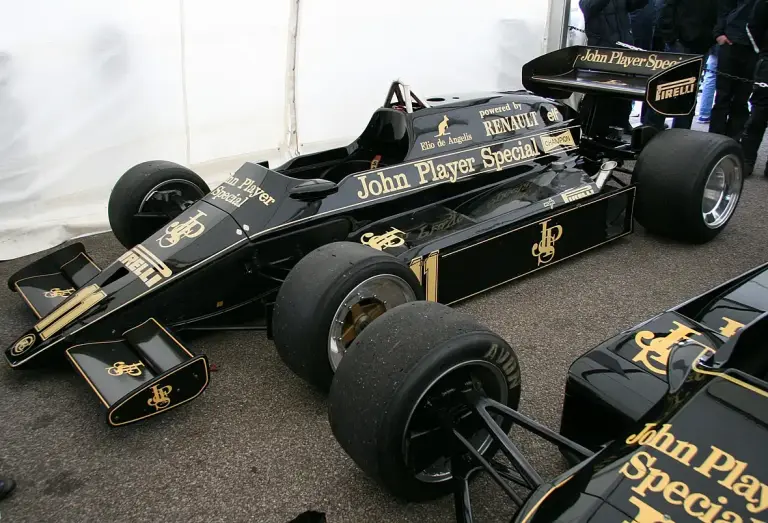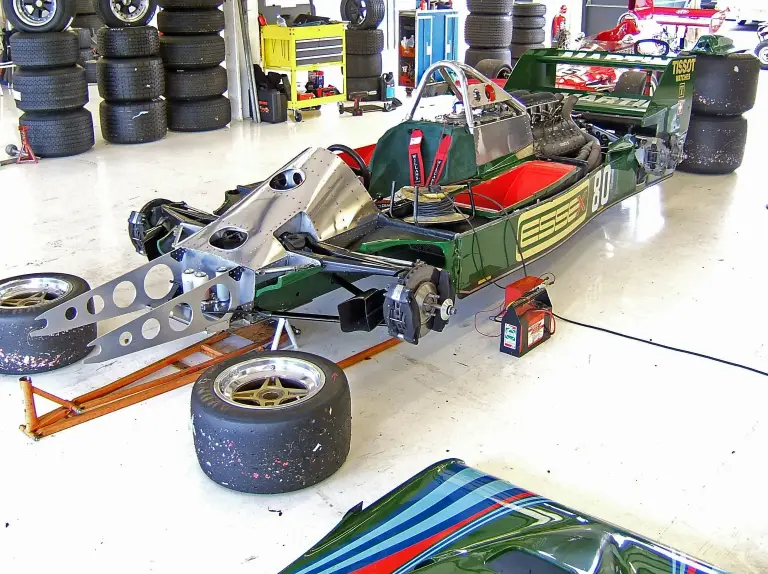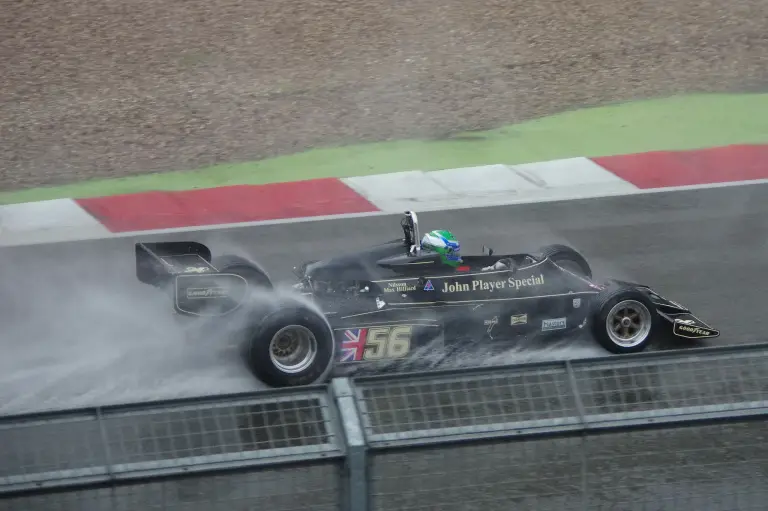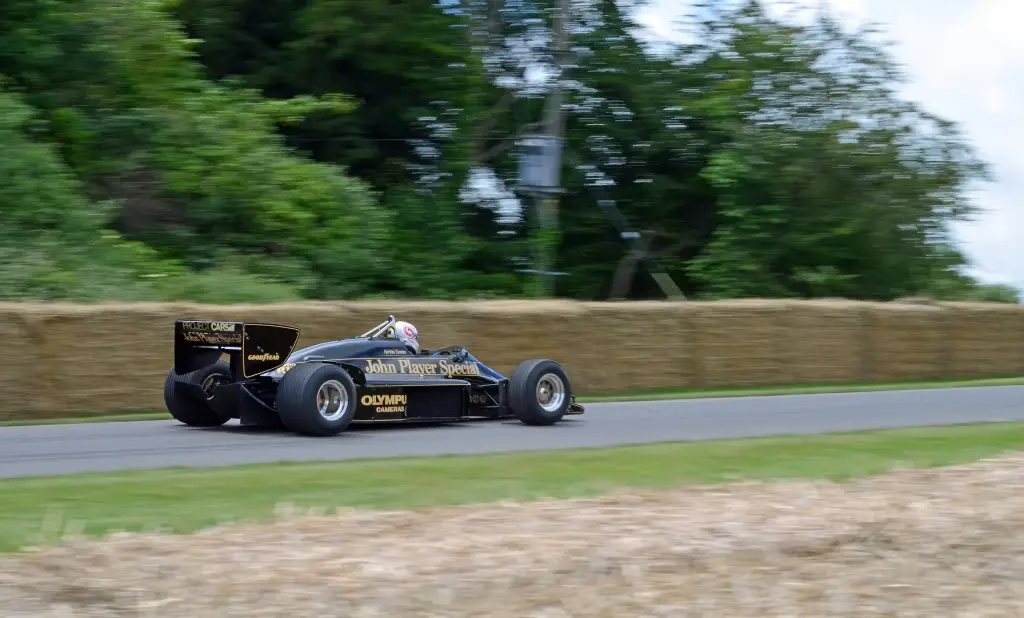
The Lotus 97T was designed by Gérard Ducarouge and built by Team Lotus for the 1985 Formula One World Championship. A development of the previous year’s 95T, it was powered by the turbocharged 1.5-litre Renault EF15B V6 and ran on Goodyear tyres.
Lotus 97T at a glance
| Season | 1985 Formula One |
|---|---|
| Designer | Gérard Ducarouge |
| Engine | Renault EF15B 1.5-litre turbo V6 |
| Tyres | Goodyear |
| Drivers | Ayrton Senna, Elio de Angelis |
| Poles | 8 (7 Senna, 1 de Angelis) |
| Wins | 3 (Portugal, Belgium, San Marino) |
| Constructors | 4th, level on points with Williams |
| Aerodynamics | ideas from the Lotus 96T Indycar, early bargeboards |
| Successor | Lotus 98T |
Based on one source (English Wikipedia).
History of the Lotus 97T
The 97T was a generally simple design that borrowed aerodynamic elements from the abandoned Lotus 96T Indycar project, including an early form of bargeboard placed between the front wheels and the sidepods to improve airflow along the car’s flanks. Ducarouge also got around the ban on the rear-wing winglets seen in 1984 by putting them on the rear edges of the sidepods instead.
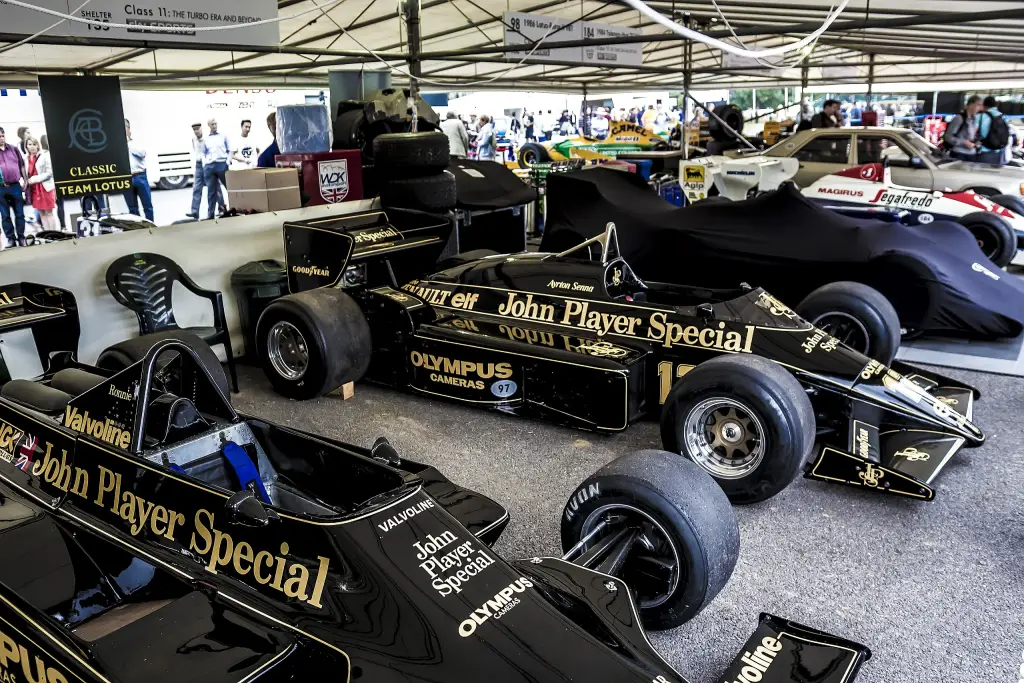
Lotus’s big signing for 1985 was Ayrton Senna, who came from Toleman to replace Nigel Mansell after Mansell joined Williams. Senna was the first driver signed to the team since Colin Chapman’s death, and he partnered Elio de Angelis, third in the previous season’s championship and impressive in the 95T.
The 97T was competitive, taking eight pole positions — seven for Senna and one for de Angelis — and three wins. Senna’s first was a brilliant drive in the Portuguese Grand Prix, winning by over a minute in monsoon conditions, and his second came at Spa in wet and dry weather. De Angelis added the third at San Marino after the original winner, Alain Prost, was disqualified an hour after the race because his out-of-fuel McLaren was 2 kg underweight. Lotus finished fourth in the constructors’ championship on the same points as Williams, which took third on a greater number of wins.
The 97T marked the start of a brief return to Lotus’s successful days of the 1960s and 1970s, continued by the 98T of 1986 and the Honda-powered 99T of 1987. It had perhaps the best handling of any car in 1985 and was at its strongest on tight, slow street circuits such as Monaco, Detroit and Adelaide, though it was competitive almost everywhere. The Renault engine, however, was unreliable and thirsty: Senna and de Angelis had to turn down the boost at high-speed tracks to save fuel and the engine, and both ran out of fuel at Imola, the hardest circuit of the year on consumption, while Senna also ran dry at Silverstone after a long fight with Prost. Senna’s engine failed at Monaco — leading to a huge accident at the fastest corner — as well as in France, Germany, South Africa and Australia, and de Angelis lost engines in Germany, Belgium and South Africa.
Design and features
- Early bargeboards: between the front wheels and sidepods to clean up airflow.
- Sidepod winglets: a way around the ban on rear-wing winglets.
- Senna’s first wins: Portugal in the wet and Belgium at Spa.
- Eight pole positions: seven by Senna, one by de Angelis.
- Thirsty Renault: fuel consumption and reliability limited its results.
Lotus 97T versions
- Lotus 97T (1985): the standard car for Senna and de Angelis, in Gold Leaf and John Player Special colours.
The 97T was developed from the Lotus 95T and was followed by the Lotus 98T. More cars are in the Lotus collection.
Sources
- Lotus 97T, English Wikipedia: chassis, drivers, racing history