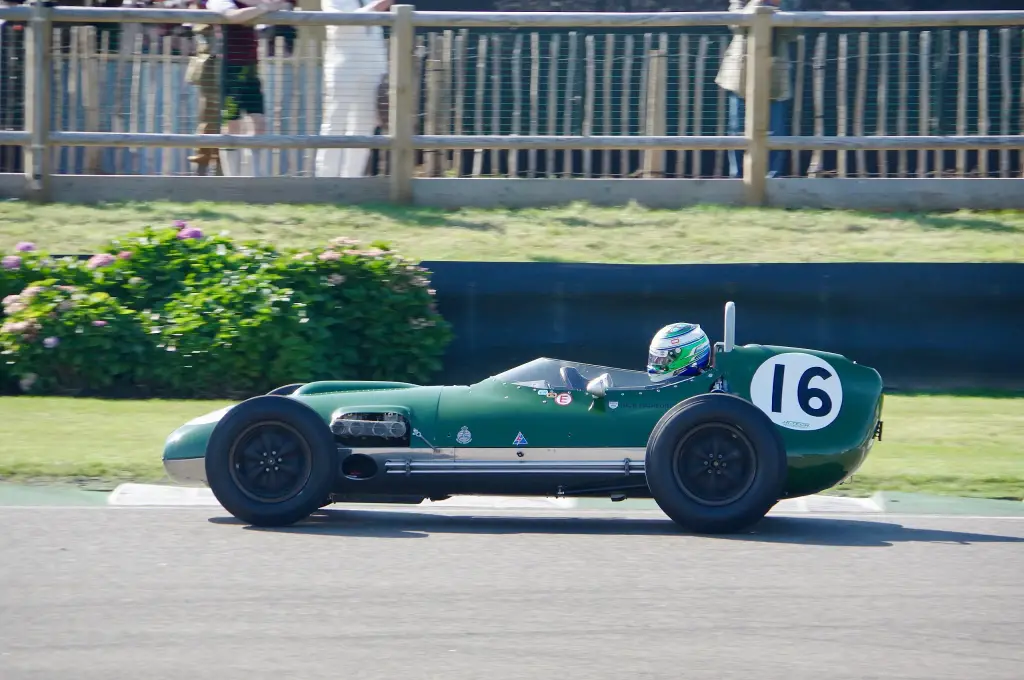
The Lotus 16 was the second single-seat racing car designed by Colin Chapman and the first Lotus built for Formula One. It raced in Formula One and Formula Two in 1958 and 1959, carried over much of the Lotus 12 and borrowed ideas Chapman had developed at Vanwall, which is why the press called it the “mini Vanwall”.
Lotus 16 at a glance
| Introduced | 1958 |
|---|---|
| Designer | Colin Chapman |
| Bodywork | Frank Costin |
| Categories | Formula One, Formula Two |
| Debut | 1958 French Grand Prix, 6 July |
| Engine | Coventry Climax FPF four, 2.0 to 2.5 litres |
| Chassis | space frame |
| Gearbox | five-speed sequential transaxle, improved by Keith Duckworth |
| Rear suspension | Chapman strut |
| Built | 8 |
Based on one source (English Wikipedia).
History of the Lotus 16
Chapman had moved from Austin 7-based specials to his own sports cars with the Lotus 6 of 1952, and by 1956 his reputation led the Vanwall team to bring him in to help develop their Formula One cars. The first single-seat Lotus, the Formula Two 12, followed in 1957, and Chapman realised that its space frame could serve as the basis of a Formula One car.
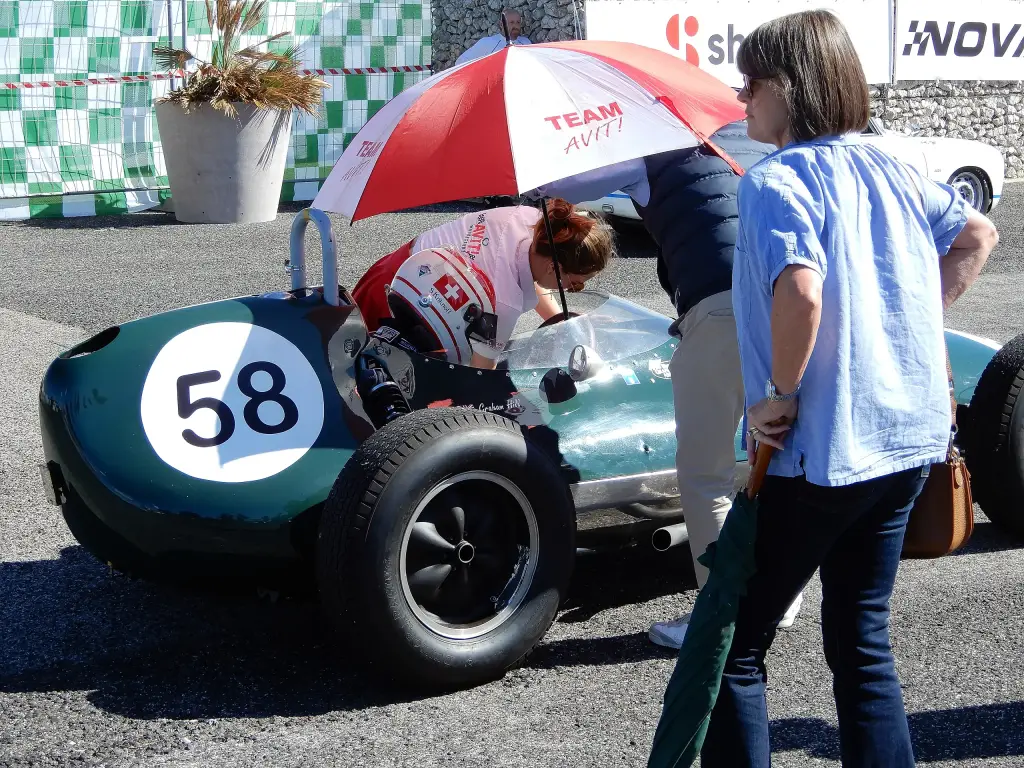
The 16 adapted the 12’s chassis to take its engine offset to one side, with the driveshaft passing to the left of the driver rather than beneath him, which lowered the driving position and reduced the frontal area. The shaft used Hooke joints, and at the angles involved this produced a vibration at twice engine speed that cracked chassis welds and transaxle mounts. The handling was also compromised by the unequal weight distribution, so the engine was moved back to a more conventional central position.
Power came from Coventry Climax’s FPF four, first at 2.0 litres and later at 2.2 and then 2.5 litres in full Formula One trim. The five-speed transaxle was the Lotus unit that Keith Duckworth, hired in 1957, had made more reliable, and the rear suspension used Chapman struts. Brakes were discs all round, mounted inboard at the rear, and the body by Frank Costin was extremely low, with a stubby fin behind the driver housing the fuel tank. Eight cars were built.
The 16 had been intended for the start of 1958, but delays in moving the engine meant that Lotus made its Grand Prix debut with a converted 12 at Monaco. The 16 first appeared three races later, at the French Grand Prix on 6 July 1958, driven by Graham Hill, and although it scored only five Formula One points in three seasons, its pace pointed the way to the Lotus 18 and 21.
Design and features
- Offset engine: the driveshaft ran beside the driver to lower the seat and shrink the frontal area.
- Chapman strut rear: one of the first independent rear suspensions in Formula One.
- Climax FPF: a light four-cylinder engine that grew from 2.0 to 2.5 litres.
- Costin bodywork: very low aluminium body with a rear fin over the fuel tank.
- Wobbly-web wheels: cast alloy wheels borrowed from aircraft practice.
Lotus 16 versions
- 2.0-litre cars: the original Formula Two and early Formula One specification.
- 2.2-litre cars: an intermediate Climax FPF size.
- 2.5-litre cars: full Formula One specification.
The 16 grew out of the Lotus 12 and was replaced by the Lotus 18. More racing cars are in the Lotus collection.
Sources
- Lotus 16, English Wikipedia: design, engine sizes, debut, production