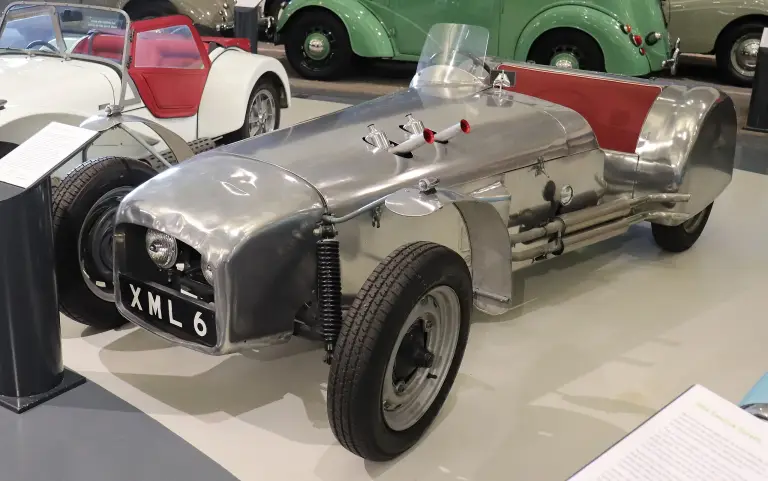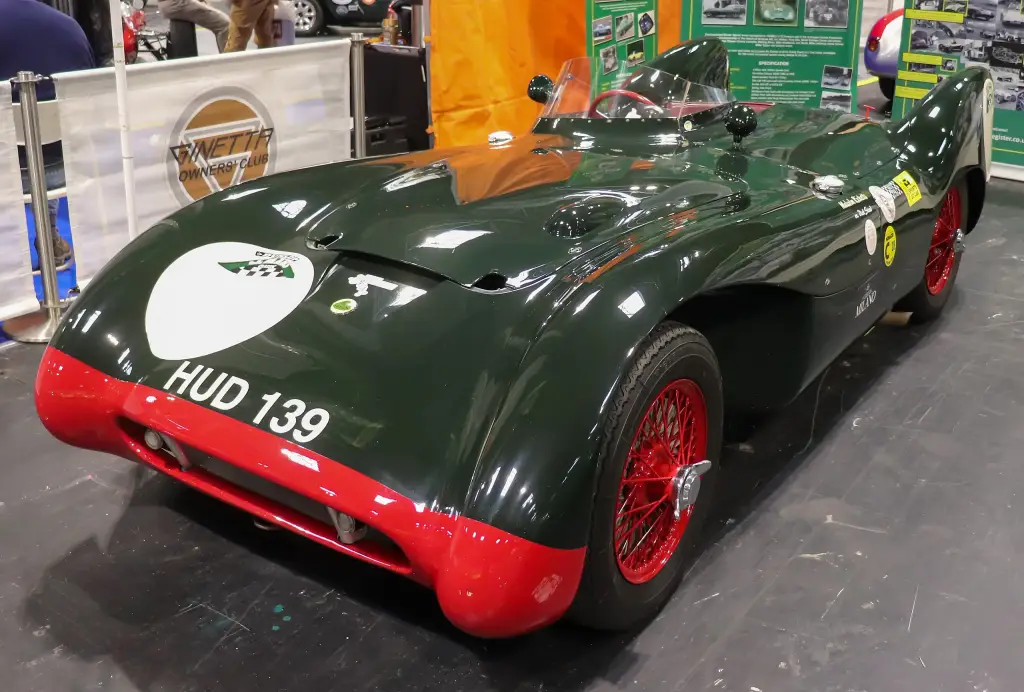
The Lotus Mark IX of 1955 was an aluminium-bodied sports racing car built by Lotus Engineering Ltd. About thirty were made, closely related to the Mark VIII of 1954 and largely based on the innovative space frame of the Mark VI of 1952.
Lotus Mark IX at a glance
| Built | 1955 |
|---|---|
| Body | aluminium, designed by Frank Costin, built by Williams & Pritchard |
| Chassis | brazed steel tube space frame, new design |
| Wheelbase | 7 ft 3.5 in (2.22 m) |
| Engines | 1,100 cc Coventry Climax, 1,500 cc MG, 1,500 cc Connaught, 2.0-litre Bristol |
| Models | Club and Le Mans (larger drum brakes) |
| Le Mans 1955 | two works cars entered, one started, disqualified |
| Sebring 1955 | two cars entered, beaten by a Porsche Spyder |
| Built | about 30 |
Based on one source (English Wikipedia).
History of the Lotus Mark IX
The highly aerodynamic bodies were designed by Frank Costin and built by Williams & Pritchard Limited. Lotus Engineering was still a fledgling company in 1954–1955 and cars were delivered in different states of completion to special order. Like the Mark VIII, the Mark IX was available with various engines, including 1,500 cc MG, 1,500 cc Connaught and 2-litre Bristol units, though it is most often associated with the 1,100 cc Coventry Climax. Two models were offered, Club and Le Mans, the latter with larger drum brakes.
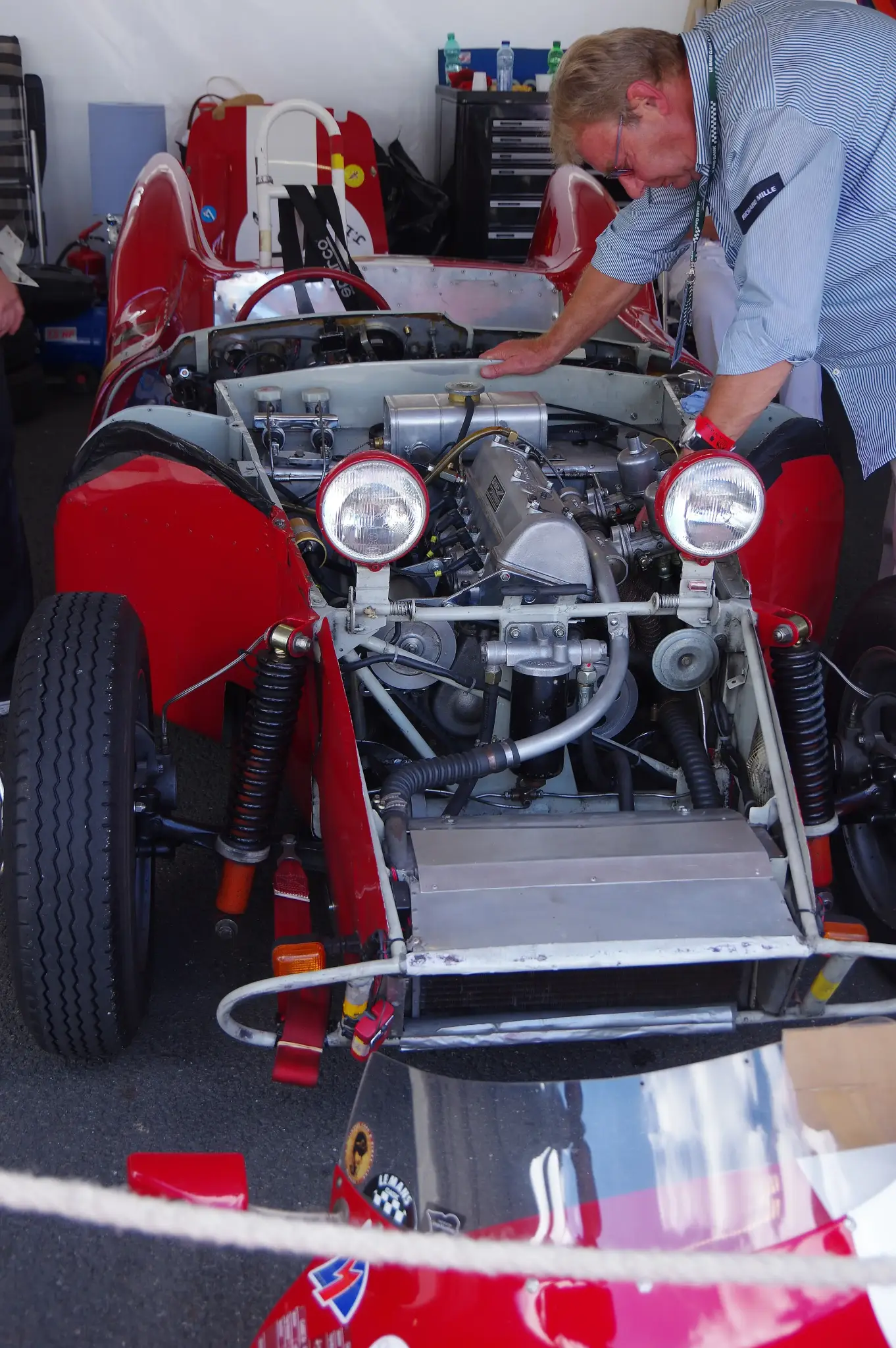
The chassis was a new design compared with the Mark VIII, though both were space frames of brazed steel tube. The new frame was more efficient and avoided the VIII’s need for diaphragm-stiffening panels, but both still used an oversized 1.8-inch lower rail, a hangover from the first Mark VI design. The Mark IX was shortened to a wheelbase of 2.22 m and its body was about two feet shorter than the Mark VIII’s, so that Chapman could fit it on his transporter.
About thirty Mark IXs were produced in various forms and raced successfully in Europe and the United States. The first two examples went to America with the 1,100 cc Climax engine for the 1955 12 Hours of Sebring, where they were beaten by a Porsche Spyder and entered as Mark VIIIs. The works team entered two Mark IXs at Le Mans in 1955, but only Chapman’s car started; it was essentially a prototype for the Eleven, with disc brakes and other advanced features, and was disqualified after Chapman reversed back onto the track without the help of the marshals.
Design and features
- Costin body: an aerodynamic aluminium shell by Frank Costin, built by Williams & Pritchard.
- New space frame: brazed steel tube, stronger and simpler than the Mark VIII’s.
- Engine choice: Climax, MG, Connaught or Bristol power.
- Club and Le Mans: two specifications, the Le Mans with larger drum brakes.
- Eleven precursor: Chapman’s 1955 Le Mans car pointed the way to the Eleven.
Lotus Mark IX versions
- Club: the standard specification.
- Le Mans: larger drum brakes.
The Mark IX followed the Lotus Mark VIII and was the direct ancestor of the Lotus Eleven. More cars are in the Lotus collection.
Sources
- Lotus Mark IX, English Wikipedia: body, chassis, engines, racing record