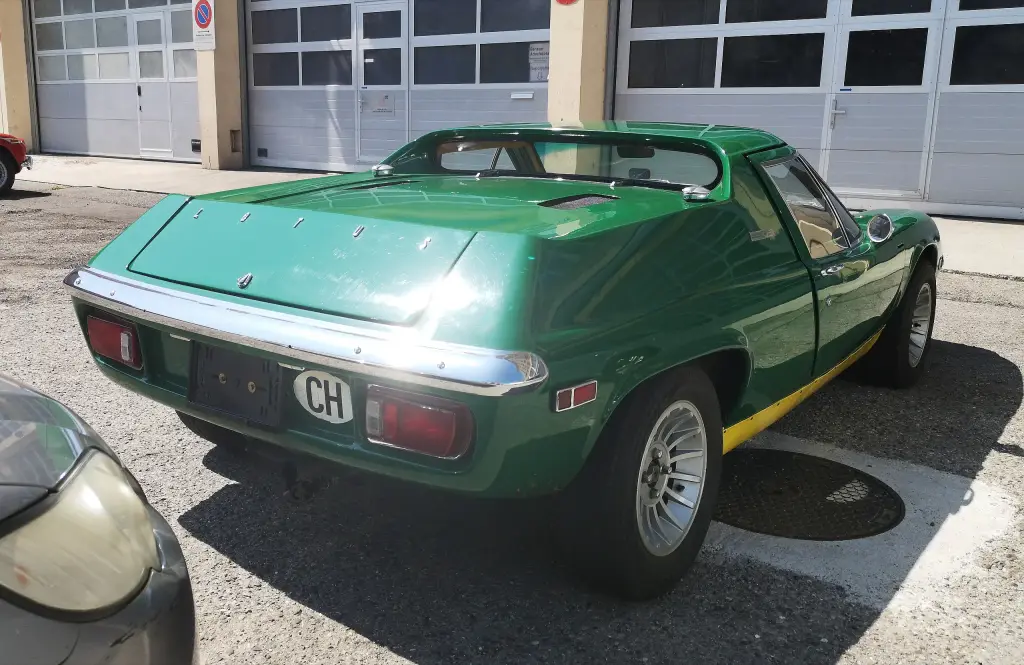
The Lotus Europa name was used on two distinct mid-engine GT cars. The original Europa and its variants, Lotus types 46, 47, 54, 65 and 74, were produced from 1966 to 1975; the name was revived in 2006 for the Type 121 Europa S, a car based on the Elise.
Lotus Europa at a glance
| Original production | 1966–1975 |
|---|---|
| Lotus types | 46, 47, 54, 65 and 74 |
| Layout | rear mid-engine, rear-wheel drive |
| Chassis | boxed steel backbone with fibreglass body |
| Initial engine | 1,470 cc Renault 16, 82 hp |
| US engine | 1,565 cc, 80 hp |
| Later engine | Lotus-Ford Twin Cam, 105 hp, later 126 hp |
| Gearbox | Renault 16 transaxle, later optional five-speed |
| Reborn | Europa S (Type 121), 2006–2010 |
| Built | 9,230 of all original models |
Based on one source (English Wikipedia).
History of the Lotus Europa
The Europa was planned as a volume-produced, two-seater mid-engine sports coupé built to reasonable cost, an ambitious aim for the time. Lotus was relatively late to the road-going mid-engine layout, which had begun with the Matra Djet in 1962, but it followed Chapman’s principle of “simplify, then add lightness” and used several ingenious solutions to make the layout affordable.
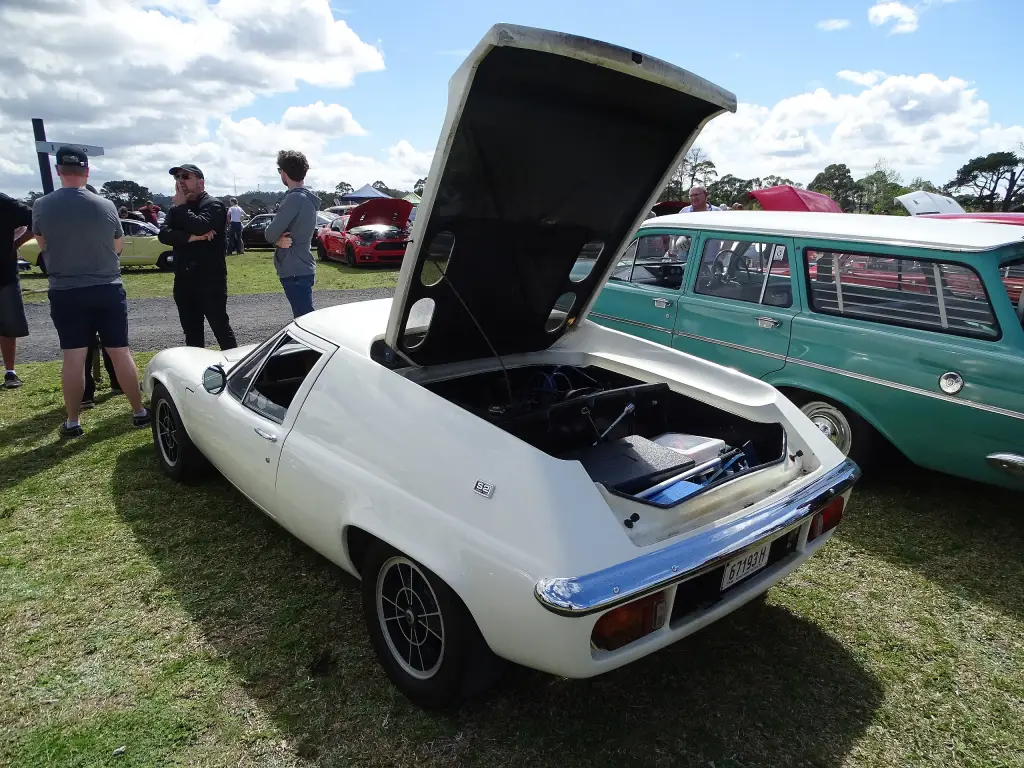
The car used a lightweight folded and welded boxed-steel backbone chassis with a fibreglass body, the combination first used on the Elan in 1962. The earliest Europas had the body fully bonded to the chassis for stiffness, but this soon changed to a bolted body so that repairs were possible. With no front engine to accommodate, the main chassis member ran straight forward to a large box-section cross-beam between the front suspension points, and at the rear it split into a U to take the engine, transmission and final drive and to support the rear suspension.
Sourcing the powertrain was critical. Chapman wanted to move beyond the Ford components used in earlier Lotuses and chose the engine and combined transaxle recently released by Renault for its 16. The 1,470 cc Renault engine was light and modern, with an aluminium block and cast-iron liners, a high-mounted camshaft, and all ancillaries driven from a pulley at the transaxle end of the camshaft — which, once the unit was turned 180 degrees and moved to the rear, put them at the back of the car for easy access. Lotus raised the compression ratio from 8.6 to 10.25, fitted larger inlet valves, revised valve timing, dual valve springs and a twin-barrel carburettor, lifting power by 23 per cent from 63 to 82 hp. A de-tuned 1,565 cc version of 80 hp was used for the United States.
Later cars received the Lotus-Ford Twin Cam engine used in the Elan, rated at 105 hp and later 126 hp in big-valve form; Lotus reportedly delayed its introduction until it trusted the Renault transaxle. The Twin Cam arrived in Europe in mid-1971 and in North America in early 1972, and US cars were rated at 113 hp. When Renault launched the more powerful 16 TX in 1973 with a strengthened five-speed gearbox, Lotus quickly offered that gearbox as an option. Production ended in 1975 with 9,230 cars of all models built. The name returned in 2006 on the Europa S, a sports car based on the Elise and built until 2010.
Design and features
- Mid-engine layout: a Renault 16 engine and transaxle turned through 180 degrees.
- Backbone chassis: the Elan’s boxed steel spine, adapted for a mid-engine car.
- Renault engine: 1,470 cc, tuned from 63 to 82 hp.
- Twin Cam: later cars with the Lotus-Ford engine of 105 to 126 hp.
- Accessible ancillaries: the Renault layout put them at the back for maintenance.
Lotus Europa versions
- Europa (1966–1975): Renault 16 engine, types 46, 47, 54, 65 and 74.
- US Europa: 1,565 cc engine of 80 hp.
- Twin Cam (1971–1975): Lotus-Ford engine, 105 hp or 126 hp in big-valve form.
- Europa S (Type 121, 2006–2010): Elise-based revival.
The Europa used the chassis ideas of the Lotus Elan and was replaced by the Lotus Esprit. More cars are in the Lotus collection.
Sources
- Lotus Europa, English Wikipedia: chassis, Renault engine, Twin Cam, production