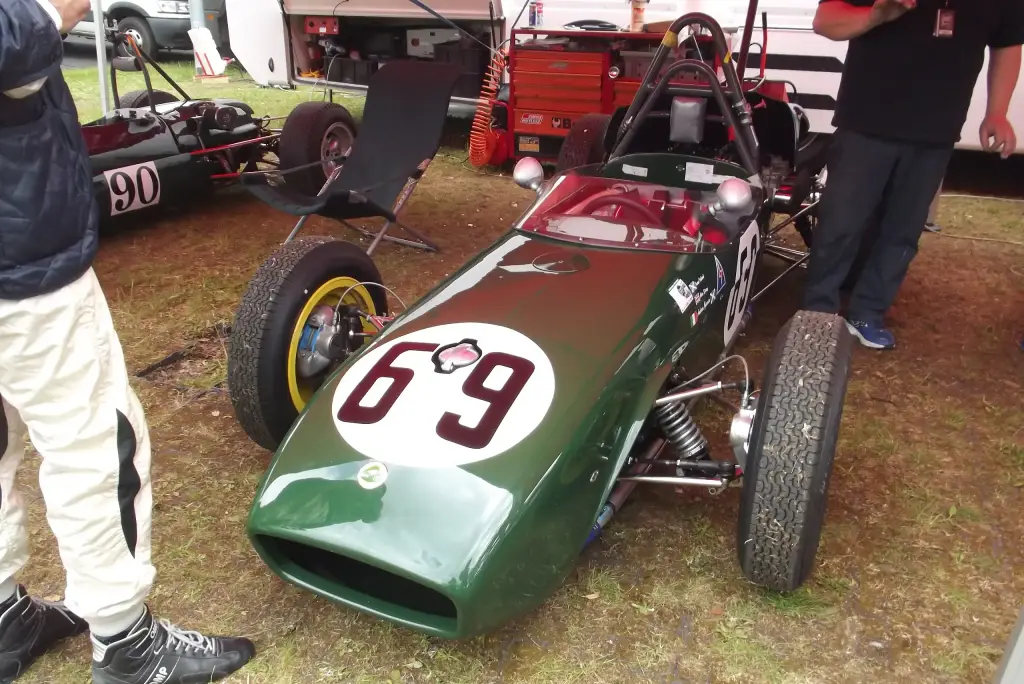
The Lotus 18 was designed by Colin Chapman for Formula One, Formula Two and Formula Junior and used from 1960 until 1966 in Formula One. It was the first mid-engined car built by Lotus and a marked improvement on the front-engined 12 and 16.
Lotus 18 at a glance
| Introduced | 1960 |
|---|---|
| Designer | Colin Chapman |
| Categories | Formula One, Formula Two, Formula Junior |
| Layout | mid-engined, space frame |
| Engine | Coventry Climax FPF, 2.5 litres, 239 bhp |
| 1961 engine | 1.5-litre Climax FPF Mk.II |
| Formula Junior engine | 998 cc Cosworth Mk.III or 948 cc BMC A-series |
| Gearbox | Lotus sequential transaxle with ZF limited-slip differential |
| Height | 28 in (71 cm) |
| Weight | 980 lb (440 kg) |
| Built | about 27 F1/F2 cars and 110 Formula Junior cars |
Based on one source (English Wikipedia).
History of the Lotus 18
The 18 was a classic Chapman design: extremely light and simple, with lightweight body panels bolted to a heavily triangulated tubular space frame. It kept the forward weight distribution of the 16 even though the engine had moved behind the driver. The first cars used a 2,467 cc Coventry Climax FPF four, and in 1960 the engine grew to 2,497 cc, producing 239 bhp at 6,750 rpm from only 132 kg. For the new 1.5-litre Formula One of 1961 there was a smaller Climax FPF Mk.II.
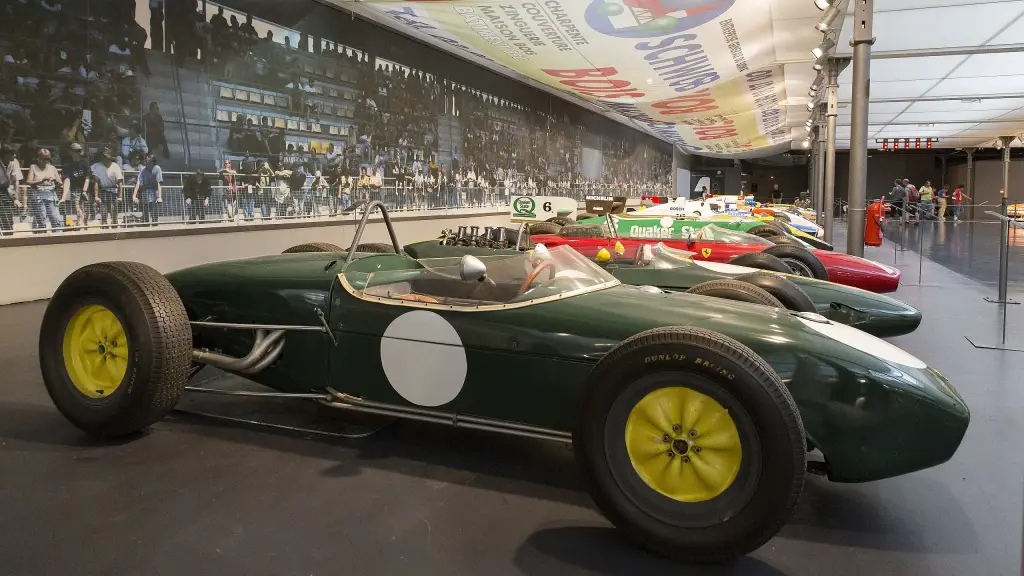
The Formula Junior version used a 998 cc Cosworth Mk.III or a 948 cc Downton BMC A-series, with thinner chassis tubing, Alfin drum brakes and a Renault four-speed transaxle. The Lotus transaxle, originally developed for the 12 and improved by Keith Duckworth, was mounted directly behind the engine with its own oil pumps. Front suspension was by double wishbones with a separate anti-roll bar; at the rear there were radius arms and a reversed lower wishbone with the fixed-length halfshaft acting as the upper link. The car stood only 71 cm high and weighed 440 kg, helped by a semi-reclining driving position.
The 18 gave Lotus its first Formula One victory when Innes Ireland won the non-championship Glover Trophy on 8 April 1960. Six weeks later, on 29 May, Stirling Moss won the Monaco Grand Prix in a car leased by the privateer Rob Walker, and he won again in the United States to help Lotus to second in the constructors’ championship. Moss repeated the Monaco win in 1961 against the faster Ferrari “sharknose” cars and also won at the Nürburgring, while Ireland won in the United States. The 18 also gave Jim Clark his first Grand Prix start in 1960.
Not every race went well. At Spa in 1960 Moss crashed the Rob Walker car in practice and missed the race, and Alan Stacey was killed after leaving the track, apparently following a bird strike. The 18 was replaced by the Lotus 20 in Formula Junior and by the 21 in Formula One, and some chassis were rebodied with 21 bodywork as the interim 18/21. A two-seat sports-racing version was sold as the Lotus 19, also called the Monte Carlo.
Design and features
- Mid-engine layout: Lotus’s first car with the engine behind the driver.
- Low weight: 440 kg thanks to a triangulated space frame and thin body panels.
- Improved transaxle: the Lotus sequential gearbox mounted directly behind the engine.
- Low build: only 71 cm high, with the driver semi-reclined.
- Widely copied: its suspension reduced weight transfer and body roll, and rivals followed the design.
Lotus 18 versions
- Formula One / Formula Two (1960): 2.5-litre Climax FPF, about 27 cars.
- Formula One (1961): 1.5-litre Climax FPF Mk.II under the new rules.
- Formula Junior: 998 cc Cosworth or 948 cc BMC engine, about 110 cars.
- 18/21: interim cars with Lotus 21 bodywork on an 18 chassis.
- Lotus 19: two-seat sports-racing version.
The 18 replaced the front-engined Lotus 16 and was followed by the Lotus 20 in Formula Junior. More racing cars are in the Lotus collection.
Sources
- Lotus 18, English Wikipedia: design, engines, racing history