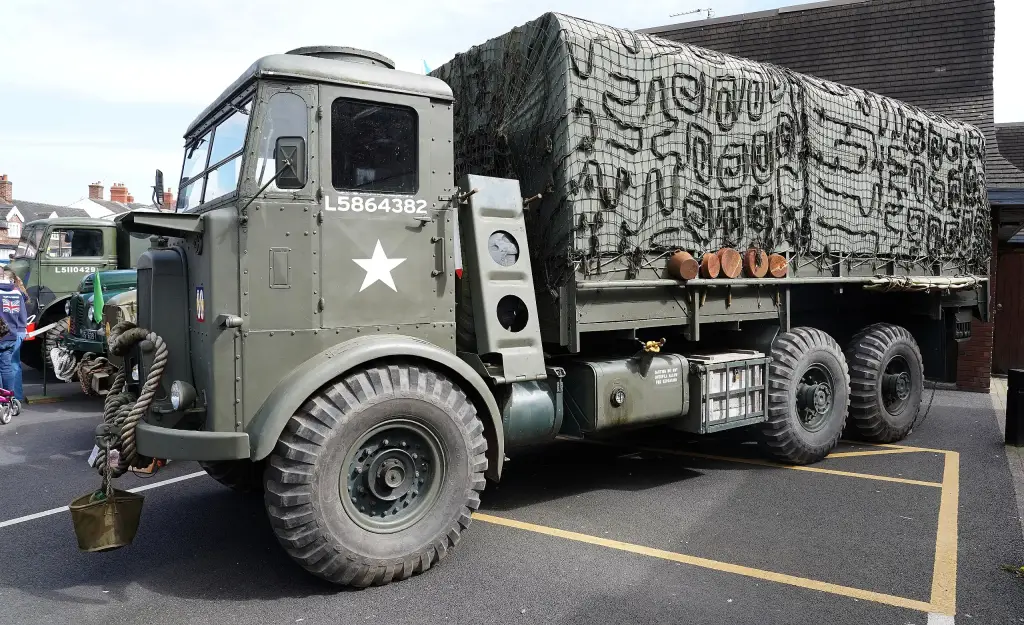
The Leyland Hippo was a 6×4 heavy general service cargo truck manufactured by Leyland Motors. Introduced in 1929, it remained in production for forty years, through a pre-war generation, the wartime Mark II and a long civilian life.
Leyland Hippo at a glance
| Maker | Leyland Motors |
|---|---|
| Type | 6×4 heavy general service truck |
| Introduced | 1929, at Olympia |
| Production | 40 years |
| First engine | inline six, 72 bhp |
| First top speed | 30 mph |
| First gearbox | four-speed |
| First wheelbase | 17 ft (5.18 m) |
| First capacity | 12 tons |
| Octopus | 1934, eight wheels on the Hippo platform, 22 tons |
| Hippo Mk I | 330 built for the British Armed Forces in 1939–1940 |
| Hippo Mk II | designed 1943, built from late 1944, 10-ton payload |
Based on one source, the English Wikipedia article on the Hippo.
History of the Leyland Hippo
First generation, 1929
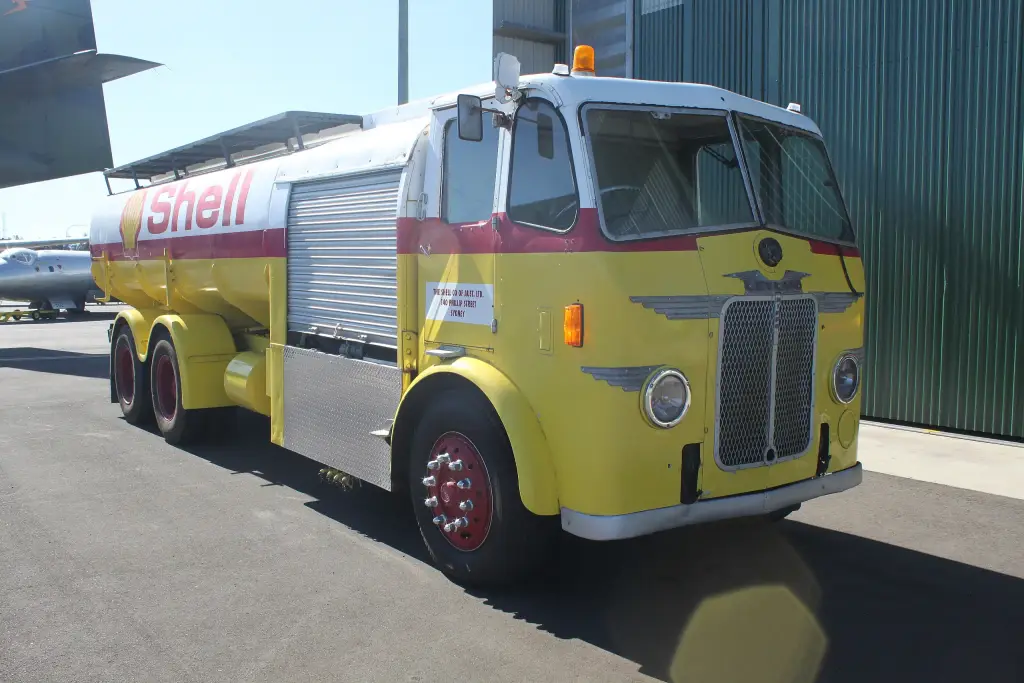
The new six-wheeled twelve-ton goods carrier was first demonstrated at the Commercial Motor Transport Exhibition at Olympia in 1929. It was a rigid 6×4 truck with the largest engine Leyland made at the time, an inline six of 72 bhp that gave a top speed of 30 mph through a four-speed gearbox. As a cab-over-engine design, the truck was 27 ft 3.75 in long on a 17 ft wheelbase and came as a tipper or a platform model with 19 ft and 22 ft loading spaces respectively, with a dry weight of five tons. The 1931 facelift stretched the vehicle to 30 ft and raised capacity to 19 tons. In 1934 Leyland developed an eight-wheeled vehicle on the Hippo platform called the Octopus, with the same engine but a higher load capacity of 22 tons.
During 1939 and 1940 the British Armed Forces took delivery of 330 Leyland Hippo Mk I trucks, also known as the WSW17. The Mk I was a militarised version of the pre-war Hippo with an open military cab and body.
Second generation, the Mark II
During the war Leyland became involved in tank development and production, which curtailed Hippo production for about two years until it was recognised that more ten-ton vehicles were needed than British firms could supply. The Hippo Mk II was a new design, developed as a result of planning for D-Day, which concluded that trucks with a ten-long-ton cargo capacity offered real logistic advantages over smaller vehicles. Design began in 1943 and production in late 1944.
The Mk II was a 6×4 truck with a 100 bhp Leyland six-cylinder inline diesel, a five-speed gearbox and a two-speed auxiliary gearbox. It had a new two-man enclosed steel cab with pull-down windows, whose top could be removed to lower the vehicle for shipping. The Mk II had single rear tyres, while the Mk IIA had narrower dual wheels and therefore carried two spare tyres, one for the front and one for the rear. The standard general service body was a steel-framed timber well type that incorporated the wheel arches to keep the loading height low, with steel hoops and a canvas cover for weather protection and to hide the load from the enemy. Some Mk IIs had large van bodies and several had expanding bodies whose sides split horizontally, the top half rising for more roof coverage and the bottom half dropping for more floor space; several vehicles could be linked into a workshop area. Post-war bodies included a 2,000 imperial gallon refueller.
The Mk II arrived too late for the days immediately after D-Day, but about 1,000 were in service by VE Day and they stayed with the British Army and the Royal Air Force into the 1950s. A civilian version followed in 1945, weighing 19 tons and using the same 100 bhp six and five-speed gearbox, with higher load capacity.
Later life
The Hippo name has also been used by Ashok Leyland in India, which was approved in 1954 to build Leyland trucks and buses starting with the Comet. In January 2026 Ashok Leyland reintroduced Hippo tractor units with six-cylinder eight-litre diesels of 320 to 360 hp and a nine-speed gearbox.
Design and features
- Six wheels: a 6×4 layout from the start, with a 12-ton capacity in 1929.
- Big Leyland six: the largest engine Leyland made at the time, 72 bhp in the first generation.
- Octopus derivative: the 1934 eight-wheeler used the Hippo platform and engine.
- Wartime Mark II: a ten-ton truck with a removable cab top for shipping.
Leyland Hippo versions
- First generation: 1929 6×4 tipper and platform models, 12 tons, later 19 tons.
- Octopus: the 1934 eight-wheeled version with 22-ton capacity.
- Hippo Mk I: the militarised 1939–1940 truck, also called WSW17.
- Hippo Mk II and Mk IIA: the 1944 ten-ton trucks with single or dual rear tyres.
- Civilian Mk II: the 1945 version rated at 19 tons.
The Hippo shared the Leyland range with the Comet, and its export role was later taken by the Landtrain. More Leyland vehicles are in the Leyland collection.
Sources
- Leyland Hippo, English Wikipedia: generations, engines, bodies, military service