The Leyland Comet was a long-running badge used by Leyland for a series of trucks and the occasional bus, intended mainly for export markets. It first appeared in December 1947 and went through five generations before the name was retired in the late 1980s, although Ashok Leyland in India still uses it.
Leyland Comet at a glance
| Maker | Leyland Motors |
|---|---|
| Type | truck, with an occasional bus version |
| First shown | December 1947 |
| First-generation wheelbase | 17.5 ft (5.3 m) |
| First-generation gross weight | 8.75 long tons (8,890 kg) |
| Original engines | 75 hp diesel or 100 hp petrol |
| 1950 engine | 5.76-litre Leyland O.350, 90 hp |
| 1955 output | 100 hp at 2,200 rpm |
| Generations | five, from 1947 to 1986 |
| Fifth generation | 1986, based on the C44 Roadrunner |
| Fifth-generation engines | 115 hp 6-98NV, 140 hp 402, 160 hp 411 |
| Top speed | 54 mph for a 1986 12-tonne Comet |
Based on one source, the English Wikipedia article on the Comet.
History of the Leyland Comet
First generation, 1947
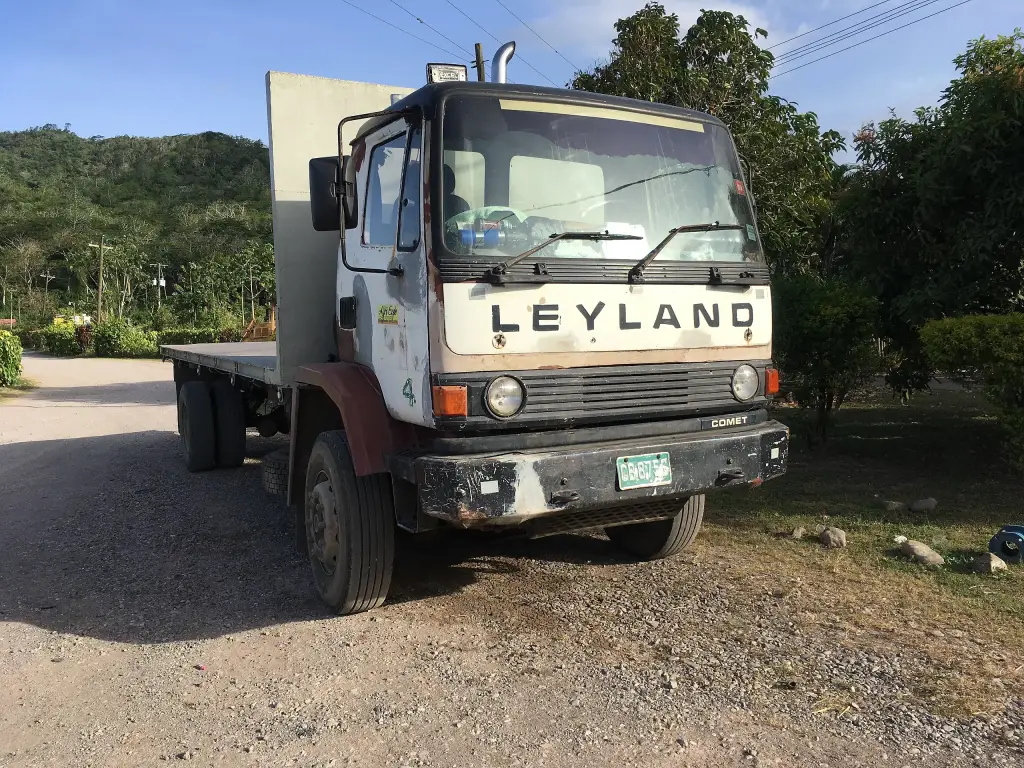
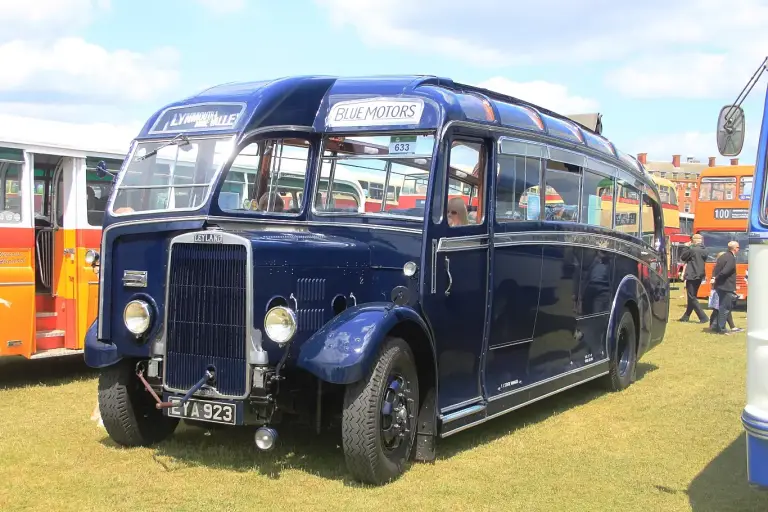
The semi-bonneted original Comet was first shown in December 1947. It was intended mainly for export but was also sold at home. Its wheelbase was 17.5 ft (5.3 m) and its gross weight 8.75 long tons (8,890 kg). A coach seating 33, sharing the same front design, appeared in 1948. The cab was built by Briggs Motor Bodies and shared with the Ford Thames ET6 and Dodge 100; when Ford bought Briggs in 1953, Leyland and Dodge had to develop new cabs. The original engines were a 75 hp diesel or a 100 hp petrol unit, the petrol version being rare in Britain. In 1950 the diesel became the 5.76-litre Leyland O.350 with 90 hp, and maximum weight rose to 12 long tons, though tropical models were rated lower. In 1955 power rose to 100 hp at 2,200 rpm with the O.350 Mk III.
Second generation, 1952
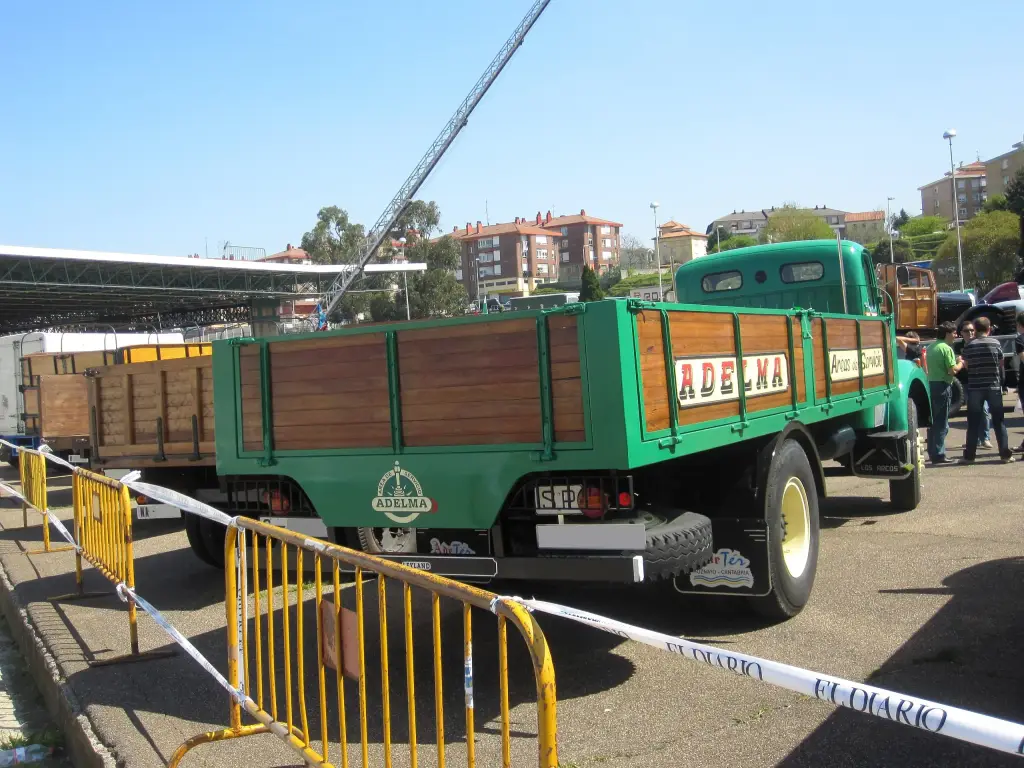
A cab-over version appeared in 1952 and was sold alongside the bonneted model until 1955 or 1956, depending on the market. The bonneted Comet stayed in production until 1958, and Australian models used the same cab into the early 1960s. The model also entered production in India after government approval in 1951; Ashok Motors, Ashok Leyland after 1954, built it locally, kept the original front clip into the early 1970s and continued the Comet into the 1990s.
Third generation, 1958
In 1958 the Comet received the “Vista Vue” cab, developed by Albion and also used by Dodge UK for its 300 model, which is why the shape is often called the LAD design. A heavier Super Comet was introduced and largely supplanted the regular Comet. The 375 engine of 1958 was rated at 110 hp, followed by a cross-flow design offered as a 370 (6.1 litres, 110 hp) and a 400 (6.6 litres, 125 hp).
Fourth generation, 1964
The fourth-generation Comet of 1964 used the Ergomatic cab, built by GKN-Sankey and also fitted to a number of other Leyland models and other British trucks in the Leyland Motor Corporation.
Fifth generation, 1986
After a decade and a half the Comet name returned in 1986, again for export markets and mainly for the developing world, with simplified equipment, fewer gears and sturdy construction. The design was an all-metal version of the C44 Roadrunner, made from six major pressings and configured for hand welding on a simple jig, with straight chassis rails. The six-wheeled version was called the Super Comet. The Comet replaced the Terrier, Boxer, Reiver, Landmaster and Clydesdale in Leyland’s rationalised range. Models from 9 to 13 long tons used the 115 hp 6-98 NV engine, the 14-ton truck the 140 hp Leyland 402 and the 16-ton and Super Comet models the 160 hp Leyland 411. A 1986 12-tonne Comet with five speeds reached only 54 mph, enough for markets in Anglophone Africa, the Middle East, the Caribbean, Central America, Taiwan, the Philippines, Malaysia, Thailand, Singapore and Oceania.
Design and features
- Export first: the Comet was designed mainly for overseas markets, from the first generation to the last.
- Shared cabs: the Briggs cab was shared with Ford and Dodge, and the Vista Vue was also used by Albion and Dodge.
- Long life in India: Ashok Leyland built the Comet into the 1990s, and the badge is still used there.
- Simplified 1986 model: six pressings and hand-weldable construction made local assembly easy.
Leyland Comet versions
- First generation: bonneted 1947 truck, with a 33-seat coach version in 1948.
- Second generation: cab-over from 1952, sold next to the bonneted model.
- Third generation: 1958 Vista Vue cab, with the heavier Super Comet.
- Fourth generation: 1964 Ergomatic cab.
- Fifth generation: 1986 export model based on the C44 Roadrunner, with a six-wheel Super Comet.
The 1986 Comet was developed from the Roadrunner, and its export role followed the Landtrain. More Leyland vehicles are in the Leyland collection.
Sources
- Leyland Comet, English Wikipedia: generations, engines, weights, export markets