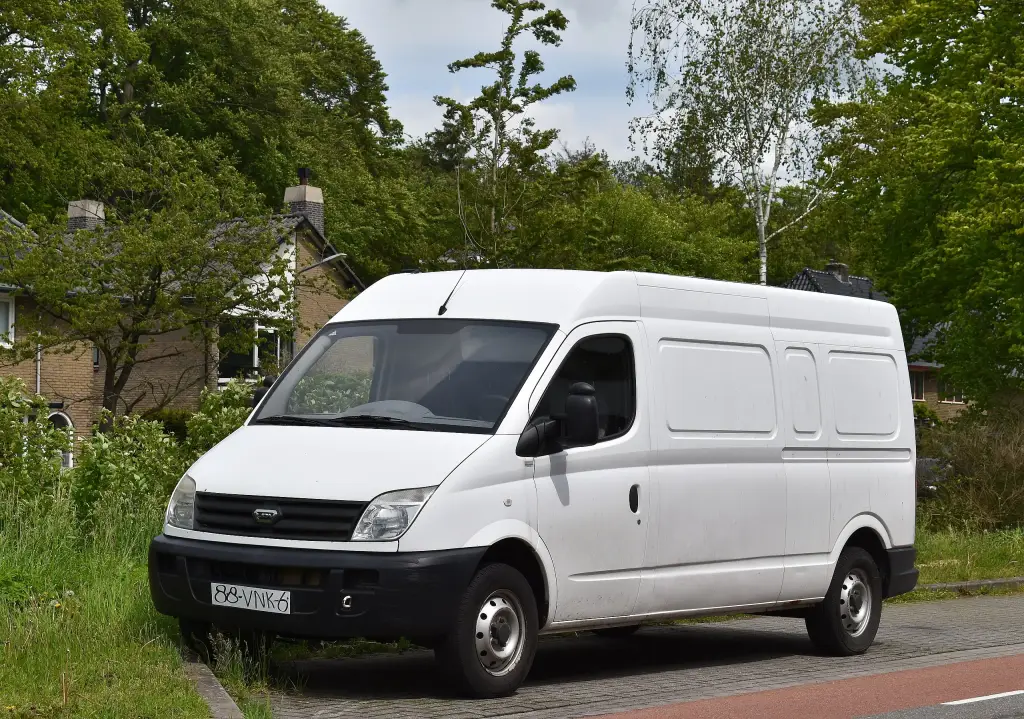
The LDV Maxus was the first all-new van LDV had built in decades, developed with Daewoo Motor and put into production at Washwood Heath at the end of 2004. It replaced the Sherpa-derived Convoy and Pilot, won its class awards, and outlived the company that made it: since 2011 it has been built in China as the Maxus V80.
LDV Maxus at a glance
| Maker | LDV Limited, Washwood Heath, Birmingham |
|---|---|
| Production | 2004–2009 |
| Developed with | Daewoo Motor, under the LD100 programme |
| Development cost | £500 million over five years |
| Tooling | moved from Daewoo Motor Polska in Lublin, Poland |
| Layout | front-wheel drive |
| Engines | 2.5-litre VM Motori diesel, 95 or 120 hp, 130 hp from 2006 |
| GVW | 2.8, 3.2 and 3.5 tonnes |
| Wheelbases | 3.1 and 3.85 metres |
| Payload | 917 to 1,616 kg |
| Load box | up to 3.36 m long, 1.77 m wide and 1.93 m high |
| Award | Van of the Year 2005 |
History of the LDV Maxus
A van designed with Daewoo
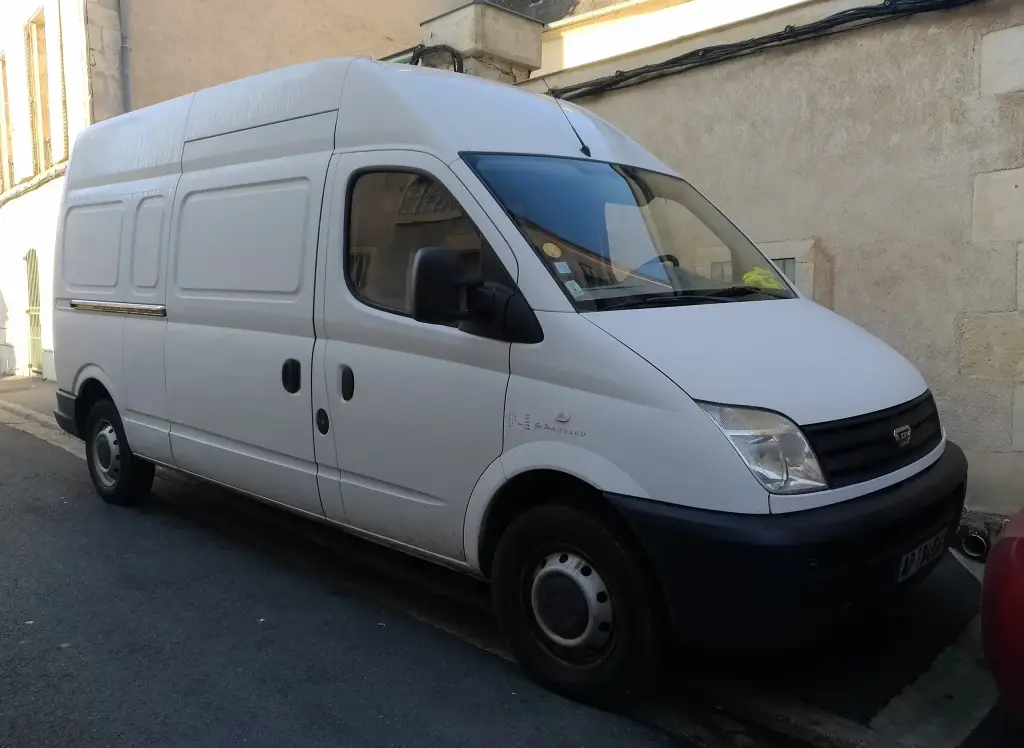
LDV needed a replacement for the Convoy and Pilot, whose origins went back to 1974, and Daewoo Motor needed a successor to its Lublin van. The two companies agreed to develop one vehicle together, and the programme, coded LD100, ran for five years and cost £500 million. When Daewoo went into receivership in November 2000 and was then bought by General Motors, LDV secured the exclusive rights to the design, bought the tooling and moved it from Daewoo’s plant in Lublin, Poland to its own factory in Birmingham. A narrow derivative using the body sides of the short-wheelbase low-roof Maxus was started to replace the Pilot but never reached production. A version of the Maxus was also built by GAZ in Russia.
On sale from 2004
Production began at the end of 2004 and the van was on the British market from 2005. It was front-wheel drive, with a 2.5-litre VM Motori diesel of 95 or 120 hp that was also used in the Chrysler Voyager, and it came in two wheelbases of 3.1 and 3.85 metres, three roof heights and gross weights of 2.8, 3.2 and 3.5 tonnes. Payload ran from 917 to 1,616 kg and the largest load box measured 3.36 metres long, 1.77 wide and 1.93 high, with a sliding door wide enough to take a Euro pallet crosswise. ABS with EBD, power steering, air conditioning and a CD player were standard, and the range covered panel vans, minibuses of 10, 12, 15 or 17 seats, and chassis cabs with dropside, tipper, Luton and box bodies.
Awards, then administration
The Maxus was well reviewed and sold across Britain to fleets such as National Grid, the Royal Mail and the police, and it took the Professional Van and Light Truck Magazine award as Van of the Year 2005. In July 2006 the Russian GAZ group bought LDV, planning to build the Maxus in Russia from 2010; a version did go on sale there in 2008. The chassis was strengthened in 2006 and a double-cab pick-up, a minibus, a refrigerator van and a full ambulance joined the range, with a 130 hp engine option; 6,722 Maxus vans were sold in England that year, and 8,620 in 2007 after 56 changes were made at the end of that year. GAZ stopped investing, LDV went into administration in June 2009 and about 800 workers were laid off. In 2008 LDV had built 10,000 vans for sales of about £150 million but lost £54 million in 2008 and the first quarter of 2009.
After LDV
SAIC of China bought most of LDV’s assets in 2010, including the rights to the Maxus design, and in 2011 launched a commercial vehicle marque called Maxus. The Maxus was relaunched as the V80 in June 2011 and has been built in China since, exported to Australia and New Zealand from 2012 and returning to the United Kingdom in 2016. GAZ also developed its own version in Russia, and Weststar LDV assembled the van under licence in Malaysia.
Design and features
- Modern running gear: front-wheel drive and a 2.5-litre VM common-rail diesel, unlike the old rear-drive Sherpa line.
- Euro pallet loading: the sliding side door was wide enough to load a pallet crosswise.
- Three gross weights: 2.8, 3.2 and 3.5 tonnes with payloads from 917 to 1,616 kg.
- Wide body range: panel van, minibus up to 17 seats, and chassis cabs for dropside, tipper, Luton and box bodies.
- Award winner: Van of the Year 2005 in Britain, with minibus and combi titles to follow.
LDV Maxus versions
- Panel van: two wheelbases and three roof heights.
- Minibus: 10, 12, 15 or 17 seats for fleet and school work.
- Chassis cab: dropside, tipper, Luton and box bodies from the factory.
- Special bodies: a refrigerator van, a pick-up with a three-berth cabin and a full ambulance.
- Maxus V80: the Chinese-built continuation from 2011, sold as the LDV V80 in export markets.
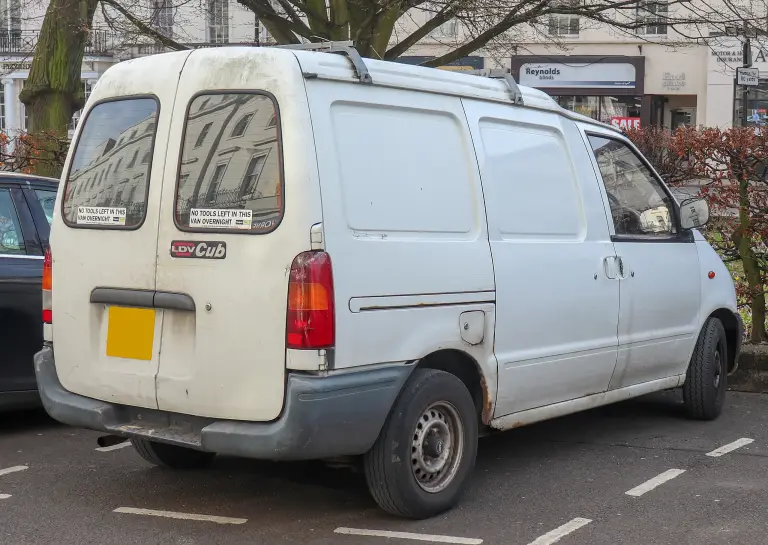
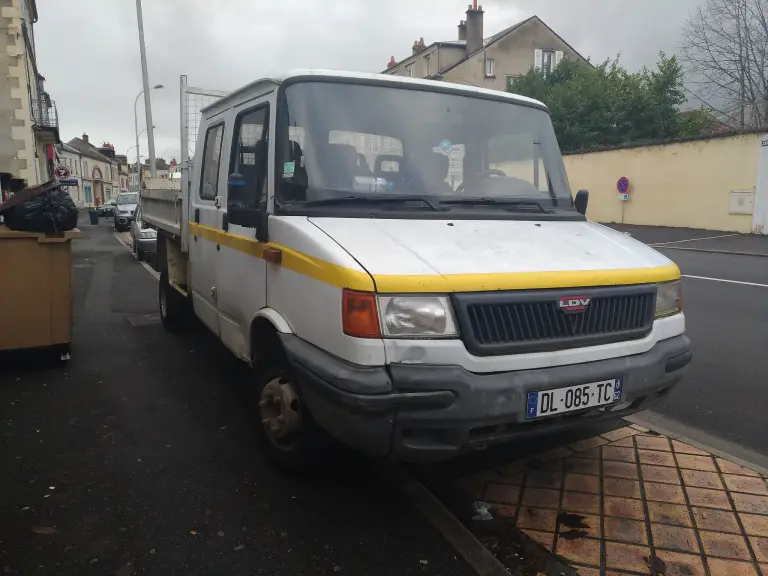
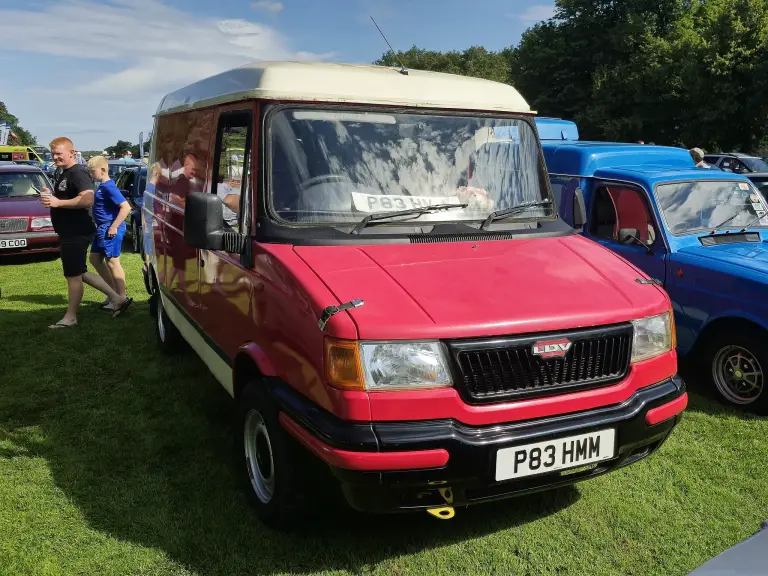
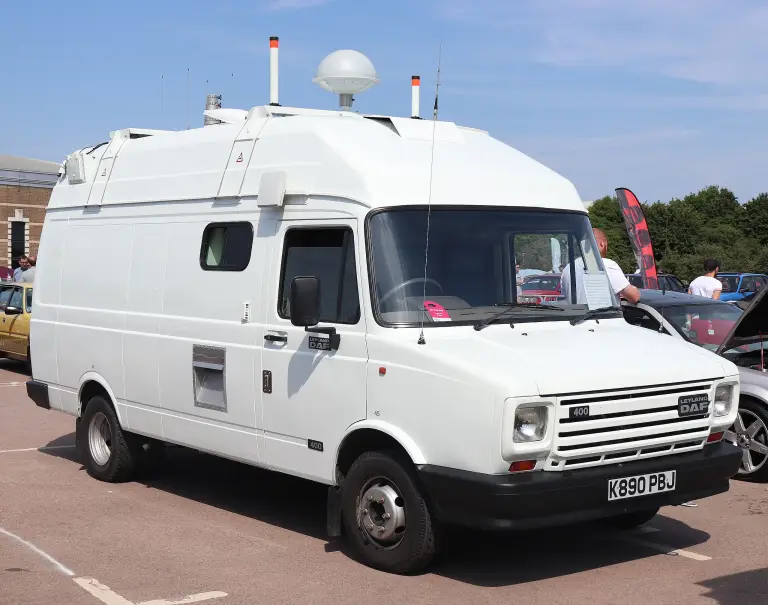
The Maxus replaced the LDV Convoy and the LDV Pilot in 2006. The badge-engineered van that came before it was the LDV Cub. More vans are in the LDV collection.
Sources
- LDV Maxus, English Wikipedia: LD100 programme, Daewoo, SAIC and the V80, awards, administration
- LDV Maxus, German Wikipedia: dimensions, payload, engines, sales figures, GAZ
- LDV Maxus, Italian Wikipedia: development, Lublin production, engine outputs